
How Caregiver Workflows Influence Product Durability
In daily care environments, product durability is shaped less by static load ratings and more by how caregivers actually work. Repetitive movements, rushed transfers, and space-limited handling quietly define how long chairs, walkers, and handrails last in real facilities.
This article explains how caregiver workflows influence durability across rehabilitation equipment, helping buyers and distributors evaluate products beyond appearance, thickness, or paperwork.
Why Workflow Behavior Matters More Than Visual Strength
Care equipment is rarely used in isolation. Caregivers operate under time pressure, staffing limits, and patient unpredictability. These conditions introduce forces that product drawings and catalog photos do not show.
Common workflow-driven actions include:
- Pulling equipment sideways instead of lifting vertically
- Supporting patient weight while adjusting equipment position
- Repeated micro-movements during transfers
- Using equipment temporarily as leaning or bracing support
Over time, these behaviors create stress patterns that accelerate fatigue in joints, fasteners, and welded connections.
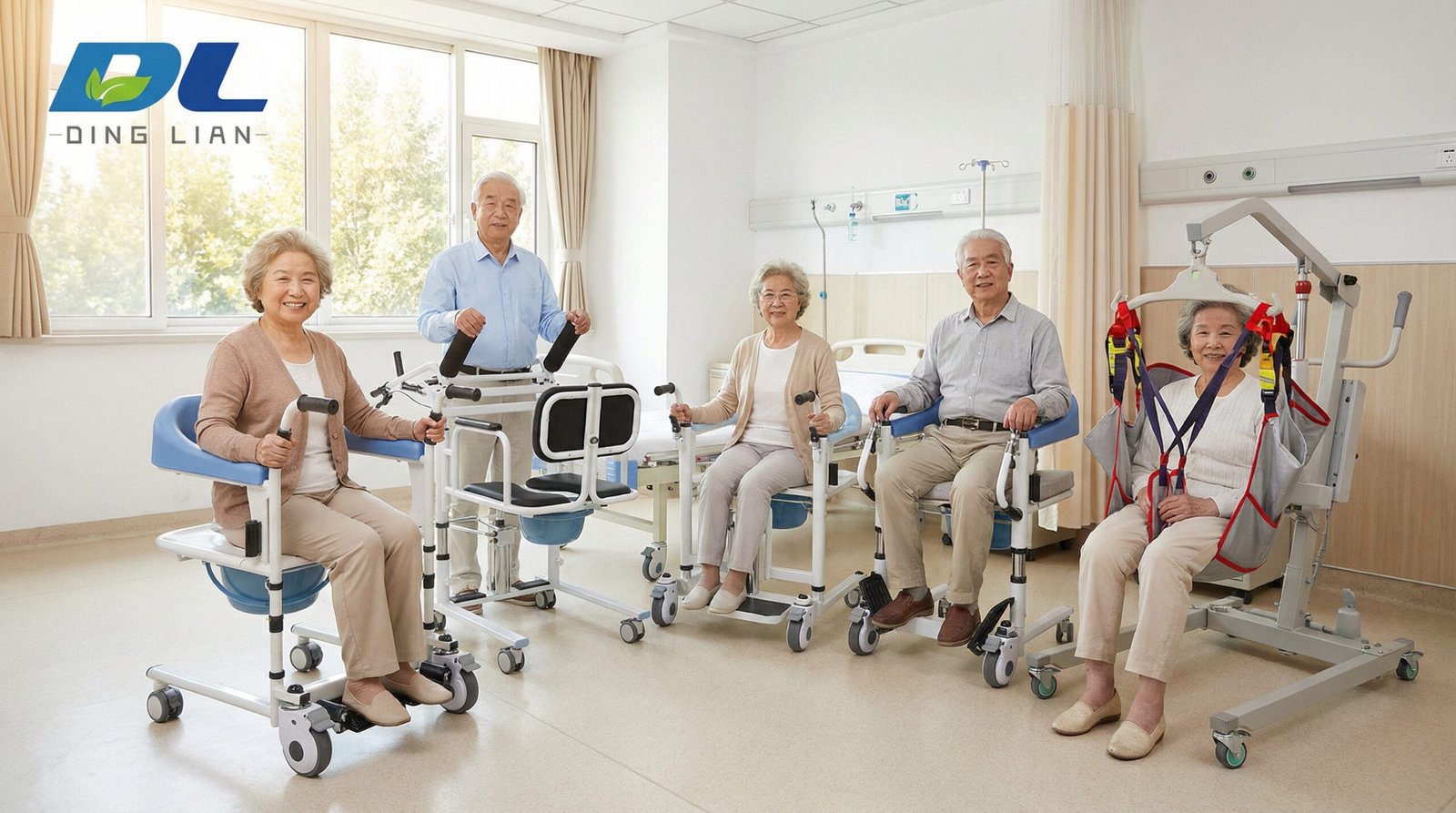
Patient Transfer Tasks: The Highest Stress Scenario
Transfer-related products experience the most complex loads in care facilities. During bed-to-chair or chair-to-toilet transfers, forces shift continuously as patients hesitate, adjust posture, or lose balance.
Unlike laboratory testing, real transfers involve:
- Diagonal and rotational loads
- Sudden force spikes
- Uneven weight distribution
This is why products in the patient transfer equipment category often fail first at joints and connection points rather than main frames.
Where Early Fatigue Commonly Appears
Based on field inspections and post-use feedback, early fatigue frequently occurs at:
- Pivot joints near handles
- Fasteners under alternating push–pull forces
- Welded intersections exposed to twisting
These issues are often invisible until failure happens.
Walking Aids and Repetitive Micro-Stress
Walking aids may appear simple, but they endure constant repetition. A single walker can experience hundreds of short loading cycles per day across multiple users and surfaces.
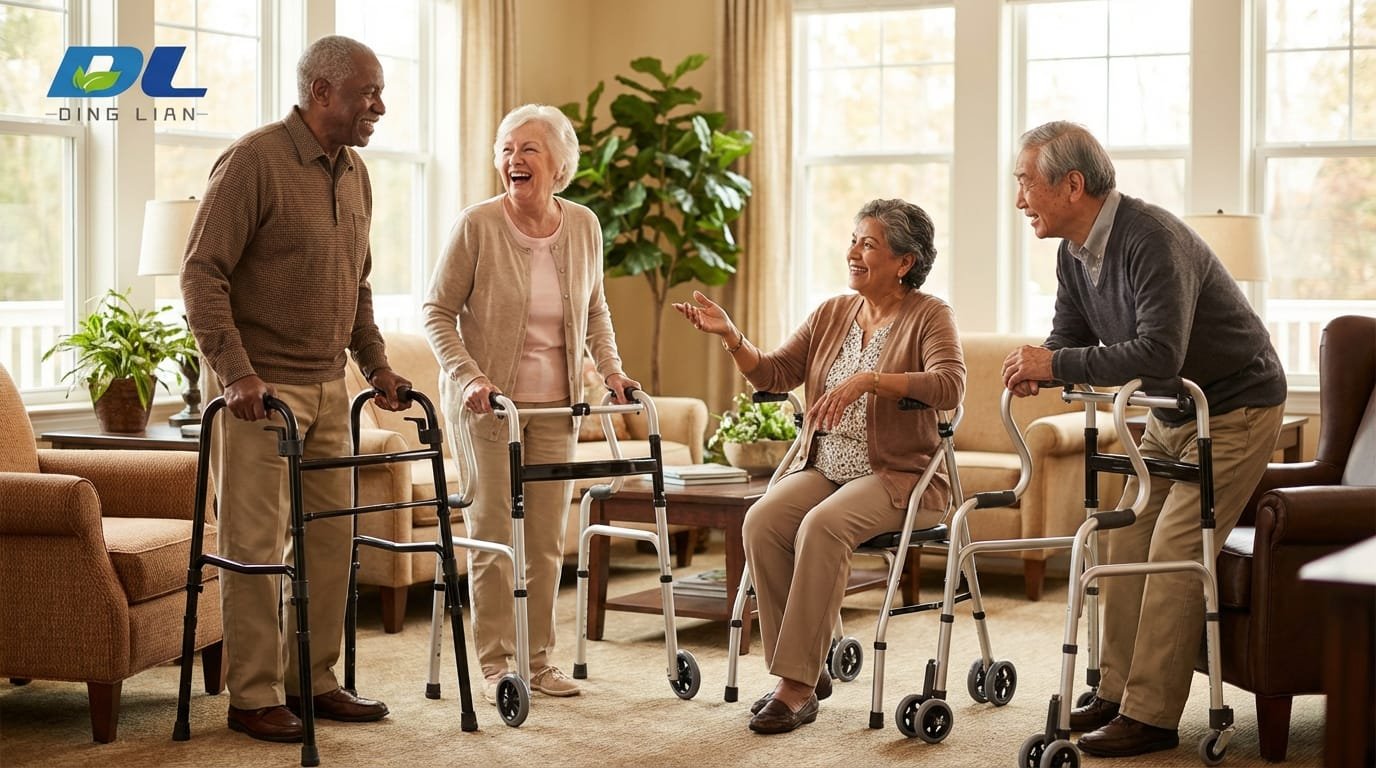
Across different regions, walking aids may be called walkers, rollators, or mobility frames. Regardless of naming, durability challenges remain consistent.
Facilities sourcing from the walking aid category often report:
- Wear around height adjustment holes
- Loosening at leg tips and joints
- Frame distortion caused by side loading
Rated Load vs. Real Workflow Stress
Load ratings describe static capacity, not cumulative fatigue. A product rated for heavy weight may still fail early if subjected to repeated off-axis forces.
| Aspect | Standard Testing | Daily Workflow Reality |
|---|---|---|
| Load Direction | Vertical | Multi-directional |
| Cycle Count | Limited | Thousands |
| User Behavior | Controlled | Unpredictable |
What Large Buyers Learn After One Year of Use
Procurement teams managing multiple facilities often observe similar patterns after 12–18 months:
- Increased maintenance frequency
- Noises at joints before visible damage
- Gradual loosening of connection points
These issues are typically workflow-related, not misuse.
Design Choices That Respond to Caregiver Reality
Manufacturers with long-term facility feedback focus on reinforcing stress transition zones rather than simply increasing material thickness.
At Dinglian, workflow-based confirmation testing simulates repeated caregiver movements before mass production. This approach reflects experience as a long-term manufacturer supporting global distributors and care programs.
Why Certification Alone Is Not Enough
International certifications establish compliance, but they cannot fully represent daily workflow stress. Buyers increasingly evaluate certification alongside real-use performance.
Dinglian’s compliance background can be reviewed on the certificate page , which complements practical design validation.
Choosing Durable Equipment Partners
Durability is shaped by behavior as much as by materials. Products designed with caregiver workflows in mind tend to perform more reliably over time.
For buyers evaluating long-term cooperation, understanding how a supplier approaches real-use stress is critical. To learn more about Dinglian’s background, visit the About Us page or contact us directly.