
Lightweight Aluminum Rollator Walker: What Buyers Should Check Before Choosing
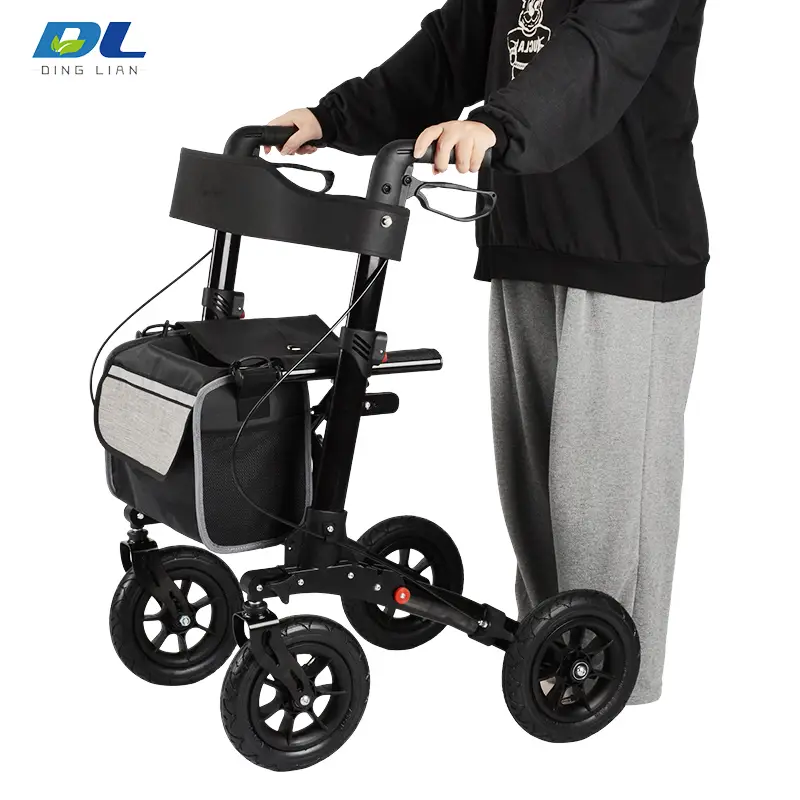
Lightweight Aluminum Rollator Walker: What to Verify on the Sample Before You Place a Bulk Order
Put three supplier datasheets side by side and a lightweight aluminum rollator looks the same on all of them: similar weight, similar load rating, almost identical photos. The differences only appear once a sample is on your table and you start handling it. So this isn’t another round of what to look for in a rollator. It’s about what to do in the week after the sample arrives, before a purchase order goes out.
One assumption before we start: you’ve already decided a lightweight folding model is the right direction. If you’re still working out which type of rollator suits your market, our Rollator Walker Complete Guide covers that part, and it’s worth reading first. What follows picks up from there.
Why Light and Foldable Come Up First, and Why That Matters at Sample Stage
In markets like Germany and Poland, foldable and light tend to be the first two things shoppers ask for. People live in apartments with stairs, travel by car or public transport, and want something they can lift without thinking about it. That’s a fair thing to build a product range around.
The trouble is that those are exactly the two features that are easiest to claim and hardest to judge from a photo. A frame that feels light might simply be thin. A rollator that folds neatly might not stay square after a month of daily use. Speaking as the Zhongshan Dinglian manufacturer buyers deal with directly, we’d much rather you find a weak point on a sample than in a container.
Step One: Weigh It Yourself, Then Ask What Was Weighed
Start with a plain kitchen scale. Spec sheets often quote the bare frame, while the unit your customer buys includes the seat, the basket or bag, the brake cables and the wheels. A rollator that says 6 kg on paper can feel noticeably different once it’s fully assembled, so weigh it the way it will be sold.
Then weigh the packed carton too. For anyone shipping in volume, packed weight and carton size decide freight cost far more than the number printed in the brochure.
Step Two: Check the Tube, Not Just the Label
Almost every sample is labeled aluminum alloy. That word covers a wide range of grades and wall thicknesses, and the label won’t tell you which one you’re holding. A pair of calipers will tell you more than the datasheet does. Measure the tube at several points along its length, press the middle of a long section with your thumbs, and look closely at every joint. You don’t need a lab for this. You need ten quiet minutes and good light.
| What to Check | How to Check It | What Good Looks Like | Warning Sign | Ask the Supplier |
|---|---|---|---|---|
| Tube wall thickness | Measure with calipers at several points | Consistent readings along the whole tube | Readings that vary, or a tube that flexes under thumb pressure | Which alloy grade and wall thickness does this model use? |
| Weld seams | Inspect every joint under bright light | Smooth, even seams with no gaps | Pitting, hairline cracks or uneven build-up | How are welds inspected before shipment? |
| Surface finish | Run a hand along the tube and look at the cut ends | Even coating with no bare patches | Peeling, or scratches that expose bare metal | What coating or anodizing is applied? |
| Joints and rivets | Wiggle each joint by hand | Firm, with no play | Rattling or visible gaps | Are the joints riveted or bolted, and how are they locked? |
| Height-adjust pins | Adjust through the full range several times | Pin seats fully every time | Pin half-engages, or the handle slowly drifts | How many adjustment cycles has this been tested for? |
If a supplier can answer the right-hand column quickly and in writing, that tells you something already. If the answers are vague, that tells you something too. Either way, you now have a reference to compare against when the bulk order arrives.
Step Three: Fold It Fifty Times
Any rollator folds nicely on day one. What you want to know is how it behaves on day ninety. A rough test is enough: fold and unfold the sample fifty times, then go back over it. Folding mechanisms are where lightweight models most often fail, because the hinges and locks carry loads that the thin tubing can’t share.
- Does it lock with a clear click or lever engagement every single time?
- After fifty cycles, is there new play at the hinges or looseness at the center brace?
- When unfolded on a flat floor, do all four wheels touch down evenly?
- Can an average user fold it without awkward lifting or pinched fingers?
Then lean your weight on the handles and push gently from side to side. A frame that was fine when new will often show its first wobble right here.
Step Four: Test the Brakes the Way a User Actually Would
Squeezing the brake lever and watching the wheel stop proves very little. Load the frame with some weight, set it on a gentle ramp and see whether each side holds equally. Check that the parking brake still holds when someone leans on the handles, not just when the frame is empty. Then look at the cable routing: cables that sit exposed or rub against the frame tend to be the first thing to fail in daily use.
Wheels deserve the same attention. Lighter designs sometimes use smaller or softer wheels to save weight, and that shows up on uneven pavement, door thresholds and wet floors. Spin each wheel and listen for roughness, check for side-to-side play, and roll the unit across a carpet edge if you can.
Where Lightweight Stops Making Sense
It’s worth being honest about this one. A lightweight aluminum frame suits users who steady themselves rather than lean on the frame. For someone who puts a lot of weight through the handles every step, a heavier frame usually feels safer and lasts longer. If you’re supplying both kinds of user, you’ll likely want two models, not one that tries to do everything.
Step Five: Ask for the Paperwork That Matches the Product
Once the sample has passed your own checks, ask for the documents behind it. For rollators, ISO 11199-2 is the standard most buyers refer to, so ask which edition the testing was done to and whether it covers the exact model on your table, not just the product family.
| Document or Test | What It Confirms | Who Usually Provides It | Why It Matters | If It’s Missing |
|---|---|---|---|---|
| Load and fatigue test record | The frame survives repeated stress, not just one-time loading | Manufacturer test lab or a third party | Fatigue is what separates a good frame from a lucky one | Treat the rated load as an unverified claim |
| Folding cycle record | Hinges and locks hold up over time | Manufacturer quality team | Foldable models tend to fail at the joints first | Run your own fifty-cycle check and ask for theirs |
| Brake performance check | Stopping and holding power is consistent | Manufacturer quality team | Brakes are where complaints tend to concentrate | Test a loaded frame on a ramp yourself |
| Market compliance documents (CE or equivalent) | The product can legally be sold in your market | Manufacturer, with a notified body where required | Customs and retail partners will ask for it | Hold the order until you’ve seen it |
| Material declaration | Alloy grade and tube specification | Manufacturer | Lets you compare two quotes on equal terms | Get the spec in writing before comparing prices |
When the Sample Passes: Moving to a Trial Order
A good sample is a starting point, not a guarantee. The real risk is drift between the sample and the first production batch, so we usually suggest a smaller trial order before committing to a full container. When it arrives, pick a few units at random and repeat the same checks: weigh them, measure the tube, fold them, test the brakes. If they match the sample, you can order with confidence. If they don’t, you’ve caught it while it’s still cheap to fix.
At our Zhongshan Dinglian factory we’d rather buyers do exactly this. A buyer who has measured, folded and braked a sample themselves tends to place orders with fewer surprises on both sides. When you’re ready to look at which lightweight folding models we currently make, you can browse the full Rollator Walker Product Category and request a sample from there.
Final Thoughts
Weight is the easiest thing to put on a datasheet and the least useful thing to judge a rollator by. What decides whether your customers keep it, recommend it or send it back is the tube, the folding joints, the brakes and the documents behind them, and all four can be checked on your own table within a week.
Do those checks before you place the order, not after the first complaint. It costs a few hours now, and it saves a far longer conversation later.