
How Transfer Chairs Reduce Caregiver Injury Risks
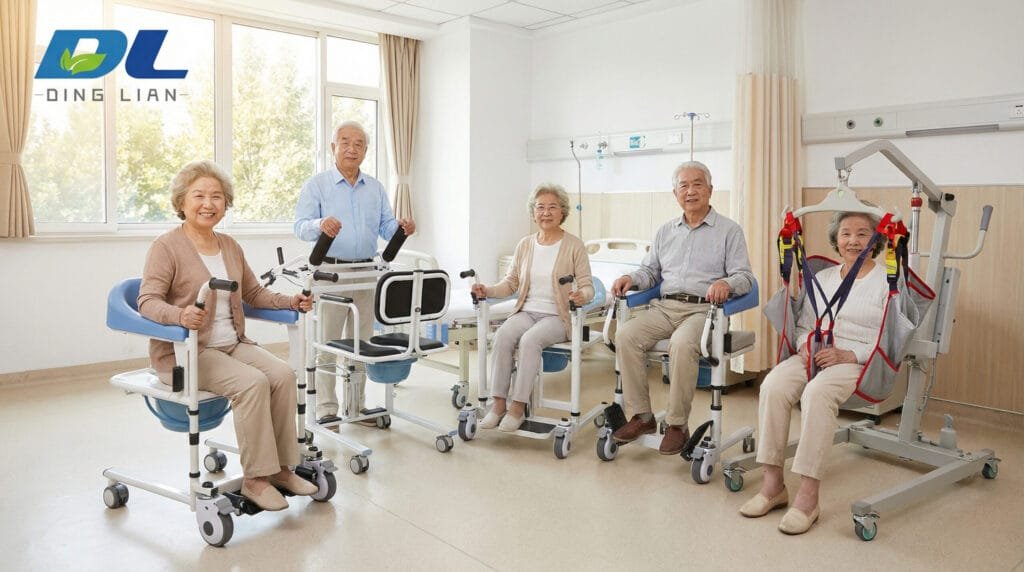
Reducing Physical Strain in Daily Patient Handling
Caregiver injuries during patient transfers are rarely caused by a single accident. They build up over time—through repeated lifting, unstable positioning, and inefficient movement. Transfer chairs address this problem by turning physical lifting into controlled movement, reducing strain while improving safety and consistency in daily care routines.
Why Do Caregiver Injuries Occur So Frequently?
In real-world care environments, transfers happen dozens of times a day. A nurse or home caregiver may assist a patient from bed to chair, chair to toilet, and back again—often without mechanical assistance.
Hidden Causes Behind Injuries
- Repetitive manual lifting exceeding safe limits
- Awkward body posture during transfers
- Patient instability or sudden weight shifts
- Slippery environments such as bathrooms
Clinical observations suggest that musculoskeletal injuries among caregivers are strongly linked to repetitive strain rather than single incidents. Over time, even small inefficiencies in transfer methods lead to chronic issues.
—How Do Transfer Chairs Actually Reduce Injury Risks?
The key difference lies in how movement is managed. Instead of lifting, caregivers guide the patient through a structured transfer process.
1. Load Redistribution
Transfer chairs carry the patient’s weight, reducing pressure on the caregiver’s back and arms.
2. Controlled Movement
With brake systems and stable frames, movement becomes predictable and secure.
3. Ergonomic Positioning
Split-seat and adjustable height designs reduce the need for bending or twisting.
Real Usage Scenario: Hospital Environment
In a hospital setting, a caregiver may handle 15–25 transfers per shift. Without equipment, each transfer involves lifting, stabilizing, and repositioning the patient manually.
Using a transfer chair changes the process. The caregiver positions the chair, locks the wheels, adjusts height, and guides the patient into place. This reduces physical strain and improves workflow efficiency.
—Real Usage Scenario: Home Care Setting
In home care, the challenge is different. Caregivers are often family members without training. Transfers happen in tight spaces like bathrooms or bedrooms.
A compact transfer chair with foldable design and silent wheels allows safe movement without requiring professional strength or technique.
—Transfer Chair vs Wheelchair vs Patient Lift
| Equipment | Main Function | Caregiver Effort | Best Use Case |
|---|---|---|---|
| Transfer Chair | Short-distance transfer | Low | Bed to toilet |
| Wheelchair | Mobility | Medium | Long distance |
| Patient Lift | Full lifting | Very low | Heavy patients |
Product-Level Example: DL-WGYW02 Transfer Chair
The DL-WGYW02 model is designed for high-frequency use. Its hydraulic lifting system allows smooth height adjustment, while the widened footrest improves stability during transfers.
With a 150kg load capacity and silent brake casters, it is suitable for both hospital and home care scenarios where reliability is critical.
—What Do Serious Buyers Evaluate?
- Structural durability (frame thickness)
- Wheel performance (rotation + braking)
- Ease of cleaning and maintenance
- OEM customization capability
👉 Read full transfer equipment guide →
—Common Mistakes Buyers Still Make
Choosing Low-Cost Options
Lower price often means weaker structure and reduced lifespan.
Skipping Sample Testing
Real performance cannot be judged from images.
—FAQ
Can one caregiver operate a transfer chair?
Yes, most designs are optimized for single-person operation.
Is it safe for home use?
Yes, especially compact models designed for small spaces.
What is the standard load capacity?
Typically 150kg.
—Final Thoughts
Transfer chairs are no longer optional—they are becoming essential in both professional and home care environments. For distributors, choosing the right product line means fewer complaints, better user satisfaction, and stronger long-term business growth.