
Ultimate Guide to Patient Transfer Equipment for Elderly Care 2026
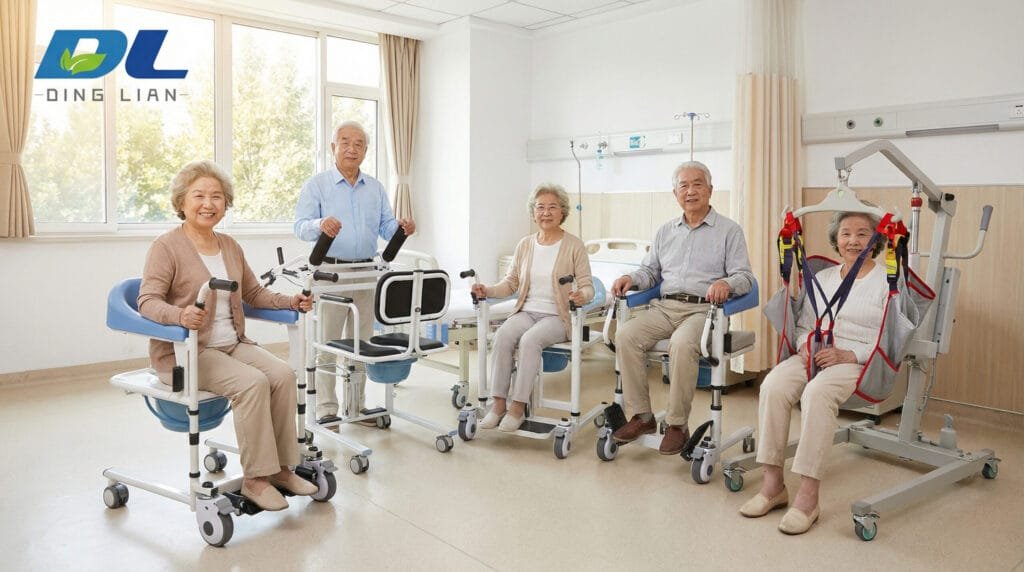
Understanding Modern Patient Transfer Systems for Safer Daily Care and Rehabilitation
Moving a person from a bed to a wheelchair sounds simple until you see how often injuries happen during the process. In hospitals, rehabilitation centers, nursing homes, and even private homes, patient transfer accidents remain one of the most overlooked safety issues. Caregivers suffer back strain, patients lose confidence after unstable transfers, and families begin searching for safer mobility solutions that reduce physical effort without sacrificing dignity. This is why demand for patient transfer equipment continues to rise globally.
Over the last few years, the market has shifted away from single-purpose mobility devices toward multi-functional systems. Buyers are no longer looking only for a transport chair. They now want a patient transfer chair that can work as a bedside commode, shower chair, wheelchair, and transfer aid at the same time. This change is especially visible in home care, elderly rehabilitation, and long-term nursing applications where space, caregiver workload, and user comfort all matter equally.
For distributors and rehabilitation equipment importers, understanding how these systems work is no longer optional. Choosing the wrong transfer solution can increase after-sales complaints, installation issues, and caregiver injuries. Choosing the right one improves user safety, simplifies caregiving, and creates long-term product demand.
👉 Explore complete transfer equipment solutions here: View Patient Transfer Equipment Collection →
Why Patient Transfer Equipment Has Become Essential
Mobility loss affects daily life much faster than many families expect. A user recovering from surgery, a stroke survivor, an elderly person with weak lower limbs, or someone living with long-term disability often struggles most during transfers rather than during sitting itself.
The highest-risk moments usually happen during:
- Bed to wheelchair transfer
- Toilet transfers
- Bathroom movement
- Shower seating transitions
- Vehicle loading assistance
According to CDC-related mobility injury reports, patient handling and transfer tasks remain one of the leading causes of musculoskeletal injuries among caregivers and healthcare staff. This explains why transfer systems are becoming standard equipment not only in medical institutions but also in home rehabilitation environments.
What buyers are discovering is simple: reducing lifting effort directly improves safety.
What Is a Patient Transfer Chair?
A patient transfer chair is a mobility device specifically designed to move individuals with limited mobility safely between locations without requiring heavy manual lifting.
Unlike a standard wheelchair, a transfer chair focuses on controlled movement during transitions.
Modern systems may include:
- Adjustable height mechanisms
- Split-seat transfer systems
- Hydraulic lifting support
- Commode openings
- Waterproof bathing compatibility
- Foldable footrests
- Locking casters
The goal is not just transportation. The goal is reducing physical transfer risk.
Different Types of Patient Transfer Equipment
One common mistake distributors make is treating all transfer devices as the same category. In reality, the market is divided into several very different usage scenarios.
| Type | Main Use | Typical Environment | Key Benefit | Buyer Priority |
|---|---|---|---|---|
| Hydraulic Patient Transfer Chair | Lifting & transfer | Home care / rehab | Reduced lifting effort | Safety |
| Commode Transfer Chair | Toilet & shower support | Bathroom use | Multi-function use | Convenience |
| Patient Transfer Wheelchair | Daily movement | Indoor mobility | Compact transfer | Maneuverability |
| Disabled Transfer Chairs | Mobility support | Long-term care | Accessibility | Comfort |
Hydraulic Patient Transfer Chairs: Why Demand Is Rising
Among all transfer systems, the hydraulic patient transfer chair category is growing especially fast because it solves one major issue: caregivers should not need to manually lift full body weight repeatedly throughout the day.
Hydraulic systems use controlled lifting assistance to raise or lower the seating position safely.
This creates several advantages:
- Reduced caregiver fatigue
- Safer bed-to-chair transfers
- Lower fall risk
- Improved toilet accessibility
- Better bathroom transfer support
For home care distributors, this category is particularly attractive because many families want safer transfer systems without moving toward expensive ceiling lift installations.
👉 Example hydraulic model: View Hydraulic Patient Transfer Chair →
Why Commode Transfer Chairs Are Growing Faster Than Expected
A few years ago, many buyers still treated commode chairs and transfer devices as separate products. Today, the market increasingly prefers integrated systems.
A modern commode transfer chair can combine:
- Transfer assistance
- Toilet accessibility
- Shower compatibility
- Wheelchair mobility
This multi-function approach matters because caregivers want fewer transfers, not more.
Every extra movement increases:
- Fall risk
- Back injury risk
- User discomfort
- Transfer time
That is why the market increasingly favors systems that combine multiple care functions into one device.
The Growing Importance of Bed to Wheelchair Transfer Safety
The phrase bed to wheelchair transfer may sound simple, but this is actually one of the most technically important parts of daily rehabilitation care.
Caregivers face several problems during these movements:
- Uneven patient balance
- Weak lower body support
- Bathroom access limitations
- Narrow household spaces
- Unsafe manual lifting posture
Traditional wheelchairs were never specifically designed for these transfer stages.
A dedicated transfer wheelchair for disabled users focuses instead on positioning, lifting support, and side accessibility.
This is one reason many rehabilitation distributors are expanding beyond standard mobility products into patient transfer systems.
Manual Transfer Systems Still Matter
While electric systems receive attention online, manual and hydraulic systems still dominate many real-world care environments.
Reasons include:
- Lower maintenance requirements
- No charging dependency
- Simpler operation
- More affordable pricing
- Easier export logistics
For many importers, especially in developing healthcare markets, manual systems remain the most practical solution.
👉 Example manual transfer model: View Manual Patient Transfer Chair →
What Buyers Look for in Patient Transfer Equipment
Experienced distributors rarely select transfer products based on appearance alone.
The real evaluation usually focuses on:
1. Weight Capacity
Transfer systems commonly range between 250–450 lbs capacity.
Stable frame structure matters more than catalog claims.
2. Seat Height Adjustability
Proper height adjustment determines whether the chair can align with:
- Beds
- Toilets
- Wheelchairs
- Sofas
3. Waterproof Performance
Bathroom transfer products require:
- Rust-resistant frames
- Drainage-friendly seating
- Anti-slip materials
4. Safety Mechanisms
Critical safety elements include:
- Locking wheels
- Stable footrests
- Safety buckles
- Anti-tip frame structure
Why Multi-Function Transfer Systems Are Becoming the Future
One major shift happening in rehabilitation equipment is the move toward integrated mobility systems.
Instead of buying:
- A shower chair
- A commode chair
- A wheelchair
- A transfer aid
Families increasingly prefer one multi-function solution.
This trend explains the rise of:
- 4-in-1 transfer chairs
- Shower commode wheelchairs
- Hydraulic mobility transfer chair systems
For distributors, this also means:
- Higher average order value
- Better differentiation
- Reduced direct price competition
International Demand and Multilingual Market Trends
Global demand for transfer solutions is no longer limited to English-speaking markets.
European distributors increasingly search using regional terminology such as chaise de transfert de patient in French markets and sedia di trasferimento paziente in Italian sourcing environments.
In many regions, aging populations and home rehabilitation programs are expanding rapidly, especially where hospital overcrowding has increased interest in home-care mobility systems.
This is also changing product expectations:
- Smaller footprint designs
- Bathroom-compatible transfer systems
- Reduced caregiver lifting effort
- Improved indoor maneuverability
Why Manufacturers Matter More Than Many Buyers Expect
A transfer chair may appear mechanically simple, but long-term reliability depends heavily on manufacturing quality.
Weak weld points, unstable casters, thin tubing, or poor wheel locks become major safety problems after repeated use.
Experienced rehabilitation distributors usually evaluate:
- Production consistency
- Frame welding quality
- Material thickness
- Assembly accuracy
- Export packaging
In practical terms, after-sales complaints often come from structural shortcuts rather than visible design differences.
Common Buyer Mistakes When Choosing Transfer Equipment
Choosing Only by Lowest Price
Low-cost products often reduce material thickness or wheel quality.
Ignoring Bathroom Compatibility
Many transfer systems fail because they do not align correctly with toilets or narrow bathroom layouts.
Overlooking Caregiver Operation
A chair that looks attractive in a catalog may still require excessive physical effort during actual transfers.
Treating All Users the Same
Stroke rehabilitation, elderly care, and disability mobility support often require very different transfer approaches.
Future Trends in Patient Transfer Equipment
The future of rehabilitation mobility is moving toward:
- Integrated multi-function systems
- Compact transfer solutions
- Bathroom-safe transfer mobility
- Reduced caregiver lifting dependency
- Improved indoor accessibility
This means the strongest growth will likely come from products that combine:
- Wheelchair functionality
- Transfer assistance
- Commode compatibility
- Shower accessibility
For importers and distributors, understanding this transition early creates a strong competitive advantage.
Frequently Asked Questions
What is the difference between a transfer chair and a wheelchair?
A wheelchair mainly supports mobility, while a patient transfer chair focuses on safe movement between surfaces such as beds, toilets, and showers.
Are hydraulic transfer chairs suitable for home care?
Yes. Hydraulic systems are especially popular in home care because they reduce lifting effort without requiring electrical installation.
Can one caregiver operate a transfer chair safely?
Most modern transfer systems are designed to support single-caregiver operation when used correctly.
What weight capacity should buyers look for?
Most buyers prefer systems supporting at least 150kg–200kg to cover broader user requirements.
Can transfer chairs be used in bathrooms?
Many commode transfer chairs are designed specifically for bathroom and shower compatibility using waterproof materials.
Why are multi-function transfer chairs becoming popular?
They reduce the number of transfers required each day while improving convenience for both users and caregivers.
Final Thoughts
The global rehabilitation market is changing quickly. Families, caregivers, hospitals, and rehabilitation centers all face the same challenge: how to move people safely while reducing physical strain and preserving independence.
This is why patient transfer equipment is no longer considered a niche category. It is becoming a core part of modern elderly care and rehabilitation systems.
Whether buyers are sourcing a patient transfer wheelchair, a hydraulic patient transfer chair, a commode transfer chair, or a compact patient transfer aid, the real priority remains the same:
Safer movement. Lower caregiver burden. Better daily quality of life.