
How Material Fatigue Develops in Elderly Care Equipment
One of the most common questions procurement teams quietly ask is this: Why does elderly care equipment that looks intact still feel less safe after a few years? The answer is rarely a single defect. In most cases, the issue is material fatigue — a slow, cumulative process that develops under repeated loading, cleaning, and daily human movement. This article explains how material fatigue forms in real care environments, and why products like bedside handrails often reveal the earliest warning signs.
Why Material Fatigue Rarely Shows Up in the First Year
If you manage long-term care facilities, hospitals, or home care distribution, you may already recognize this pattern. Equipment performs well during the first year. Load ratings are met. Surface finishes still look clean. Fasteners remain tight. Yet after thousands of daily use cycles, subtle changes begin to appear — not failures, but signals.
Material fatigue does not announce itself dramatically. It develops quietly at stress concentration points: welded joints, fastener holes, tube bends, and contact interfaces. Bedside handrails, grab rails, and support frames experience this more than most products because they interact directly with unpredictable human movement.
Common early-stage fatigue signals
- Slight flex increase when users pull themselves upright
- Micro noise at joints during repeated load cycles
- Coating wear around mounting points
- Fasteners requiring more frequent re-tightening
None of these immediately trigger replacement. But together, they explain why long-term safety perception matters as much as compliance certificates.

Why Bedside Handrails Experience Fatigue Faster Than Expected
From a procurement perspective, bedside handrails may appear simple. In reality, they endure one of the most complex load profiles in elderly care environments. Unlike static furniture, handrails absorb dynamic force — sudden pulling, uneven weight distribution, and repeated side loading.
In different regions, bedside handrails are referred to as barandillas de cama, barreiras laterais de cama, barrières de lit, حواجز السرير, or кроватные поручни. Regardless of language, the usage pattern remains the same: high-frequency contact under real human movement.
Why static load ratings are not enough
| Test Condition | Real-World Behavior |
|---|---|
| Single static load | Rare in actual care use |
| Vertical force only | Combined pull, twist, and shift |
| Short duration | Thousands of daily cycles |
This is why experienced buyers increasingly look beyond datasheets and focus on structural consistency over time.
How Manufacturing Decisions Influence Long-Term Fatigue Behavior
From our experience as a Zhongshan Dinglian manufacturer, material fatigue is not solved by thicker tubes alone. The real difference comes from how materials are selected, formed, welded, and tested as a system.
Key factors that slow fatigue development
- Controlled tube bending radius to reduce stress concentration
- Weld sequencing that avoids heat-affected weakness zones
- Surface treatment consistency to protect micro-cracks
- Fatigue-focused load testing, not just pass/fail checks
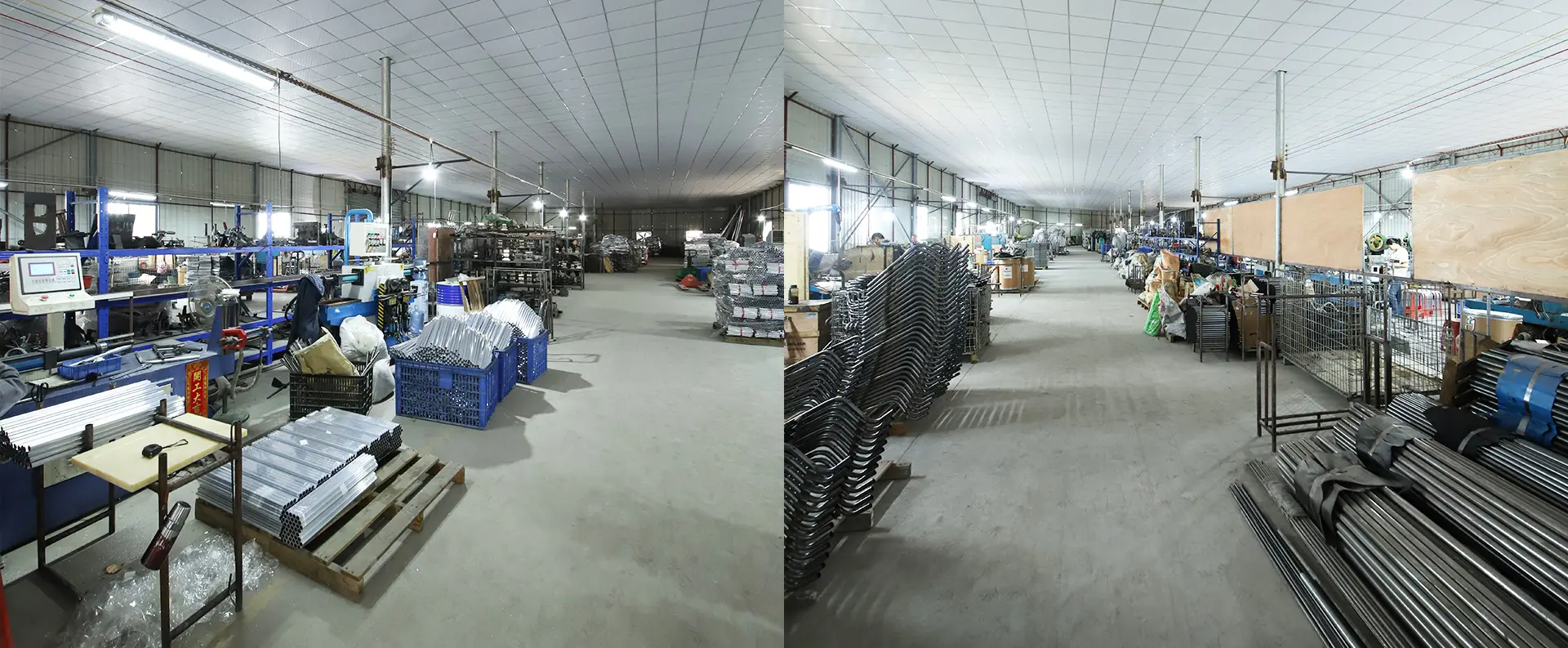
These practices are developed through repeated production cycles, not theoretical design alone. Buyers who visit our Our Equipment page often notice how testing is integrated into daily production flow rather than treated as a final step.
Who Should Pay the Most Attention to Material Fatigue
Not every buyer faces the same risk profile. Material fatigue matters most in environments where equipment is shared, cleaned frequently, and used continuously.
- Nursing homes with high resident turnover
- Hospitals with frequent bed transfers
- Home care distributors serving bariatric users
- Rental and institutional supply programs
In these settings, bedside handrails are not accessories. They are load-bearing safety interfaces. This is why many buyers eventually reassess suppliers after two or three procurement cycles.
Understanding how fatigue develops also explains why some buyers choose to work directly with a Zhongshan Dinglian factory rather than trading-only suppliers. Manufacturing consistency is difficult to replicate without direct process control.
Making Fatigue Behavior Part of Procurement Decisions
When evaluating bedside handrails or other elderly care equipment, consider asking questions that go beyond load capacity. These conversations often reveal more than test reports alone.
- How is fatigue testing conducted over repeated cycles?
- Which joints experience the highest stress in real use?
- How does cleaning frequency affect surface protection?
- What design revisions were made after field feedback?
Buyers who ask these questions early tend to experience fewer replacements, fewer complaints, and more predictable service life.
If you are exploring bedside handrail solutions, you may find it helpful to review our bedside handrail range to understand how structure and fatigue behavior are considered together.
To learn more about our background and production philosophy, visit About Us. For specific project discussions or long-term supply planning, feel free to Contact Us.