
Why Nursing Home Equipment Ages Faster Than Expected
Many nursing home operators are surprised when care equipment begins to show wear far earlier than expected. A commode chair may look solid at delivery, pass initial inspections, and even feel stable during the first months of use. Yet within one or two years, signs of aging appear: loose joints, surface corrosion, frame flex, or wheels that no longer roll smoothly. This is not a coincidence—it is the result of how equipment is truly used inside long-term care environments.
Based on feedback collected from facility managers, purchasing teams, and maintenance supervisors across different regions, early aging is rarely caused by a single defect. Instead, it is driven by daily routines, repeated stress cycles, cleaning chemistry, and design assumptions that do not fully reflect real nursing home workflows.
Daily Use Is Very Different From Lab Testing
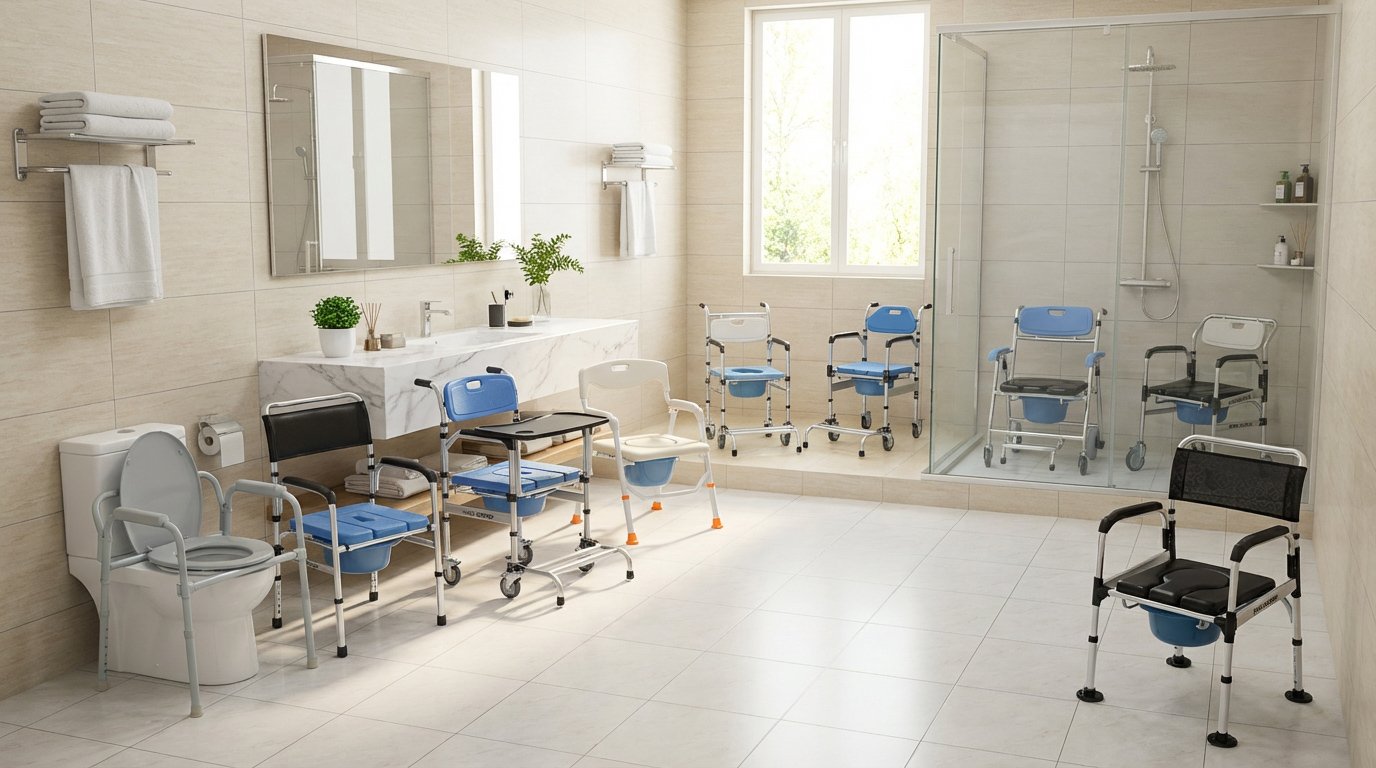
Most care equipment is tested under controlled conditions: static load, limited cycles, and clean environments. However, a nursing home places very different demands on a bedside commode chair. In one facility, the same chair may be used by multiple residents within a single shift, transferred across rooms, and adjusted dozens of times per day.
This constant movement creates what engineers call micro-fatigue. Bolts do not fail immediately, but they slowly loosen. Welded joints do not crack at once, but internal stress accumulates. Over time, what looks like “normal wear” becomes structural aging.
High-Frequency Stress Points Often Overlooked
- Armrest connections supporting lateral transfers
- Seat frame edges bearing uneven body weight
- Caster mounts absorbing rolling impact
- Backrest joints stressed during assisted sitting
In many mass-market products, these points are designed to meet minimum standards, not long-term daily repetition under real caregiver behavior.
Cleaning Routines Accelerate Material Fatigue
Another underestimated factor is cleaning. Infection control protocols require frequent disinfection, often multiple times per day. Alcohol-based sprays, chlorine solutions, and alkaline detergents gradually attack surface finishes and underlying materials.
We often hear buyers say: “The chair rusted even though it is aluminum.” In reality, aluminum frames may not rust like steel, but surface coatings, fasteners, and joint interfaces can still degrade when exposed repeatedly to aggressive cleaning agents.

What Research and Field Data Show
Studies on healthcare equipment durability consistently show that chemical exposure combined with mechanical stress reduces product lifespan more than load alone. Facilities that increased disinfection frequency during post-pandemic periods reported faster surface aging and higher maintenance costs.
This explains why equipment that looks identical on day one can age very differently depending on care protocols.
Why “Strong Looking” Chairs Still Age Early
Appearance can be misleading. Thick tubing and glossy finishes give a sense of durability, but true longevity depends on internal structure and assembly logic.
| What Buyers See | What Actually Matters |
|---|---|
| Tube thickness | Stress distribution at joints |
| Paint or coating | Surface prep and adhesion process |
| Weight capacity label | Dynamic load cycles in daily use |
How Different Markets Describe the Same Product
Global buyers often search using local terms that reflect the same functional needs:
- Spanish: silla cómoda para adultos mayores
- Portuguese: cadeira sanitária
- French: chaise percée médicale
- Russian: кресло-туалет для пожилых
- Arabic: كرسي مرحاض طبي
Despite language differences, the expectations are similar: stability, hygiene resistance, and predictable lifespan.
Why Large Buyers Look Beyond Unit Price
Procurement teams managing dozens or hundreds of units quickly realize that early aging creates hidden costs: replacement labor, downtime, resident complaints, and safety risks.
This is why many distributors and facility groups choose to work directly with Dinglian as a rehabilitation equipment manufacturer, supplier, and factory— not simply for price, but for lifecycle reliability.
Our design decisions are based on field feedback, internal stress mapping, and long-term usage simulation, supported by our documented quality systems and testing processes listed on our certificate page.
Understanding the Manufacturer Behind the Product
A product is only as reliable as the team behind it. At Dinglian, engineering, production, and quality control operate as one integrated system.
This factory-level control allows us to adjust material thickness, reinforce high-risk joints, and validate real-world performance before products reach the market.
Choosing Equipment That Ages Predictably
Early aging is not inevitable. When buyers understand how nursing home workflows truly affect equipment, they can select products designed for reality—not just appearance.
If you are evaluating commode chairs for long-term care use, or planning to expand your product range with a reliable manufacturing partner, we invite you to explore our commode chair solutions or contact our team directly.
Contact us to discuss real usage conditions, expected service life, and how to reduce replacement cycles in your facilities.