
Bed to Wheelchair Transfer: Safer Daily Movement Solutions
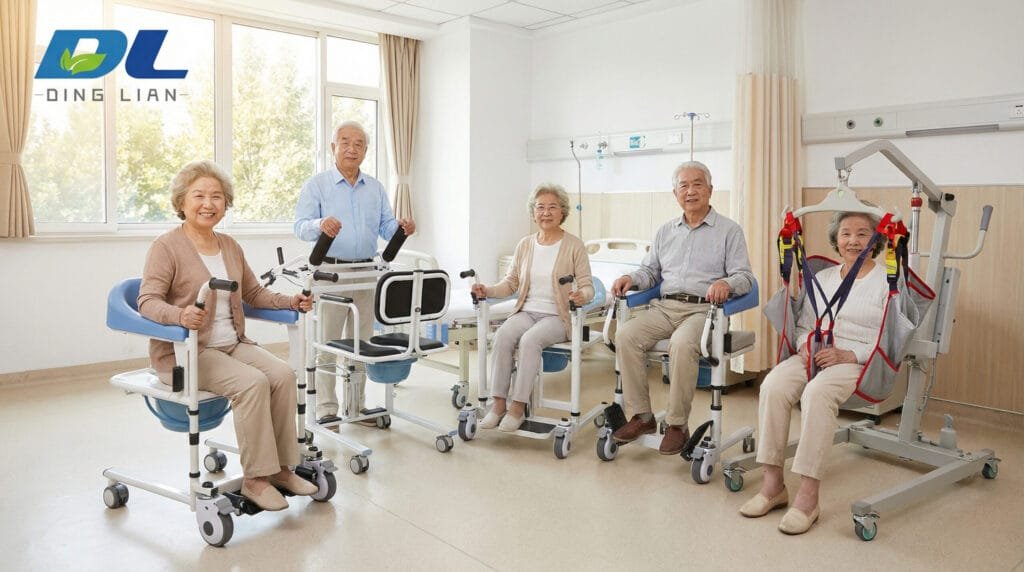
Why Safe Transfer Methods Matter More Than Most Caregivers Expect
The highest injury risk in elderly care often happens during a simple movement: getting someone from a bed into a wheelchair. Falls, shoulder strain, unstable standing posture, and caregiver back injuries usually happen in those few seconds between surfaces. That is why more distributors, rehabilitation centers, and home-care buyers are focusing on safer bed to wheelchair transfer solutions instead of relying on traditional wheelchairs alone. The right transfer equipment does not just move a patient. It reduces daily risk, lowers caregiver fatigue, and makes routine care more manageable in small homes, nursing facilities, and rehabilitation environments.
For a broader understanding of transfer systems and industry trends, read our complete guide here: Ultimate Patient Transfer Equipment Guide →
Industry Insight
According to healthcare workplace injury studies, patient handling tasks remain one of the leading causes of musculoskeletal injuries among caregivers. Transfer-related strain is especially common during bathroom and bedside movement.
The Biggest Misunderstanding About Wheelchair Transfers
Many buyers assume that if a wheelchair exists, patient transfer problems are already solved. In reality, the wheelchair itself is often not the problem. The dangerous part is the transition between surfaces.
This usually includes:
- Bed to wheelchair movement
- Wheelchair to toilet transfer
- Bathroom repositioning
- Post-surgery support transfers
- Stroke rehabilitation movement assistance
A traditional wheelchair mainly supports seated mobility. It does not always provide stable transfer positioning, caregiver leverage, or lifting assistance.
That gap is exactly why the market for patient transfer aid systems has grown rapidly over the past few years.
Buyer Advice
Distributors who add transfer equipment alongside wheelchairs usually see stronger repeat orders because transfer products solve daily caregiving problems that ordinary mobility chairs cannot fully address.
Why Are Bed Transfers So Physically Difficult?
Most transfer injuries happen because caregivers are forced to compensate for unstable movement manually.
Typical problems include:
1. Uneven Weight Distribution
Elderly users recovering from stroke, surgery, or mobility decline often cannot evenly support their body weight. During transfer movement, sudden leaning creates instability.
2. Weak Lower Limb Strength
Patients with limited standing ability usually require partial lifting support. Caregivers then compensate using their back and shoulders, which increases long-term injury risk.
3. Narrow Bedroom Layouts
Home care environments are often much smaller than hospital rooms. Tight spaces make manual turning and repositioning more dangerous.
4. Poor Wheelchair Positioning
Incorrect transfer angles increase twisting movement during transfers. This creates instability for both patient and caregiver.
What Makes Modern Transfer Systems Safer?
Modern wheelchair transfer safety systems focus less on transportation and more on controlled movement.
The goal is reducing:
- Sudden lifting force
- Unsafe twisting posture
- Unstable standing transitions
- Bathroom slipping risk
- Repeated caregiver strain
This is why many rehabilitation equipment buyers now prioritize:
- Split-seat transfer systems
- Hydraulic lifting assistance
- Locking caster systems
- Multi-function transfer chairs
- Commode-compatible transfer frames
Explore complete transfer equipment solutions here: Browse Patient Transfer Equipment →
Common Transfer Mistakes That Increase Injury Risk
After years of working with rehabilitation distributors and mobility equipment buyers, certain mistakes appear repeatedly.
Mistake 1: Treating Transfer as Purely a Mobility Issue
Many facilities still focus only on wheelchairs without considering the actual movement process between surfaces.
Correction:
Transfer safety requires positioning support, stable seating access, and controlled movement assistance.
Mistake 2: Choosing Products Only by Price
Low-cost transfer systems often reduce tubing thickness, caster quality, or frame stability.
In daily use, these shortcuts quickly become safety problems.
Mistake 3: Ignoring Bathroom Compatibility
Some transfer systems work well beside a bed but fail in narrow bathrooms.
This creates additional transfer steps, increasing fall risk.
Mistake 4: Forgetting Caregiver Ergonomics
A product may look stable on paper yet still require excessive physical effort during operation.
Caregiver Insight
Products that reduce repetitive bending and lifting usually create stronger long-term satisfaction than products focused only on appearance or compact size.
How Transfer Chairs Improve Daily Care Efficiency
One reason modern transfer systems are growing quickly is simple: they reduce the number of separate movements required each day.
A multi-function transfer chair may work as:
- Transfer wheelchair
- Commode chair
- Bathroom chair
- Shower support chair
- Mobility transfer aid
Instead of moving a patient repeatedly between different devices, caregivers can maintain one continuous support system.
This reduces:
- Transfer frequency
- Fatigue
- Fall risk
- Daily handling time
What Distributors Should Look for in Transfer Equipment
| Feature | Why It Matters | Common Low-End Issue | Buyer Priority | Recommended Standard |
|---|---|---|---|---|
| Caster Locking | Prevents movement during transfer | Weak brakes | Very High | Medical-grade locks |
| Frame Stability | Improves transfer confidence | Frame flexing | High | Reinforced structure |
| Seat Height Adjustment | Matches bed & toilet height | Limited adjustment | High | Multiple positions |
| Water Resistance | Bathroom compatibility | Rusting | Medium | Aluminum or coated steel |
| Transfer Accessibility | Safer side movement | Narrow access | High | Split-seat or open access |
Why Home Care Demand Is Changing the Market
The transfer equipment market used to focus mainly on hospitals and rehabilitation facilities.
Today, the fastest growth is happening in home care.
Several factors are driving this:
- Aging populations
- Smaller family caregiving teams
- Increased rehabilitation at home
- Pressure to reduce hospital stays
This shift changes product expectations completely.
Families now prefer transfer systems that are:
- Compact
- Bathroom-compatible
- Easy to clean
- Simple to operate
- Suitable for single-caregiver support
Why Manufacturers Matter More Than Buyers Think
In transfer equipment, production quality directly affects user safety.
A poorly welded frame or weak caster mechanism may not fail immediately. Problems usually appear after repeated daily transfers.
This is why experienced distributors increasingly evaluate:
- Tube thickness
- Welding consistency
- Caster durability
- Bathroom corrosion resistance
- Load-bearing stability
As a rehabilitation equipment manufacturer and factory with long-term export experience, Zhongshan Dinglian focuses heavily on practical daily-use performance rather than appearance-driven designs alone.
Many buyers notice the difference after comparing repeated transfer stability and frame durability over time.
Learn more about our company and production experience here: About Zhongshan Dinglian →
The Future of Caregiver Transfer Support
The future of caregiver transfer support will likely focus on reducing physical dependency without increasing operational complexity.
The strongest-performing products over the next few years will probably combine:
- Transfer mobility
- Bathroom accessibility
- Commode compatibility
- Compact home-care dimensions
- Safer caregiver operation
Distributors who understand this transition early usually position themselves more successfully in rehabilitation and elderly-care markets.
Final Thoughts
Safe transfers are no longer a secondary consideration in rehabilitation care. They are now one of the most important parts of daily mobility management.
Whether the environment is a nursing home, rehabilitation center, hospital, or private home, reducing transfer strain improves both patient safety and caregiver sustainability.
That is why demand for advanced patient transfer aid systems, transfer wheelchairs, and multi-function mobility solutions continues growing worldwide.
If you are sourcing rehabilitation transfer products for distribution or project procurement, choosing the right manufacturer matters just as much as choosing the right design.
Contact our team to discuss transfer equipment solutions for your market: Talk With Our Transfer Equipment Team →
YOAST SEO
Focus Keyphrase:
bed wheelchair transfer safety
Slug:
bed-to-wheelchair-transfer-solutions
Meta Description:
Learn safer bed to wheelchair transfer methods, caregiver support solutions, and patient transfer equipment for daily mobility care.