
Bathroom and Toilet Transfer Chairs for Elderly Users
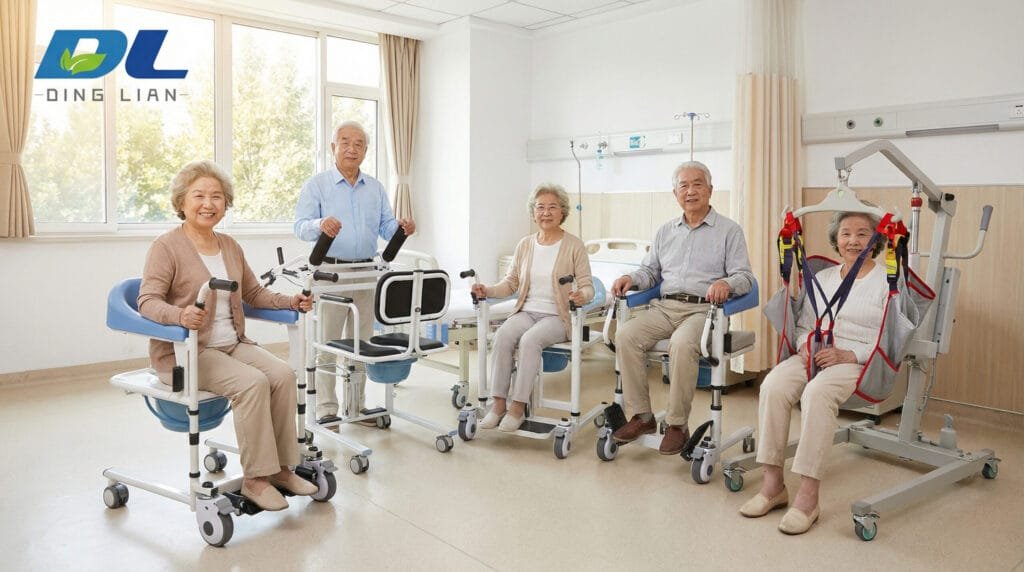
Why Bathroom Transfers Are One of the Highest-Risk Moments in Elderly Care
For many elderly users, the most dangerous movement of the day is not walking across a room. It is moving safely between the toilet, shower area, wheelchair, and bed. Wet floors, narrow bathroom layouts, weak lower-limb strength, and caregiver lifting fatigue all increase the risk of falls during bathroom transfers. This is exactly why demand for the commode transfer chair, toilet transfer chair, and bathroom transfer chair market continues growing in rehabilitation centers, nursing homes, and home-care environments worldwide.
Today’s buyers are no longer looking for simple bedside commodes. They increasingly prefer multi-function systems that combine transfer support, shower access, mobility assistance, and toilet positioning into one safer daily-care solution.
For a broader understanding of transfer equipment systems and industry trends, explore our full guide here:
Read the Complete Patient Transfer Equipment Guide →
Industry Insight
Bathroom-related falls remain one of the leading causes of injury among elderly users. Transfer stability and caregiver support are now becoming central purchasing priorities for rehabilitation distributors and care facilities.
The Real Problem: Why Bathroom Transfers Become Unsafe
Many people assume bathroom accidents happen because users lose balance while walking. In reality, the highest-risk moment often occurs during transfer movement itself.
Common high-risk situations include:
- Wheelchair to toilet transfers
- Shower seating repositioning
- Bedside commode movement
- Standing pivot transfers
- Caregiver-assisted lifting
Traditional wheelchairs are not specifically designed for wet environments or close-range transfer positioning. This creates instability in small bathroom spaces.
That gap explains why the shower transfer wheelchair and multi-function transfer chair category has expanded rapidly over recent years.
Why Standard Wheelchairs Often Fail in Bathroom Scenarios
A standard wheelchair mainly focuses on mobility transportation. Bathroom care requires something very different.
Caregivers need:
- Closer toilet positioning
- Stable caster locking
- Corrosion resistance
- Easy cleaning surfaces
- Transfer accessibility
Without these features, caregivers often improvise movement manually, increasing both patient and caregiver injury risk.
Buyer Advice
Experienced importers increasingly prefer transfer systems that combine mobility, commode, and shower functionality because they reduce repeated daily transfers and simplify caregiving routines.
What Makes a Good Commode Transfer Chair?
A reliable commode transfer chair is not just a toilet chair with wheels. It must support safe positioning throughout the entire transfer process.
Strong-performing models usually focus on:
1. Stable Transfer Positioning
The frame structure should reduce wobbling during movement between bed, toilet, and shower.
2. Waterproof & Rust-Resistant Materials
Bathroom environments expose products to moisture daily. Powder-coated steel or aluminum alloy structures usually perform better long term.
3. Locking Casters
Wheel locking stability directly affects transfer safety. Weak brakes often become one of the biggest hidden safety risks.
4. Height Compatibility
Toilet alignment matters. Poor seat height matching increases lifting difficulty during transfers.
5. Easy Cleaning Design
Smooth surfaces and removable buckets simplify maintenance in both institutional and home-care environments.
How Bathroom Transfer Chairs Reduce Caregiver Fatigue
Caregiver exhaustion is rarely caused by one large movement. It usually develops through repeated smaller transfers throughout the day.
This includes:
- Toilet repositioning
- Shower movement
- Standing support
- Wheelchair alignment
- Post-cleaning repositioning
Modern bathroom transfer chair systems reduce these repetitive strain points by simplifying the movement process.
Instead of transferring between multiple devices, users remain within one integrated support system.
Why Multi-Function Transfer Systems Are Becoming More Popular
The market has clearly shifted away from single-function products.
Today’s rehabilitation buyers increasingly want:
- Transfer wheelchair functionality
- Shower compatibility
- Commode accessibility
- Indoor mobility support
- Compact bathroom maneuverability
This is why the toilet transfer chair category is now closely connected with transfer wheelchairs and shower mobility systems.
| Feature | Why It Matters | Common Market Problem | Buyer Priority | Recommended Solution |
|---|---|---|---|---|
| Caster Stability | Safer transfers | Weak locking wheels | Very High | Medical-grade brakes |
| Water Resistance | Bathroom durability | Rusting frames | High | Aluminum or coated steel |
| Seat Access | Simplifies positioning | Narrow openings | High | Open or split-seat design |
| Transfer Width | Bathroom accessibility | Oversized frame | Medium | Compact structure |
| Cleaning Convenience | Daily hygiene | Complex maintenance | Medium | Removable bucket system |
Why Home Care Is Changing Product Design
One major industry shift is happening outside hospitals.
Home-care demand is now shaping transfer product development more than ever before.
Families want solutions that:
- Fit narrow bathrooms
- Reduce lifting strain
- Work without complicated installation
- Support shower and toilet use together
- Can be operated by one caregiver
This has accelerated demand for compact shower transfer wheelchair systems and multi-purpose transfer chairs.
Explore more bathroom and transfer solutions here:
Browse Patient Transfer Equipment →
What Experienced Buyers Usually Check Before Ordering
Professional distributors rarely evaluate transfer chairs based only on appearance or catalog images.
They usually inspect:
- Frame thickness
- Wheel quality
- Bathroom corrosion resistance
- Bucket stability
- Load-bearing performance
- Transfer smoothness
Products that perform well during repeated daily transfers generally create lower complaint rates and stronger long-term customer retention.
| Buyer Concern | Common Low-End Issue | Long-Term Impact | Professional Recommendation |
|---|---|---|---|
| Caster Durability | Brake failure | Unsafe transfers | Use reinforced medical casters |
| Bathroom Corrosion | Rusting frame | Short lifespan | Choose coated steel or aluminum |
| Transfer Stability | Frame wobble | Higher fall risk | Reinforced support structure |
| Cleaning Maintenance | Hard-to-clean surfaces | Poor hygiene | Smooth removable components |
Why Manufacturer Experience Matters in Transfer Products
Bathroom transfer equipment may appear simple, but daily long-term usage quickly exposes production weaknesses.
Poor welding quality, unstable wheel systems, weak seat supports, or inadequate waterproof treatment usually become visible after repeated transfers.
This is why experienced rehabilitation distributors increasingly prefer working with manufacturers that understand real transfer environments rather than only catalog design trends.
As a rehabilitation equipment manufacturer and factory with long-term export experience, Zhongshan Dinglian focuses heavily on practical caregiver usability, stable frame structure, and long-term bathroom durability.
Learn more about our manufacturing experience here:
About Zhongshan Dinglian →
The Future of Bathroom Transfer Solutions
The future of elderly mobility support is moving toward integrated transfer systems instead of isolated single-purpose products.
The strongest demand growth is expected in products combining:
- Toilet accessibility
- Shower compatibility
- Transfer support
- Indoor mobility
- Caregiver-friendly operation
For distributors, this creates opportunities to move beyond traditional commode products into higher-value rehabilitation transfer solutions.
Final Thoughts
Bathroom transfers are one of the most sensitive and physically demanding parts of daily elderly care.
Choosing the right bathroom transfer chair, commode transfer chair, or shower transfer wheelchair can significantly improve safety, reduce caregiver strain, and simplify long-term rehabilitation support.
As global demand for safer home-care solutions continues growing, buyers who understand real transfer challenges will be better positioned to choose products that deliver long-term value instead of short-term convenience.
If you are sourcing transfer systems for rehabilitation distribution or project procurement, contact our team here:
Talk With Our Transfer Equipment Team →