
Commode Chair Guide: Types, Features and Buying Tips
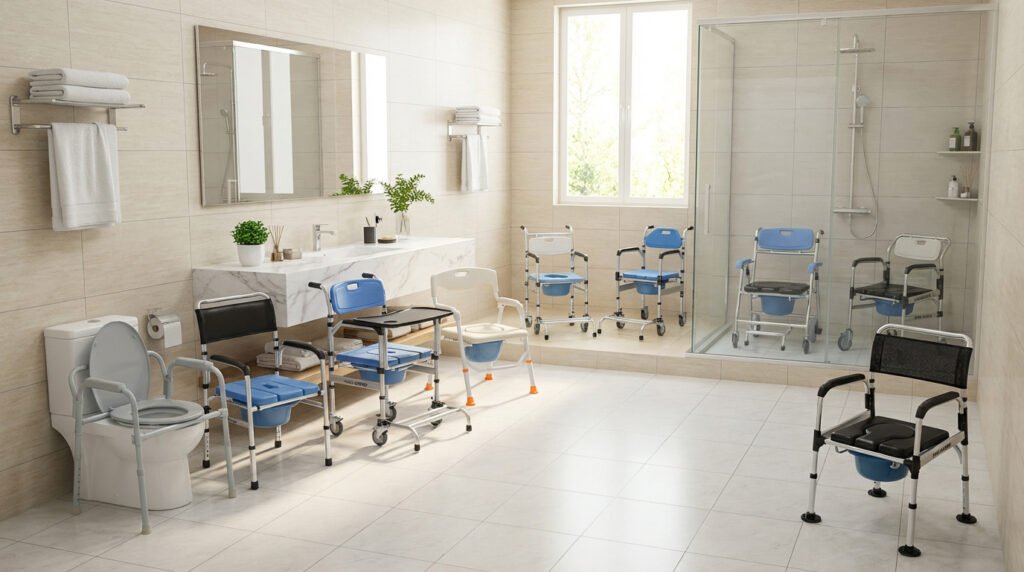
Complete Guide to Commode Chairs: Types, Features, and Practical Buying Advice for Medical Equipment Buyers
For hospitals, nursing homes, and home-care distributors, choosing the right commode chair is less about simply providing a portable toilet and more about preventing falls, improving patient dignity, and reducing caregiver workload. In real care environments, a properly designed chair can significantly lower the risks associated with nighttime toileting while making patient transfer easier for caregivers.
According to the World Health Organization, falls are one of the leading causes of injury among elderly populations globally. Toileting trips during the night are frequently involved in these accidents. That is why a stable and accessible toilet chair for patients is considered essential equipment in many care facilities.
This guide explains how commode chairs work, the main product types available in the market, and what experienced procurement managers usually consider before selecting a supplier.
What Exactly Is a Commode Chair and Why Is It Used So Widely?
A commode chair is a portable toileting device designed for individuals who cannot safely reach a traditional bathroom. The chair includes a seat opening and a removable bucket beneath it, allowing the user to relieve themselves safely without walking long distances.
Because of this simple but effective design, portable commode chairs are widely used in hospitals, rehabilitation centers, assisted living facilities, and home-care environments.
Modern designs often serve several purposes simultaneously:
- Portable bedside toilet for limited mobility patients
- Raised toilet support when placed over a standard toilet
- Transfer support seat during rehabilitation
- Temporary hygiene solution after surgery
Data from the National Institute on Aging indicates that reduced mobility affects a significant percentage of seniors after hospitalization. As a result, equipment such as bedside commode chairs has become standard in both medical and home-care settings.
Why Do Hospitals and Nursing Homes Prefer Bedside Commode Chairs?
When procurement managers evaluate assistive equipment, they usually focus on three factors: patient safety, caregiver efficiency, and overall usability. A well-designed medical commode chair contributes to each of these areas.
Reducing Fall Risks
Nighttime toileting is a common cause of falls among elderly patients. A nearby bedroom commode chair allows users to avoid walking long distances in low-light conditions.
Supporting Caregivers
In nursing homes, caregivers may assist many residents during the night. Using wheeled commode chairs or adjustable designs helps reduce the physical strain associated with patient transfers.
Maintaining Patient Dignity
For elderly individuals, independence in daily activities is closely tied to dignity and mental well-being. A stable disabled toilet chair enables patients to manage toileting with minimal assistance.
Main Types of Commode Chairs Buyers Should Understand
Different environments require different product designs. Experienced buyers normally select models according to patient mobility level, space constraints, and care procedures.
| Type | Typical Application | Main Advantage | Buyer Consideration |
|---|---|---|---|
| Bedside Commode Chair | Hospital wards / bedrooms | Quick access at night | Bucket capacity and stability |
| Wheeled Commode | Hospitals / nursing homes | Easy patient transport | Wheel brakes and durability |
| Foldable Toilet Chair | Home care / travel | Space saving storage | Frame strength after folding |
| Bariatric Commode | Obese patient care | High weight capacity | Seat width and reinforced frame |
Key Features Professional Buyers Usually Compare
Price is rarely the only consideration when purchasing portable toilet chairs. Procurement teams usually evaluate structural design, durability, and maintenance convenience.
Frame Strength
The frame determines the overall safety of the chair. High-quality models typically use reinforced aluminum or steel tubing to maintain stability during patient transfer.
Weight Capacity
Standard models support around 120–150 kg. Facilities serving bariatric patients often require bariatric commode chairs designed for significantly higher loads.
Adjustable Height
Height adjustment allows the seat to match the patient’s bed height or toilet height. This small feature can significantly improve daily usability.
Removable Bucket Design
A removable bucket with lid simplifies cleaning and improves hygiene management in high-frequency environments.
How Buyers Evaluate a Reliable Commode Chair Manufacturer
Selecting a dependable commode chair manufacturer is just as important as selecting the product itself.
Experienced distributors usually evaluate suppliers based on several practical factors:
- Stable production capacity
- Consistent quality inspection procedures
- Compliance with international medical equipment standards
- Reliable export experience
For example, Zhongshan Dinglian has more than two decades of experience as a rehabilitation equipment manufacturer and factory. Long-term manufacturing experience often translates into more stable product quality and better understanding of international market requirements.
Final Thoughts for Medical Equipment Distributors
Although a commode chair may appear to be a simple product, it plays a critical role in daily patient care. The right design improves safety, reduces caregiver workload, and supports patient dignity.
For distributors and procurement managers, evaluating structural design, safety features, and manufacturing reliability helps ensure that the selected product meets real clinical needs.
Working with an experienced commode chair factory such as Zhongshan Dinglian allows buyers to obtain products designed with practical care environments in mind.