
Wheeled Commode Chairs: Mobility and Convenience for Elderly and Patients
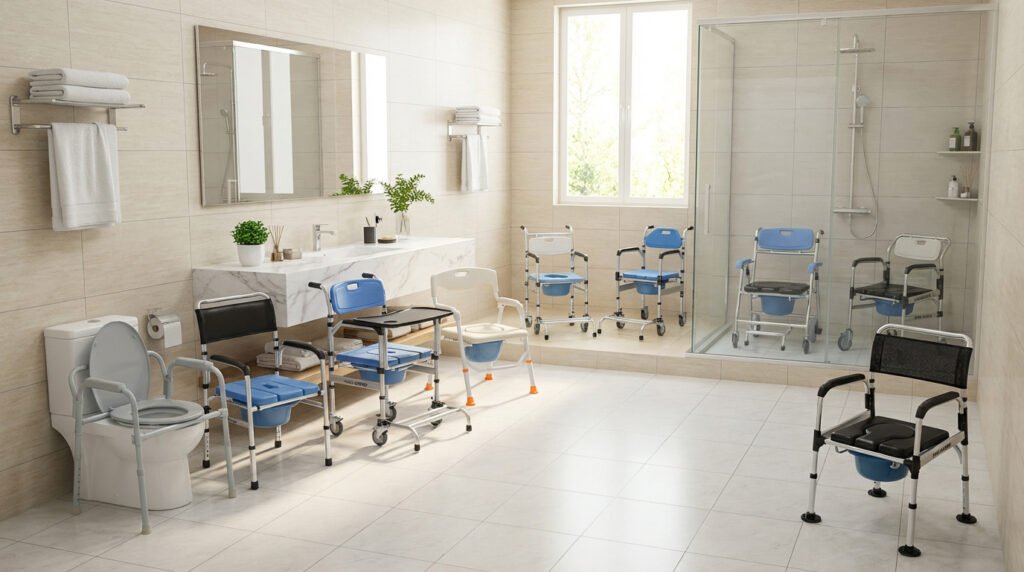
Wheeled Commode Chairs: Mobility and Convenience for Elderly and Patients
In many hospitals and long-term care facilities, transferring patients safely between bed, toilet, and shower is one of the most frequent daily tasks. A wheeled commode chair solves this challenge by combining a mobile transport chair with a portable toilet. Instead of requiring patients to walk or be lifted repeatedly, caregivers can move the chair directly to the desired location. For a complete comparison of all commode chair types, see our Complete Commode Chair Guide.
This simple design significantly reduces fall risks, improves patient comfort, and saves time for caregivers. As a result, rolling commodes are now widely used in rehabilitation centers, nursing homes, and home-care environments.
For distributors and medical equipment buyers, understanding how these chairs differ from standard bedside models is important. Our full Commode Chair Guide provides detailed comparisons and practical purchasing advice.
What Is a Wheeled Commode Chair?
A wheeled commode chair is a mobility-assisted toileting chair equipped with four wheels, allowing caregivers to move patients safely from one location to another. It functions both as a transport chair and a portable toilet.
The chair typically includes:
- Lockable caster wheels
- Removable commode bucket
- Supportive armrests
- Durable frame structure
- Water-resistant seat materials
Because of this design, many facilities use wheeled commodes as multi-purpose patient transport equipment.
According to the International Journal of Nursing Studies, patient transfer activities represent one of the most physically demanding tasks for caregivers. Equipment that reduces lifting requirements can significantly lower workplace injury rates.
Why Are Rolling Commode Chairs Popular in Hospitals?
When evaluating rehabilitation equipment, healthcare facilities usually prioritize efficiency and safety. A rolling commode chair offers advantages in both areas.
Improved Patient Mobility
Patients recovering from surgery or injury often cannot walk long distances. A mobile toilet chair with wheels allows caregivers to move the patient directly from bed to bathroom.
Reduced Caregiver Strain
Manual lifting during transfers can lead to musculoskeletal injuries among healthcare workers. Mobile commode chairs reduce lifting frequency by enabling smoother patient movement.
Multi-Purpose Function
Many models can serve as:
- Bedside toilet chair
- Transport chair
- Shower commode chair
- Over-toilet assist chair
This flexibility is why wheeled commode chairs are frequently included in hospital procurement lists. For a broader understanding of bedside, foldable, and portable options, check our Complete Commode Chair Guide.
Common Types of Wheeled Commode Chairs
| Type | Primary Use | Main Advantage | Buyer Consideration |
|---|---|---|---|
| Standard Wheeled Commode | Hospitals and nursing homes | Easy patient transport | Wheel locking system |
| Shower Commode Chair | Bathroom and hygiene care | Waterproof materials | Rust-resistant frame |
| Heavy Duty Rolling Commode | Bariatric patients | Higher weight capacity | Seat width and frame reinforcement |
| Foldable Wheeled Commode | Home care and transport | Easy storage | Structural durability |
Key Features Buyers Should Evaluate
Wheel Quality and Braking System
Caster wheels should rotate smoothly while also providing reliable locking mechanisms. Poor-quality brakes can create safety risks during patient transfers.
Frame Strength
High-quality models typically use aluminum alloy or stainless steel frames. These materials balance durability and corrosion resistance.
Seat Comfort
Seats are often made from PU padding or molded plastic. Comfortable seating is important for elderly patients who may sit for longer periods.
Bucket Accessibility
The commode bucket should be removable without disturbing the patient. Rear-access designs are often preferred in professional care facilities.
How Medical Equipment Buyers Select a Reliable Manufacturer
Beyond product features, experienced distributors also evaluate the capabilities of the commode chair manufacturer. For a detailed comparison of all types and features, refer to the Complete Commode Chair Guide.
Some practical procurement considerations include:
- Stable production capacity
- Compliance with international safety standards
- Quality inspection procedures
- Long-term export experience
Manufacturers with extensive industry experience often understand the practical needs of hospitals and rehabilitation centers better than newer suppliers. Zhongshan Dinglian operates as a rehabilitation equipment manufacturer and factory with more than 20 years of experience producing wheeled commode chairs.
Real Procurement Insights from Healthcare Distributors
Large medical equipment distributors often evaluate rolling commode chairs based on real operational experience rather than simple specifications.
- Durability under high daily usage
- Ease of cleaning for infection control
- Availability of spare wheels and parts
- Packaging efficiency for international shipping
- Compatibility with different bathroom layouts
A supplier who understands these operational requirements can become a long-term partner for distributors rather than just a product provider.
Final Thoughts
A wheeled commode chair may seem like a simple mobility aid, but in daily healthcare environments it plays an important role in patient safety and caregiver efficiency.
By combining mobility with toileting functionality, rolling commode chairs help reduce fall risks, simplify patient transfers, and improve comfort for individuals with limited mobility.
For distributors and healthcare equipment buyers, working with an experienced commode chair factory such as Zhongshan Dinglian ensures that the product design reflects real-world care environments and long-term durability requirements. For more detailed comparisons and guidance on bedside, foldable, and bariatric commodes, visit our Complete Commode Chair Guide.