
Rollator Demand in the Middle East Is Growing What Is Driving This Shift
Across the Middle East, conversations around elderly mobility are changing quietly but steadily. Distributors, care providers, and project buyers are no longer asking whether mobility aids are necessary. Instead, discussions increasingly focus on which type of walking support truly fits daily life beyond hospitals.
In daily communication with families, caregivers, and rehabilitation professionals, the same concerns surface repeatedly. How can older adults walk safely outdoors without relying on constant assistance? Is there a practical option between a basic walker and a wheelchair that still preserves independence? These real-life questions explain why rollator demand in the Middle East is growing.
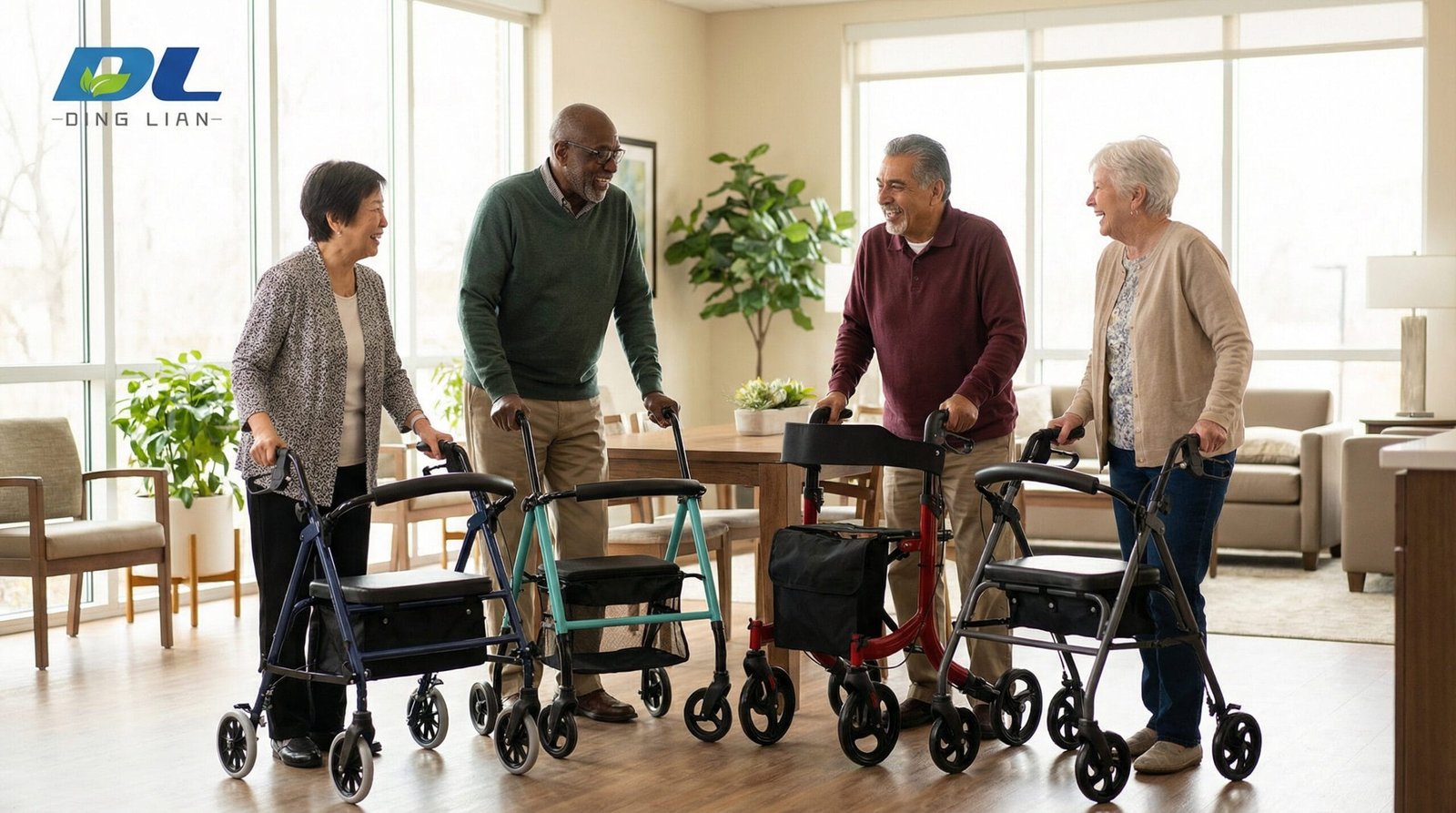
The Mobility Gap Buyers Are Actively Addressing
In many Middle Eastern countries, family-based care remains the foundation of elderly support. Mobility equipment must function not only inside bedrooms or bathrooms, but also in courtyards, community spaces, shopping centers, and places of worship. This reality exposes a clear gap between simple indoor walkers and wheelchairs, which many users associate with a loss of independence.
Rollators fit directly into this gap. Across different markets they are known by different names — andador con ruedas in Spanish-speaking regions, déambulateur à roulettes in French, andador com rodas in Portuguese, роллатор in Russian, and commonly described in Arabic as مشاية بعجلات مع مقعد. Regardless of language, expectations remain consistent: stable walking support that allows rest, control, and confidence in public environments.
Why Rollators Are Replacing Basic Walkers in Daily Use
Traditional walkers provide vertical support, but they require continuous upper-body effort. In warm climates, this quickly leads to fatigue. Rollators introduce wheels, hand brakes, and integrated seating, allowing users to move longer distances and pause safely when needed.
- Reduced physical strain during extended walking
- Safe resting options in public spaces
- Greater confidence during independent movement
These differences explain why rehabilitation professionals increasingly recommend rollators for users who are not wheelchair-dependent but experience balance or endurance limitations.
Key Factors Driving Rollator Demand in the Middle East
An Aging Population That Remains Socially Active
Life expectancy across several Gulf countries has increased steadily. Many individuals aged 60 and above remain socially active, attending religious gatherings and family events. Mobility aids that fold easily, fit into vehicles, and perform reliably on smooth outdoor surfaces align better with these routines than fixed walking frames.
Expansion of Home Care and Private Rehabilitation Services
As healthcare services extend beyond hospitals, home care providers and private clinics are sourcing broader mobility solutions. Rollators are often selected alongside other daily care products, which is why buyers reviewing walking aid solutions increasingly evaluate suppliers based on consistency across product categories.
Preference for Long-Term Reliability Over Short-Term Cost
Market feedback consistently shows that buyers in the Middle East prioritize durability and stability. Aluminum frames, dependable braking systems, and serviceable components are valued because mobility equipment is expected to remain functional for years.
How Procurement Teams Evaluate Rollator Suppliers
In procurement discussions, buyers focus less on surface features and more on how rollators perform after months of daily use.
| Evaluation Area | Key Consideration |
|---|---|
| Frame Stability | Handles uneven weight shifts safely |
| Brake Performance | Maintains responsiveness over time |
| Ease of Folding | Allows independent handling |
| Supply Support | Availability of parts and technical response |
These considerations explain why many buyers prefer working directly with an experienced manufacturer or factory rather than short-term trading channels.
Why Buyers Choose Dinglian as a Supply Partner
At Dinglian (Zhongshan) Rehabilitation Equipment Co., Ltd., our role as both a long-term manufacturer and supplier allows us to focus on practical performance rather than surface claims. Buyers visiting our production and testing facilities often look for consistency in structure, assembly, and quality control.
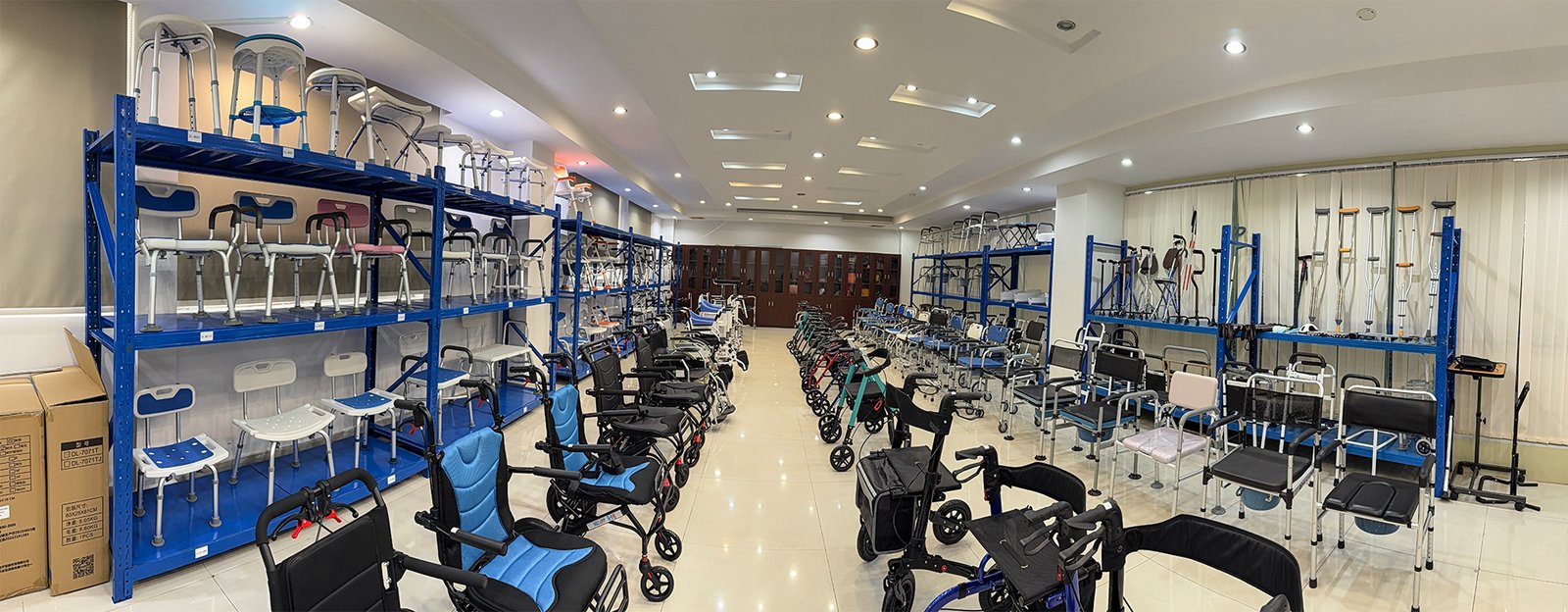
Our product development is guided by how users actually move — how they start walking, pause, turn, and regain balance. This practical perspective is shaped through long-term collaboration between engineering, testing, and customer feedback teams, and is further reflected in our company background shared on the About Us page.
Observed Outcomes From Real Market Use
Distributors report that rollators with stable seating and reliable braking systems experience fewer returns and stronger repeat demand. Care providers observe improved confidence among elderly users and fewer incidents during outdoor mobility.
These outcomes matter because mobility influences more than physical movement. Maintaining independence in daily routines supports emotional well-being and reduces caregiver strain — priorities consistently emphasized by families and care institutions.
Looking Ahead
Rollator demand in the Middle East reflects long-term demographic change and evolving expectations around aging with dignity. Buyers who evaluate products based on real-world performance — and who work with experienced factories — are better positioned for sustainable growth.
If you are reviewing rollator supply options or exploring cooperation opportunities, we welcome direct discussion. Please visit our Contact Us page to connect with our team.