
How Small Design Details Extend Equipment Service Life
In care facilities, equipment failure rarely comes from one dramatic overload. More often, it is the result of hundreds of small design decisions that quietly affect durability over time. This is especially true for shower chairs, which are exposed daily to moisture, cleaning chemicals, weight shifts, and caregiver handling. Buyers often focus on frame material or stated weight capacity, but real service life depends on much finer details.
Why Service Life Is Decided by Details, Not Specifications
Across nursing homes, hospitals, and home care environments, similar feedback appears repeatedly in buyer interviews and facility maintenance reports. Equipment that looks strong on paper can still age faster than expected. The reason is simple: specifications describe limits, while design details determine behavior under repetitive use.
In many regions, a shower chair may also be called silla de ducha (Spanish), cadeira de banho (Portuguese), chaise de douche (French), душевой стул (Russian), or كرسي الاستحمام (Arabic). Despite different names, the real-world stresses are remarkably similar.
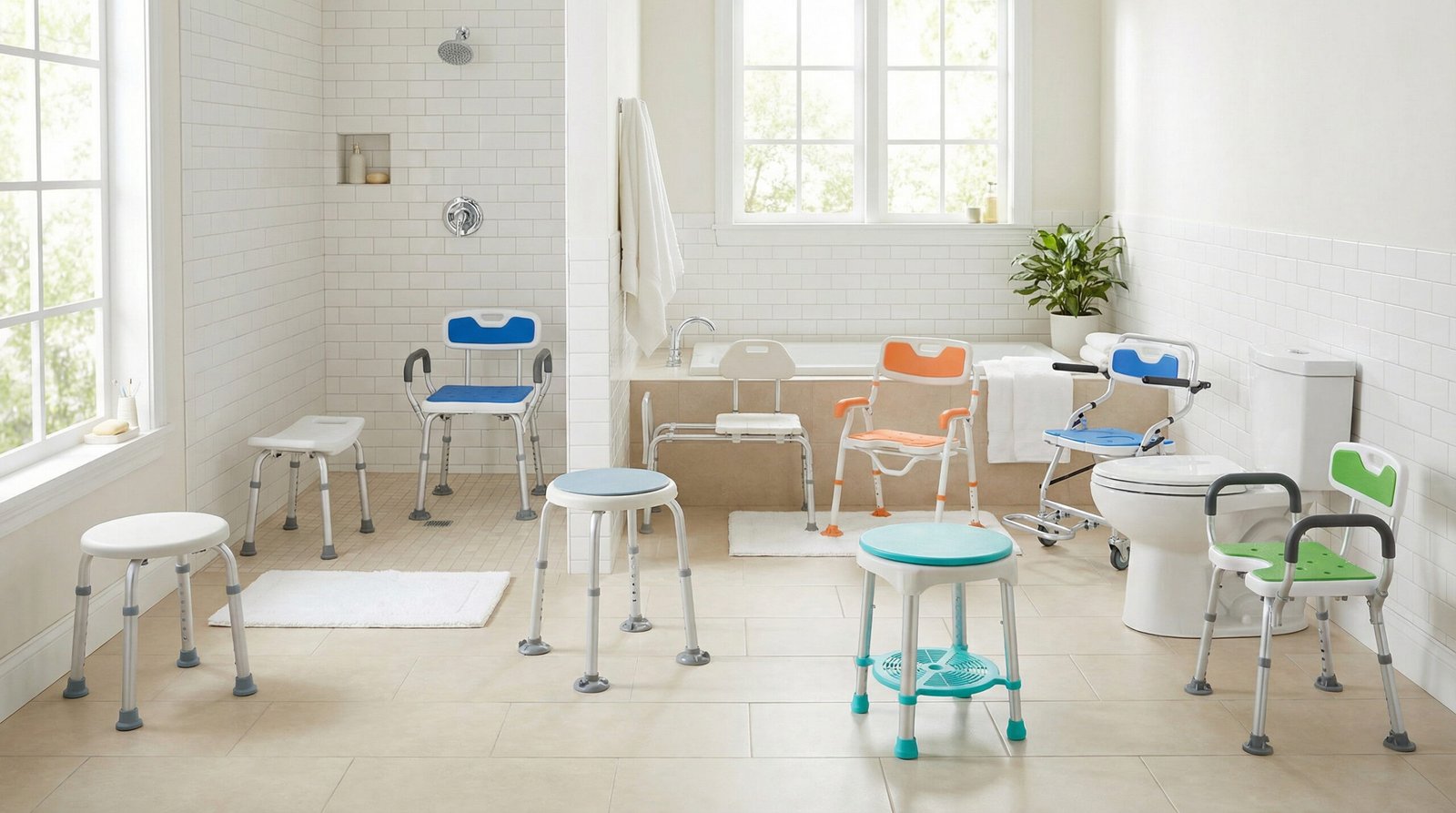
Small Design Choices That Quietly Extend Equipment Life
1. Load Distribution at Contact Points
One of the earliest failure points in shower seating is not the main frame, but the joints where legs meet the seat structure. Chairs that concentrate load on narrow weld zones tend to develop micro-cracks after repeated transfers. Designs that spread force across wider brackets or reinforced sleeves show noticeably longer service life in institutional use.
2. Drainage Geometry and Moisture Escape
Standing water accelerates corrosion and material fatigue. Subtle seat curvature, drainage slot placement, and tube venting all influence how quickly moisture exits after use. In facilities where chairs are cleaned several times per shift, poor drainage can shorten usable life by years.
3. Surface Transitions and Cleaning Resistance
Research published in infection control journals consistently shows that aggressive disinfectants degrade plastics and coatings over time. Chairs with smooth surface transitions and fewer sharp edges resist chemical wear better than complex molded shapes. This becomes critical in environments with strict hygiene protocols.
What Procurement Teams Often Learn Too Late
Procurement teams frequently report that early aging appears first as wobble, noise, or loosened fasteners—not visible fractures. These symptoms usually trace back to overlooked design details rather than material grade alone.
| Design Detail | Long-Term Impact |
| Reinforced stress zones | Reduced joint fatigue over repeated transfers |
| Non-absorbent seat materials | Lower degradation from cleaning chemicals |
| Stable foot geometry | Less frame torsion during patient movement |
How Design Decisions Reflect Manufacturing Philosophy
At Dinglian (Zhongshan) Rehabilitation Equipment Co., Ltd., design reviews start with field feedback rather than catalog benchmarks. As a rehabilitation equipment manufacturer with long-term facility clients, product development focuses on stress repetition rather than static testing alone.
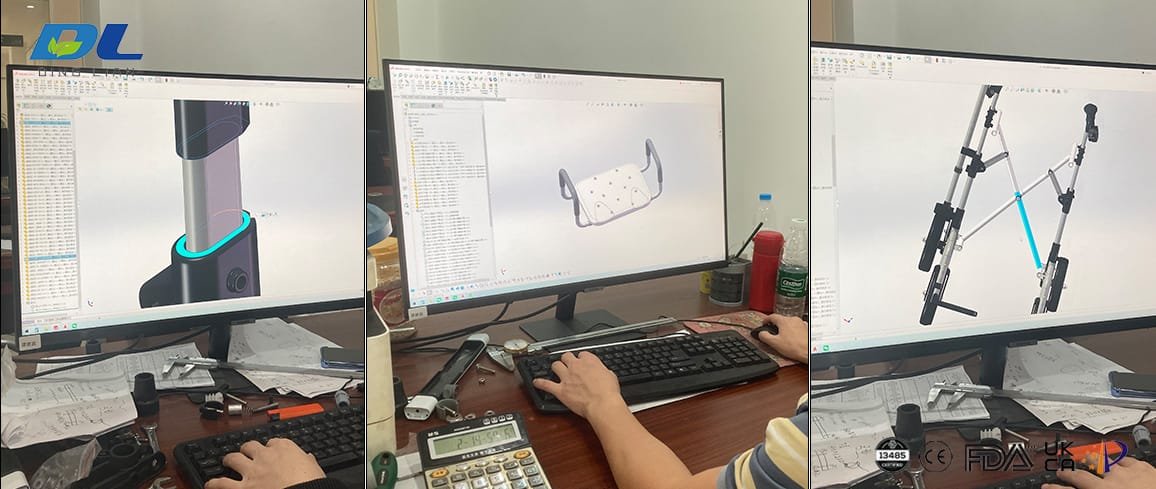
Prototype validation includes simulated cleaning cycles, uneven load shifts, and caregiver-assisted transfers that mirror daily operations. This approach aligns closely with insights published in ergonomic and rehabilitation engineering studies, which emphasize repetitive motion as the dominant aging factor in care equipment.
Why Buyers Compare More Than Price
Experienced buyers rarely choose equipment based solely on unit cost. Instead, they evaluate replacement frequency, maintenance workload, and user complaints. Small design improvements—such as reinforced fastener zones or corrosion-resistant interfaces—can reduce total ownership cost significantly over multi-year use.
This is especially relevant when comparing entry-level products with professional-grade options found in categories like shower chairs and other daily-use seating.
Connecting Design to Real Facility Outcomes
Facilities that standardize on thoughtfully designed equipment report fewer service interruptions and lower staff frustration. Reduced downtime directly affects care quality, particularly for elderly users who rely on consistent routines.
Buyers evaluating manufacturing transparency often review production capabilities and testing environments, which is why access to information such as our equipment and quality systems matters during supplier selection.
Choosing a Long-Term Partner
Beyond product drawings, long-term durability reflects how closely a supplier understands daily care realities. Learning more about us provides insight into how field experience, research input, and manufacturing discipline come together in practical design.
For procurement teams assessing specific use cases or customization needs, direct discussion often reveals more than specification sheets alone. You are welcome to contact us to explore how small design details can translate into measurable service life gains.