
Why Joint Design Matters More Than Frame Thickness
In many purchasing discussions, one assumption appears frequently: a thicker frame automatically means a stronger shower chair. On paper, this logic feels reasonable. In practice, long-term use tells a different story. Chairs with impressive tube thickness often fail not at the frame, but at the joints that connect it.
After months of daily use in homes, care facilities, and assisted living environments, it becomes clear that joint design determines whether a shower chair remains stable or gradually becomes unsafe. This distinction is often overlooked during early-stage sourcing but becomes critical once products are in real use.

Why Load Ratings Alone Don’t Tell the Full Story
Most buyers begin comparisons by checking load capacity. A 150 kg or 180 kg rating provides reassurance, but this figure reflects static testing under controlled conditions. Daily use is dynamic. Users shift weight, lean sideways, push up using armrests, and repeat these movements multiple times every day.
What absorbs these forces is not the tube thickness alone, but how stress transfers through connection points. Poorly designed joints concentrate force at narrow contact areas, accelerating metal fatigue and loosening fasteners. Over time, this leads to subtle wobbling long before visible damage appears.
Where Failures Usually Begin
- Seat-to-leg junctions bearing vertical and lateral loads
- Armrest pivots used for standing support
- Cross-brace intersections exposed to repeated torsion
In many early replacement cases, the frame remains intact while joints loosen, deform, or develop micro-cracks. This is why experienced buyers look beyond frame thickness when evaluating shower seating solutions.
Joint Geometry: The Hidden Engineering Factor
Joint geometry defines how forces travel through a structure. Flat contact surfaces, proper overlap lengths, and controlled angles allow loads to disperse rather than concentrate. When geometry is ignored, even thick tubing cannot compensate for poor force distribution.
In shower chairs used by elderly users, forces rarely act straight downward. Side loading during transfers, diagonal pressure when reaching, and uneven bathroom floors all introduce complex stresses. A joint designed only for vertical load will fail prematurely under these real conditions.
What Buyers Should Look For
- Reinforced overlap zones rather than point welds
- Multi-surface contact instead of single-axis joints
- Fastener placement aligned with natural load paths
These features are rarely highlighted in product photos but directly influence how a chair performs after months of repeated use.
Daily Use Reveals Design Truths
In real bathroom environments, shower chairs face constant exposure to moisture, temperature changes, and cleaning chemicals. Joints become the first areas where corrosion or loosening appears. Once movement starts at a joint, wear accelerates across the entire structure.
This is why experienced distributors often ask how joints are welded, reinforced, or assembled before asking about tubing thickness. The answers reveal far more about product lifespan than a specification sheet.
How This Applies to Shower Chairs Across Markets
Different markets describe shower chairs differently—silla de ducha, chaise de douche, كرسي استحمام, cadeira de banho—but usage patterns remain similar. Users rely on arm support, lateral stability, and confidence when transferring.
Regardless of language or region, joint performance defines whether a chair feels secure or unstable. Buyers supplying long-term care facilities quickly recognize that user confidence is tied directly to joint rigidity and alignment.
Manufacturing Perspective: Why Joint Design Costs More to Do Right
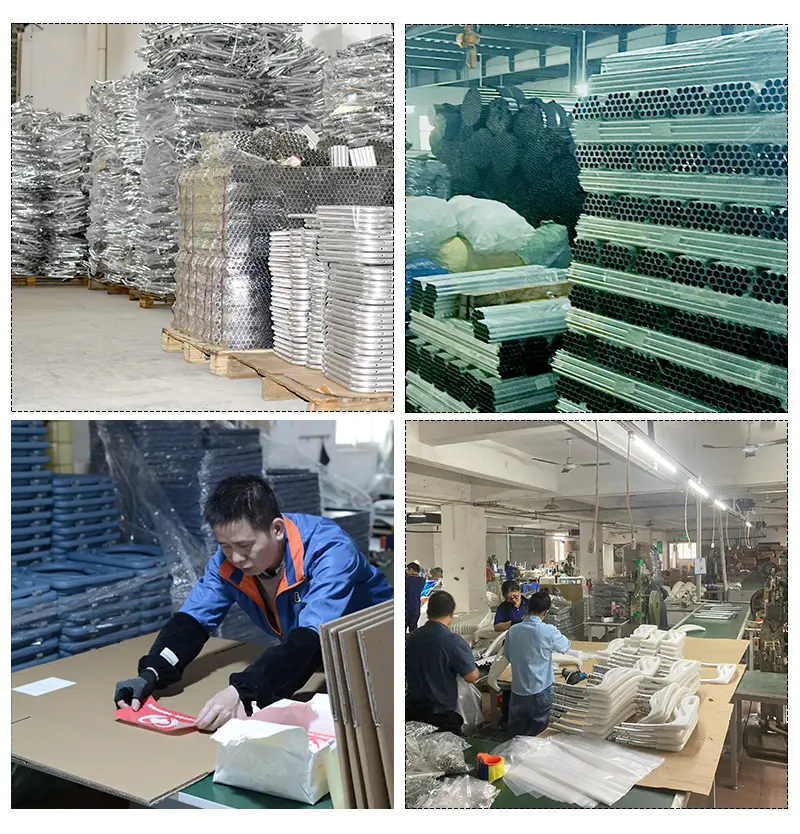
From a manufacturing standpoint, improving joint design requires more than thicker material. It involves tighter tolerances, skilled welding, additional reinforcement steps, and repeated fatigue testing. These processes increase production complexity but reduce downstream failures.
At Dinglian, joint integrity is treated as a structural priority rather than a secondary detail. As a shower chair manufacturer, supplier, and factory, design decisions are guided by long-term field performance rather than short-term cost reduction.
Our fabrication processes and internal testing standards can be reviewed through our our equipment section, where joint construction details are part of quality evaluation.
Why Experienced Buyers Prioritize Joint Design
Buyers responsible for warranty claims, facility safety, and long-term contracts understand that joint failures create more risk than frame deformation. Loose joints reduce user confidence, increase fall risk, and often lead to early product replacement.
This is why many procurement teams begin technical discussions with joint construction questions, especially when sourcing shower chairs for elderly care environments.
To explore how joint-focused design applies across different models, you may review our shower chair range, where structural details are aligned with daily use conditions.
Design Philosophy Built on Long-Term Use
Behind every joint decision is an understanding of how products are actually used. This approach is shaped by years of development experience, which is outlined naturally in our about us section, where engineering and testing capabilities are central rather than decorative.
Instead of designing for showroom appearance, we design for repeated transfers, uneven floors, and daily reliance. This is where joint performance proves its value.
Making the Right Sourcing Decision
When evaluating shower chairs, frame thickness should be considered—but never in isolation. Joint design determines how that material performs over time. Buyers who recognize this early avoid many of the common issues associated with premature product failure.
If you are reviewing models or planning a new sourcing project, direct technical discussion often reveals more than catalogs. Our team is available for such conversations through the contact us page.
Reliable products are built where engineering detail meets real-world use. In shower chairs, that meeting point is the joint.