
Why Does Uneven Load Distribution Reduce Product Lifespan
In many procurement discussions, the first specification buyers look at is load capacity. A commode chair rated for 150 kg or 180 kg often appears reassuring. Yet after months of daily use, some chairs remain stable while others begin to loosen, tilt, or feel unreliable. The difference rarely comes down to the number printed on the label.
Over time, a clearer pattern emerges: poor load distribution quietly shortens product lifespan. Even when frames remain intact, uneven stress accelerates wear at key structural points, leading to early replacement and higher long-term costs.
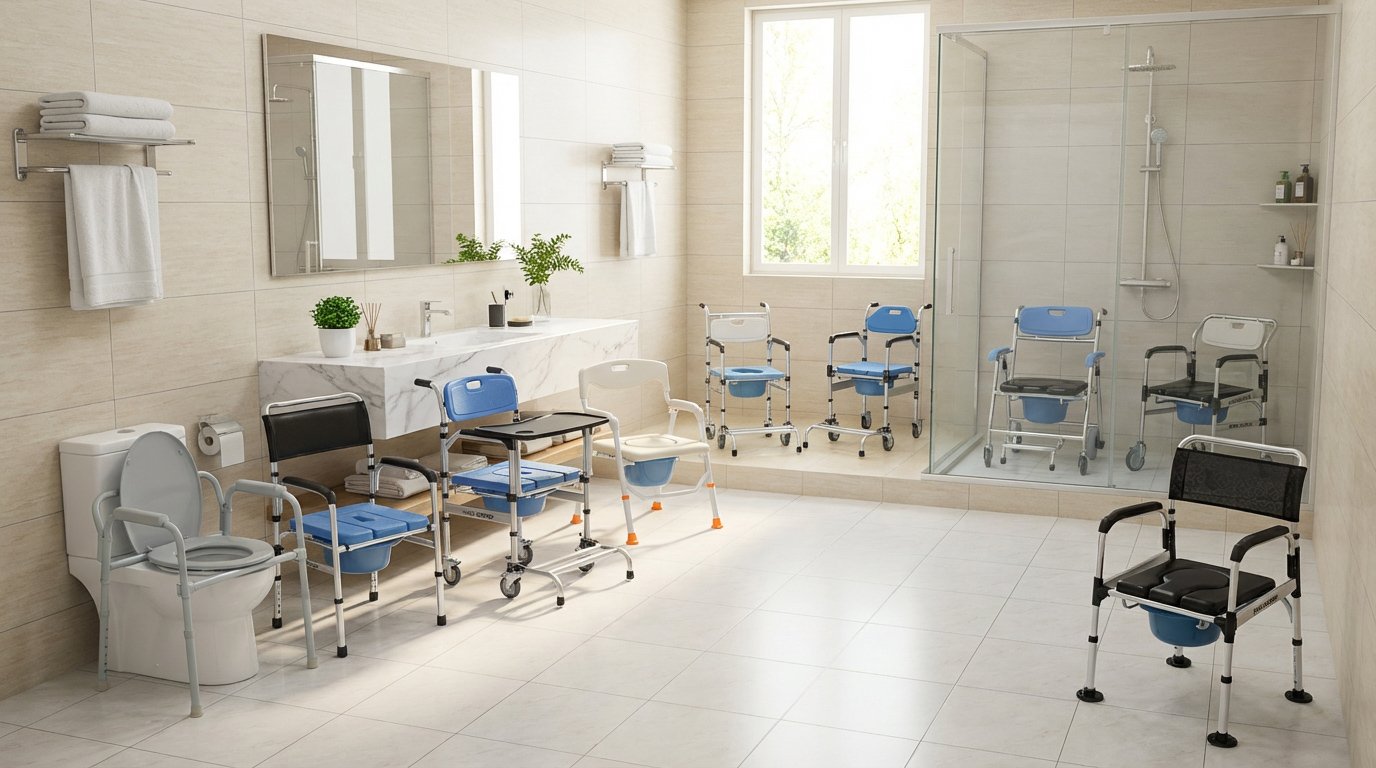
Why Load Ratings Do Not Reflect Daily Use
Load ratings are measured under controlled, static conditions. The chair is placed on a flat surface, weight is applied vertically, and deformation is observed. This confirms basic strength, but daily use rarely follows such ideal conditions.
In real environments, users sit down at angles, lean forward, push against armrests, and shift weight repeatedly throughout the day. Each movement introduces uneven forces that travel through the seat, joints, and legs.
When these forces are not evenly distributed, stress concentrates at specific points. Over time, this causes loosening fasteners, joint fatigue, and subtle instability—often long before visible damage appears.
High-Stress Areas Often Overlooked
- Seat-to-frame connections under asymmetric sitting
- Armrest mounts used for standing assistance
- Rear legs absorbing backward transfer force
These stress patterns explain why chairs with similar load ratings can perform very differently after extended use.
How Uneven Load Distribution Accelerates Wear
Uneven load distribution rarely causes sudden failure. Instead, it creates a gradual decline in performance. Micro-movements at joints increase friction. Metal fatigue develops faster where force repeatedly concentrates. Plastic components deform when pressure is applied off-center.
In care facilities, this often appears as chairs that feel unstable during transfers, even though they technically remain within rated capacity. Once user confidence drops, products are frequently removed from service regardless of structural condition.
For distributors and facility buyers, this leads to earlier replacement cycles, increased complaints, and higher operational costs.
Daily Use Patterns Buyers Should Factor In
Commode chairs—referred to in different markets as silla sanitaria, chaise percée, cadeira higiênica, or كرسي مرحاض—are rarely used gently. They support users during moments of reduced balance, urgency, and fatigue.
Transfers involve diagonal movement, partial weight bearing, and repeated repositioning. When designs fail to account for this reality, load concentrates on one side of the chair, accelerating structural wear.
Experienced buyers therefore pay close attention to how seat platforms, leg spacing, and reinforcement geometry work together to distribute weight evenly.
Design Decisions That Influence Load Balance
Achieving balanced load transfer requires more than thicker tubing. It depends on joint alignment, reinforcement placement, and how forces travel through the structure during real movement.
At Dinglian, load distribution is considered during the early design stage, guided by long-term use rather than short-term testing results. Structural layouts are evaluated based on how products behave after months and years of repeated daily use.
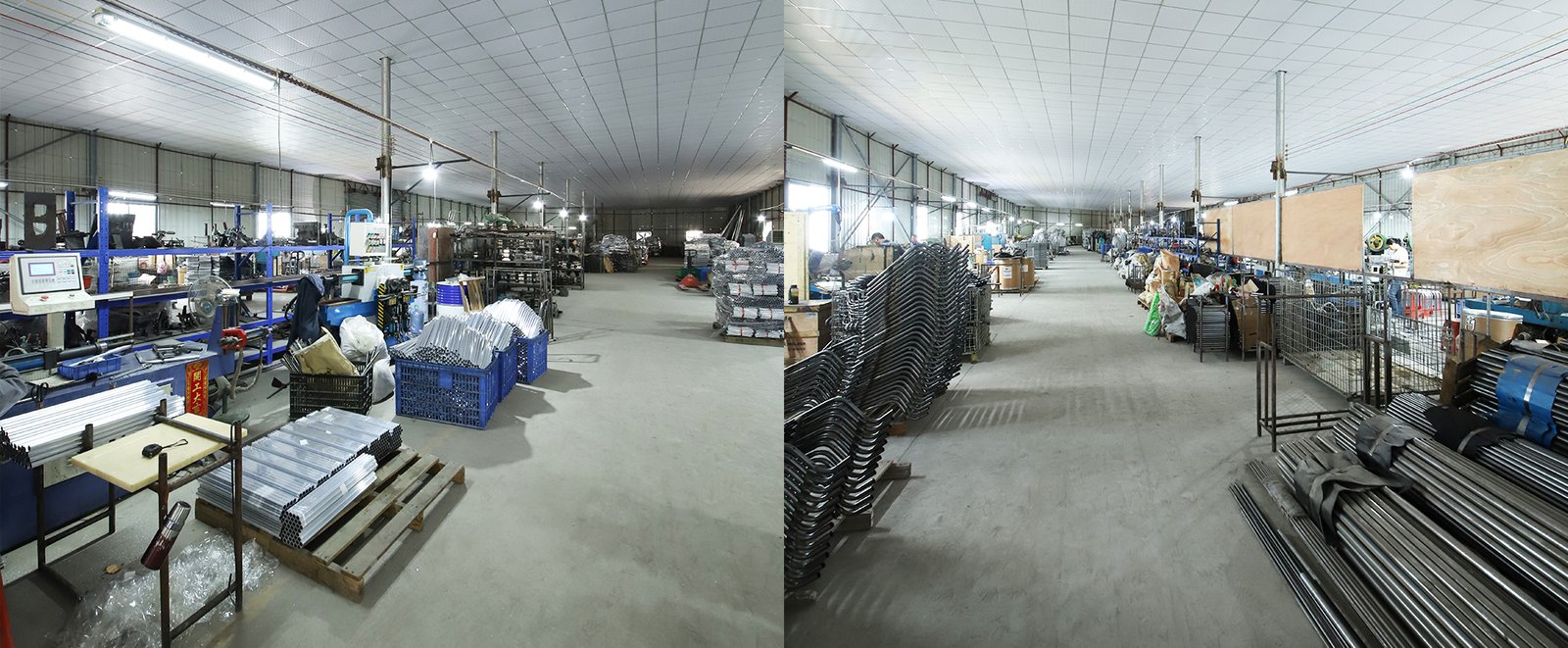
From a production standpoint, consistent fabrication and joint accuracy are critical. Buyers interested in how structural consistency is maintained can review our our equipment section for a closer look at manufacturing processes.
Why Replacement Cost Matters More Than Unit Price
For procurement teams, the true cost of a commode chair extends beyond the purchase price. Early replacement, additional maintenance, and service disruption all contribute to long-term expense.
Products with poor load distribution often require replacement within 12 to 24 months in high-use environments. In contrast, balanced designs remain stable for significantly longer periods.
This difference directly affects inventory planning and long-term reliability for care providers.
How Buyers Evaluate Load Distribution in Practice
Rather than relying on specifications alone, experienced buyers examine structural layouts and stress paths.
- Is weight shared evenly across all legs?
- Do armrests transfer force into the main frame?
- Does the seat platform flex under uneven loading?
These considerations often determine whether a product remains in service or becomes an early replacement.
Experience Shaped by Long-Term Use
Understanding load behavior requires exposure to real care environments. This development approach is reflected naturally in our about us section, where engineering decisions are tied to long-term performance rather than surface specifications.
For buyers seeking a stable supply partner, consistent performance over time often matters more than initial metrics. This perspective shapes how products are refined as they move into broader distribution.
Applying These Insights When Sourcing Commode Chairs
When sourcing commode chairs, load capacity should be considered—but never in isolation. Load distribution determines how a product performs after months of daily use, not just on day one.
For reference, our commode chair range reflects a focus on balanced structural performance rather than headline specifications.
Moving Toward More Reliable Purchasing Decisions
Poor load distribution is a hidden cost driver. It shortens lifespan, increases replacements, and undermines user confidence. Buyers who recognize this early avoid many common issues seen in long-term care environments.
If you are evaluating products or planning a sourcing project, direct technical discussion often provides the clearest insight. Our team is available through the contact us page for practical, project-based conversations.
Reliable equipment is not defined by numbers alone, but by how it carries weight—day after day.