
Materials and Hygiene: Waterproof, Easy-Clean Shower Chairs
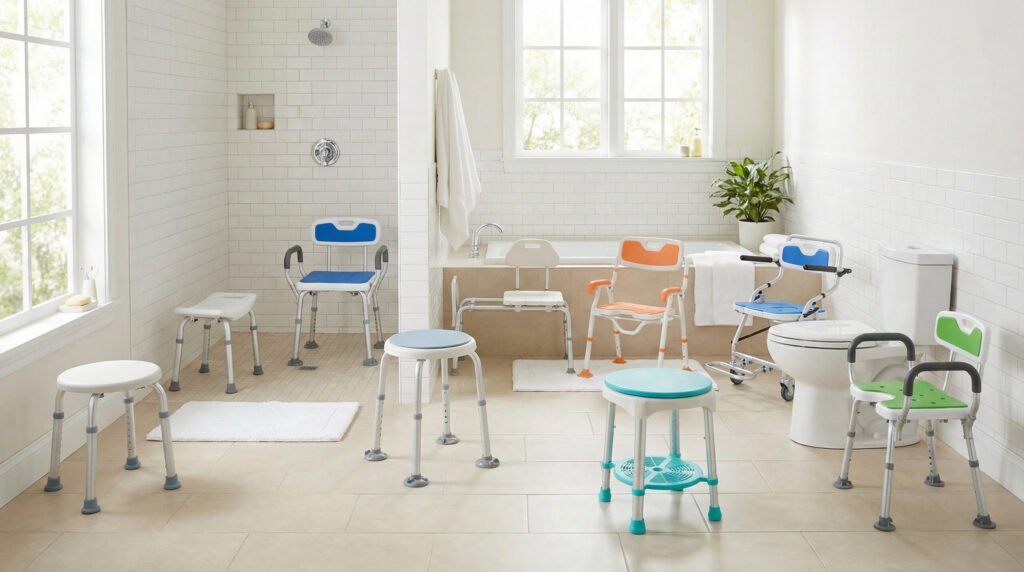
How Materials and Hygiene Impact Shower Chair Performance
When sourcing a shower chair for elderly or shower chair for disability, buyers often focus on structure, weight capacity, and price. But in real usage—especially in humid bathroom environments—material selection and hygiene performance quickly become the deciding factors.
A bath chair that is not properly waterproof or easy to clean may degrade faster, develop odor, or create hygiene concerns in both home and institutional settings. For distributors and medical equipment buyers, these issues often lead to complaints, returns, or replacement costs.
This guide focuses on how materials influence waterproof performance, cleaning efficiency, and long-term usability across different market scenarios.
Healthcare facility data shows that equipment exposed to humid environments without proper material protection can lose structural integrity up to 30% faster than expected lifecycle.
Different Usage Scenarios Demand Different Hygiene Standards
Home Care Environment
In residential bathrooms, users prioritize comfort and easy maintenance. The shower chair must be simple to wipe clean and resistant to daily water exposure.
- Basic waterproof materials
- Smooth surface for easy wiping
- Lightweight design for handling
Hospitals and Care Facilities
In institutional environments, hygiene standards are much higher. Equipment must support frequent cleaning, disinfectants, and continuous use.
- Corrosion-resistant materials
- Anti-bacterial surface design
- Quick drainage structure
- Minimal dirt-trap areas
If your target market includes hospitals, prioritize hygiene performance over cost savings. Cleaning efficiency directly impacts product acceptance.
Material Comparison: What Buyers Should Know
| Material | Advantages | Limitations | Best Use |
|---|---|---|---|
| Aluminum | Rust-resistant, lightweight | Higher cost | All markets |
| Plastic (HDPE) | Easy to clean | Lower strength | Home care |
| Steel | High strength | Risk of corrosion | Dry environments |
Waterproof Design: More Than Just Material
Material alone does not guarantee waterproof performance. Design details play a critical role.
| Design Feature | Purpose | Impact | Buyer Check |
|---|---|---|---|
| Drainage Holes | Remove water | Reduces moisture buildup | Hole distribution |
| Sealed Joints | Prevent water entry | Improves durability | Welding quality |
| Surface Finish | Water resistance | Easy cleaning | Coating quality |
Easy-Clean Design: A Key Factor for Buyers
Cleaning efficiency affects both user experience and operational cost. In care facilities, time spent cleaning equipment translates directly into labor cost.
| Feature | Benefit | Impact on Buyer |
|---|---|---|
| Smooth Surfaces | Faster cleaning | Lower labor cost |
| Minimal Gaps | Less dirt accumulation | Improved hygiene |
| Detachable Parts | Deep cleaning | Maintenance flexibility |
In high-usage facilities, easy-clean design can reduce maintenance time by up to 20–25%, improving operational efficiency.
Why Manufacturing Quality Directly Affects Hygiene Performance
Even the best materials can fail if production quality is inconsistent. Surface finishing, welding precision, and assembly accuracy determine whether a shower chair remains easy to clean over time.
At Dinglian (Zhongshan) Rehabilitation Equipment Co., Ltd. manufacturer, production focuses on corrosion resistance, smooth surface finishing, and structural consistency to ensure long-term hygiene performance.
You can review production capability on the Our Equipment page, or learn more about the company on the About Us page.
Consistent surface quality and structural accuracy ensure that products remain easy to clean even after long-term use. This is a key factor for repeat orders.
How Buyers Should Choose the Right Material Strategy
The final decision depends on your target market and distribution channel.
- Home care → prioritize comfort + easy cleaning
- Hospitals → prioritize hygiene + durability
- Retail → balance cost and maintenance
For a structured evaluation framework, refer to the Shower Chair Buyer’s Guide.
If you are sourcing products or planning your next order, you can reach us via the Contact Us page.