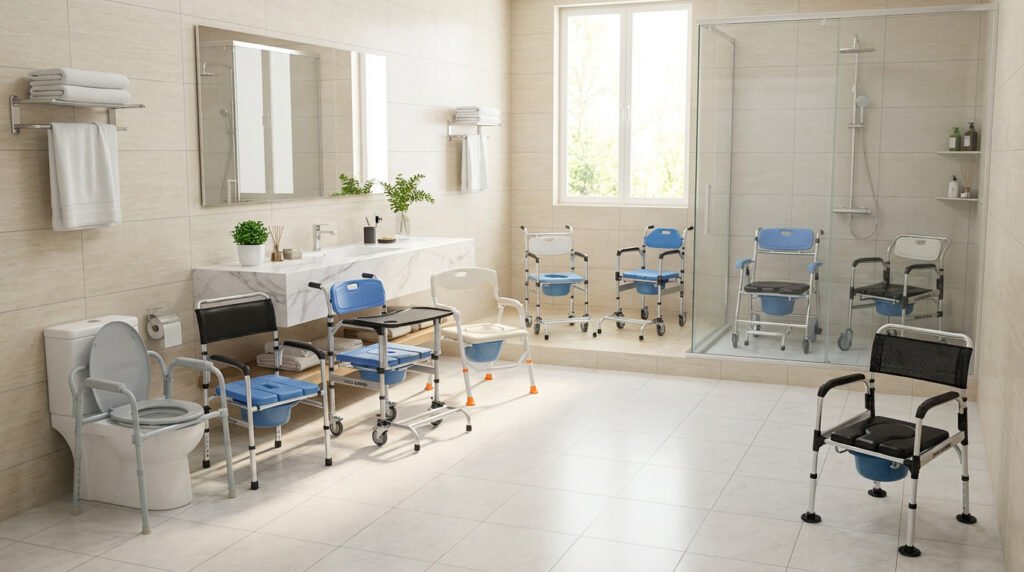
Adjustable and Drop-Arm Commode Chairs for Assisted Transfers
For patients with limited mobility, transferring from bed to toilet is often one of the most difficult and risky daily activities. A
drop arm commode is specifically designed to make lateral transfers safer and easier by allowing the armrest to swing away or detach completely.
For a full comparison of commode chair types and use cases, see our
Complete Commode Chair Guide.Unlike standard commode chairs,
adjustable commode chairs also offer customizable height settings, making them suitable for different bed levels, wheelchair transfers, and patient needs. These features are especially important in hospitals, rehabilitation centers, and home care environments where assisted transfers are frequent.For distributors and healthcare buyers, understanding the functional differences between standard, wheeled, and drop-arm designs is essential. Our
full Commode Chair Guide provides a broader overview of these categories.
What Is a Drop-Arm Commode Chair?
A
drop arm commode features armrests that can be lowered or removed to allow patients to transfer sideways from a bed, wheelchair, or other surface without lifting.This design is particularly useful for:
- Wheelchair users
- Post-surgery patients
- Elderly individuals with reduced mobility
- Patients requiring caregiver-assisted transfers
Because the side access is unobstructed, caregivers can reduce physical strain and improve transfer safety.
Why Adjustable Height Matters in Commode Chairs
An
adjustable commode chair allows the seat height to be aligned with beds, wheelchairs, or toilet levels. Proper height alignment reduces the effort required for transfers and minimizes fall risk.Typical height adjustment ranges:
| Height Range | Application | Key Benefit | Buyer Note |
|---|
| 40–45 cm | Standard bed height | Easy transfer | Most common usage |
| 45–50 cm | Wheelchair alignment | Smooth lateral movement | Critical for rehab centers |
| 50–55 cm | Higher beds | Reduced bending strain | Important for caregivers |
To understand how adjustable models compare with fixed-height or wheeled designs, refer to our
Commode Chair Guide.
Key Benefits of Drop-Arm and Assisted Commode Chairs
Safer Patient Transfers
The open side design eliminates the need to lift patients over armrests, reducing the risk of falls and injuries.
Reduced Caregiver Effort
Caregivers can assist patients with sliding transfers instead of lifting, lowering the risk of back strain.
Better Patient Comfort
Patients experience less physical stress during transfers, especially those recovering from surgery or with chronic mobility limitations.
Multi-Environment Use
An
assisted commode chair can be used beside the bed, over the toilet, or as part of a transfer system in rehabilitation settings.
Common Types of Drop-Arm Commode Chairs
| Type | Primary Use | Main Advantage | Buyer Consideration |
|---|
| Standard Drop-Arm Commode | Home care | Simple assisted transfer | Locking mechanism durability |
| Adjustable Drop-Arm Commode | Rehabilitation centers | Height flexibility | Adjustment range stability |
| Wheeled Drop-Arm Commode | Hospitals | Mobility + assisted transfer | Wheel safety system |
| Bariatric Drop-Arm Commode | High-weight patients | Heavy-duty support | Frame reinforcement |
What Buyers Should Evaluate Before Purchasing
- Strength and durability of drop-arm mechanism
- Height adjustment stability
- Weight capacity and frame structure
- Ease of cleaning and maintenance
- Compatibility with wheelchairs and beds
A poorly designed drop-arm system may loosen over time, which can create safety risks during patient transfers.
For a broader comparison of all commode designs, see our
Complete Commode Chair Guide.
How Distributors Choose a Reliable Manufacturer
Professional buyers often prioritize manufacturers with proven experience in rehabilitation equipment.
- Consistent product quality
- Stable production capacity
- Compliance with medical standards
- Experience in export markets
For example,
Zhongshan Dinglian has over 10 years of experience as a rehabilitation equipment manufacturer and factory. Their product designs focus on real caregiving scenarios, especially assisted transfer safety.
Final Thoughts
A well-designed
drop arm commode plays a critical role in improving patient safety and caregiver efficiency during assisted transfers.Compared with standard models,
adjustable commode chairs and drop-arm designs provide greater flexibility, better ergonomics, and safer transfer conditions.For distributors and healthcare buyers, partnering with an experienced
commode chair factory such as
Zhongshan Dinglian ensures reliable product quality and designs tailored to real-world patient care environments.
For more detailed insights into all commode chair types, visit our
Complete Commode Chair Guide.