
Rehabilitation & Nursing Knowledge – What Do Care Providers Need to Know First?

Why Care Providers Struggle With Rehabilitation Equipment Decisions in the First 90 Days
Most new care providers do not fail because they buy low-quality equipment. They fail because they buy the wrong type for the actual care situation. A shower chair that works well in a private home may create transfer problems inside a nursing facility. A lightweight walker may feel convenient at first but become unstable for post-surgery recovery users. In rehabilitation care, the first purchasing decisions usually shape safety outcomes, caregiver workload, and even future replacement costs.
This is why experienced distributors and rehabilitation managers focus less on catalog descriptions and more on practical use scenarios. Before selecting any product, they first evaluate mobility level, transfer frequency, caregiver involvement, bathroom layout, and long-term maintenance pressure.
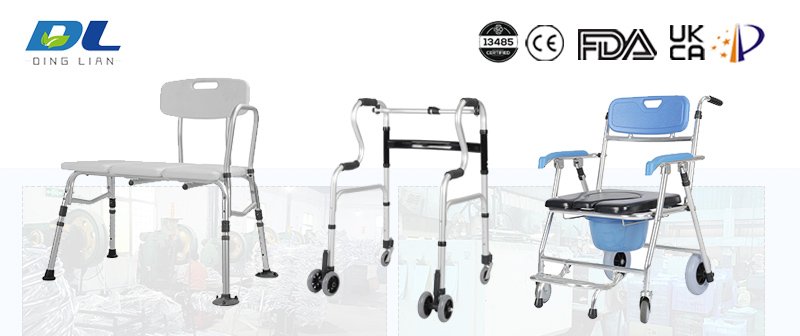
The Biggest Mistake New Buyers Make: Purchasing by Product Category Instead of Care Scenario
One of the most common patterns in rehabilitation procurement is this: buyers search for “wheelchair,” “shower chair,” or “walking aid” without first defining where and how the equipment will actually be used.
In reality, rehabilitation equipment behaves very differently depending on the environment:
- Home care: space-saving and lightweight movement matter most
- Nursing homes: repeated daily transfers create structural fatigue
- Hospitals: cleaning resistance and rapid movement become critical
- Rehabilitation centers: adjustability and user progression matter more than appearance
This explains why experienced importers rarely start discussions with “What is your cheapest model?” Instead, they ask:
- How many transfers per day will the product experience?
- Will caregivers push the equipment frequently?
- Is the environment humid or dry?
- Will elderly users operate it independently?
Why Bathroom Safety Equipment Is Usually Purchased Too Late
Across elderly care facilities, bathroom incidents remain one of the leading causes of injury. Yet many first-time buyers still treat shower chairs and commode systems as secondary accessories instead of frontline safety equipment.
The problem is not lack of awareness. The problem is misunderstanding how accidents actually happen. Most falls do not occur while standing still. They happen during turning, sitting, transferring, or attempting unsupported movement on wet flooring.
Facilities that replace bathroom equipment only after complaints appear usually face higher long-term costs than facilities that standardize preventive mobility support early.
This is why modern rehabilitation projects increasingly prioritize:
- Anti-slip aluminum shower chairs
- Height-adjustable bath seats
- Rolling commode chairs for assisted transfers
- Compact handrails for narrow bathrooms
You can review practical institutional-use models in our shower chair collection .
What Care Providers Need to Understand About Walking Aids First
Walking aids are often purchased based on appearance or frame style, but rehabilitation specialists evaluate them based on movement behavior. Two walkers may look nearly identical while performing completely differently for elderly users.
For example, caregivers frequently discover that:
| Equipment Type | Best Use Scenario | Common Buyer Mistake | Operational Impact |
|---|---|---|---|
| Standard Walker | Maximum stability indoors | Used outdoors excessively | Arm fatigue increases quickly |
| Rollator Walker | Longer walking support | Wrong wheel selection | Reduced braking control |
| Forearm Crutch | Partial load-bearing recovery | Incorrect height adjustment | Poor posture and instability |
| Quad Cane | Balance assistance | Improper base width selection | Reduced movement efficiency |
Experienced distributors therefore evaluate walking aids according to user recovery stage rather than product category alone.
Our walking aid range includes solutions designed for hospitals, home care distributors, rehabilitation projects, and elderly care institutions.
Why Wheelchair Procurement Is Becoming More Specialized
Wheelchairs are no longer selected only by weight capacity. In recent years, buyers increasingly evaluate:
- Transfer convenience
- Brake responsiveness
- Push efficiency for caregivers
- Storage and transport flexibility
- Long-duration seating comfort
This shift is especially visible in nursing homes and home-care service companies where caregivers handle multiple users daily. Equipment that saves even a few seconds per transfer can significantly reduce staff fatigue over time.
Facilities increasingly prefer wheelchairs designed around caregiver workflow rather than simply increasing frame strength or seat width.
How Professional Buyers Evaluate a Rehabilitation Equipment Manufacturer
New importers often focus heavily on pricing during initial sourcing. More experienced buyers focus on manufacturing consistency instead.
In rehabilitation equipment, inconsistency creates operational risk. Two visually identical products may behave differently after repeated use if welding tolerance, material thickness, or assembly standards vary between batches.
This is why procurement teams increasingly ask:
- Does the supplier operate its own production facility?
- Are material specifications traceable?
- Can replacement parts be supplied later?
- Does the manufacturer understand institutional use conditions?
At Zhongshan Dinglian , product development is influenced not only by laboratory testing, but also by long-term feedback from distributors, rehabilitation centers, and nursing facilities in multiple international markets.
What International Buyers Quietly Compare Before Placing Orders
| Buyer Concern | Why It Matters | Typical Procurement Result | Long-Term Effect |
|---|---|---|---|
| Certification Consistency | Supports import compliance | Lower customs risk | Market expansion stability |
| Material Selection | Affects corrosion resistance | Lower replacement frequency | Better lifecycle value |
| Factory Experience | Improves production consistency | Reduced complaint rates | Long-term buyer confidence |
| Caregiver Feedback | Reflects real daily usage | Better product selection | Operational efficiency |
FAQ: Questions New Care Providers Usually Ask First
Should rehabilitation equipment be selected by price or usage frequency?
Usage frequency should always come first. Products used repeatedly in shared environments require stronger fatigue resistance and easier maintenance.
Why do some facilities replace equipment much earlier than expected?
Replacement often happens because caregivers lose confidence in the equipment before actual structural failure occurs.
What certifications are commonly expected by international buyers?
Most distributors and institutional buyers request ISO 13485, ISO 9001, CE, FDA, or UKCA documentation depending on destination markets.
Final Thoughts for New Rehabilitation Equipment Buyers
Rehabilitation and nursing products are not ordinary consumer goods. Their real value appears after months of continuous use in demanding care environments. Buyers who understand caregiver workflow, transfer safety, material behavior, and long-term operational pressure usually make far more successful purchasing decisions.
If you are evaluating rehabilitation equipment for distribution, institutional procurement, or care projects, you can contact our team to discuss practical requirements, product categories, and regional market expectations.