
Hydraulic Transfer Chair vs Manual Transfer Chair
Why More Care Facilities Are Replacing Traditional Manual Transfer Chairs
When buyers compare hydraulic transfer chairs with manual transfer chairs, the discussion usually starts with price. In actual use, however, the bigger issue is caregiver fatigue, transfer stability, maintenance frequency, and long-term operational efficiency. Facilities handling dozens of patient transfers every day quickly realize that the wrong transfer system increases staff injury risk, slows workflows, and creates safety complaints from both caregivers and families. That is why more rehabilitation centers, nursing homes, and homecare distributors are now reassessing what type of patient transfer equipment truly performs better in real working environments instead of simply choosing the cheaper option.
Many first-time buyers focus too heavily on initial purchase cost. Experienced distributors pay more attention to transfer efficiency, caregiver strain reduction, and product lifespan over 3–5 years.
Why Is the Hydraulic Transfer Chair Becoming More Popular?
Five years ago, manual transfer chairs still dominated many developing markets because they were lighter and cheaper. Today, demand patterns are changing. Aging populations, caregiver shortages, and increasing pressure on nursing staff are pushing facilities toward easier lifting solutions.
The biggest misconception is that hydraulic transfer chairs are only suitable for hospitals. In reality, homecare dealers, rehabilitation distributors, and elderly care importers are increasingly requesting hydraulic models because they reduce physical effort during repeated patient transfers.
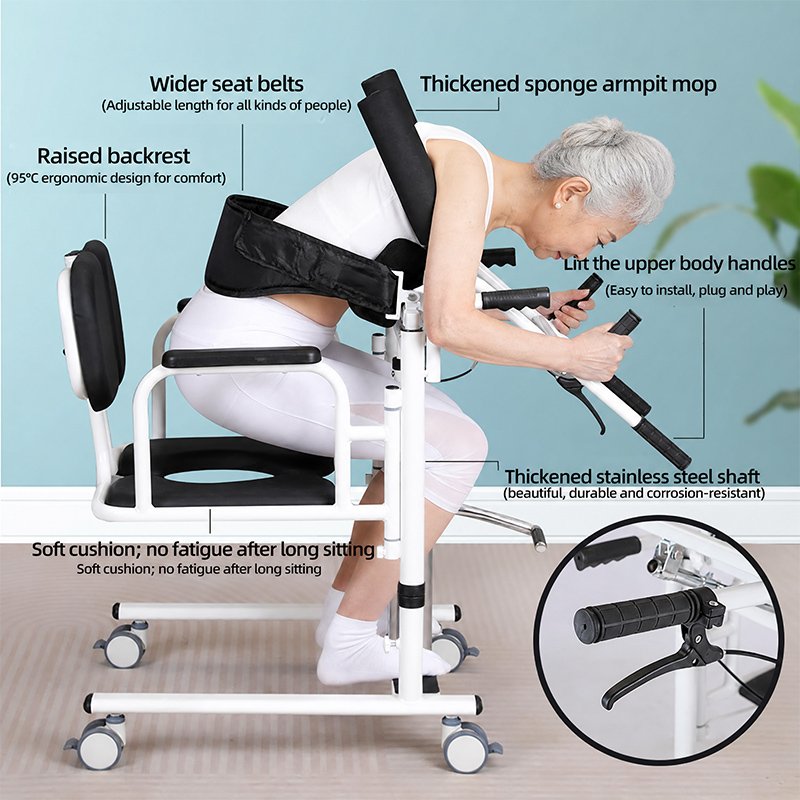
For example, the DL-WGYW02 hydraulic transfer chair uses a hydraulic lift handle system combined with silent brake casters and widened footrests. Compared with conventional manual lifting designs, caregivers can raise or lower patients with significantly less force.
If your customers mainly include nursing homes or post-surgery rehabilitation centers, hydraulic transfer systems usually generate fewer after-sales complaints related to caregiver fatigue.
What Is the Real Difference Between Hydraulic and Manual Transfer Chairs?
On product catalogs, both products may look similar. Both are used for patient movement, bedside transfers, toilet assistance, and mobility support. But once you observe real caregivers using them repeatedly throughout the day, the operational difference becomes obvious.
| Comparison Point | Hydraulic Transfer Chair | Manual Transfer Chair | Real-World Result | Best User Type |
|---|---|---|---|---|
| Lifting Mechanism | Hydraulic lifting | Manual adjustment | Lower caregiver effort | Nursing facilities |
| Weight | Heavier | Lighter | Better stability vs portability | Homecare dealers |
| Transfer Frequency | High frequency use | Medium frequency use | Reduced repetitive strain | Care centers |
| Learning Curve | Simple operation | Requires lifting coordination | Safer for new caregivers | Rehabilitation teams |
| Price Range | Higher | Lower | Long-term ROI differs | Distributors |
This is why many experienced procurement managers no longer compare these products only by unit price. They evaluate operational efficiency across hundreds or thousands of transfers.
Why Do Caregiver Injuries Increase With the Wrong Transfer Equipment?
This issue is often underestimated during procurement discussions.
According to multiple healthcare workplace safety studies, musculoskeletal injuries remain one of the most common reasons caregivers leave physically demanding care roles. Repetitive patient lifting, poor body positioning, and unstable transfer equipment all contribute to long-term physical strain.
Manual transfer systems can work well in lower-frequency environments. But when staff repeatedly assist heavier users or patients with limited mobility, the physical demand rises quickly.
The DL-WGYW02 hydraulic transfer chair was specifically designed to reduce this pressure through:
- Hydraulic lift handle assistance
- Foam underarm support
- Widened footrest positioning
- Silent brake casters for stable movement
- Freely adjustable transfer height
Meanwhile, the DL-WGYWO3 manual transfer chair focuses more on portability, compact movement, and lighter structural handling.
Why Some Buyers Still Choose Manual Transfer Chairs
Manual transfer chairs remain highly practical for distributors targeting smaller clinics, compact homecare environments, and regions where affordability matters more than transfer frequency. They are easier to transport, easier to store, and often preferred for lighter daily use.
What Buyers Often Misunderstand About Hydraulic Systems
One common misunderstanding is that hydraulic transfer chairs are difficult to maintain. That assumption mainly comes from older hydraulic medical equipment generations.
Modern transfer systems are much simpler. In fact, many distributors report fewer structural failures because caregivers apply less direct force during transfers.
The hydraulic structure itself is not usually the failure point. Improper wheel locking, overloading, or poor assembly causes more real-world issues.
What Experienced Importers Check First
Professional buyers rarely ask only about lifting range. They inspect wheel locking stability, frame welding consistency, coating durability, and long-term spare parts support before placing volume orders.
Which Transfer Chair Works Better for Different Markets?
There is no universal answer. Product-market matching matters more than choosing the “most advanced” model.
| Market Type | Recommended Model | Why It Fits | Purchase Focus | Typical Buyer |
|---|---|---|---|---|
| Nursing Homes | DL-WGYW02 | Lower caregiver fatigue | Safety & efficiency | Institution buyers |
| Homecare Dealers | DL-WGYWO3 | Lighter handling | Price & portability | Retail distributors |
| Rehabilitation Centers | Hydraulic models | High transfer frequency | Long-term use | Project buyers |
| Medical Equipment Traders | Mixed portfolio | Different price tiers | Market flexibility | Import wholesalers |
Can a Lower-Cost Manual Chair Actually Cost More Later?
This is where many procurement decisions quietly fail.
A manual transfer chair may reduce initial purchasing cost by 20–40%. But facilities often ignore secondary operational costs:
- Higher caregiver fatigue
- Longer transfer times
- Higher injury risk
- More staff training requirements
- Increased handling inconsistency
This does not mean hydraulic systems are always superior. It means buyers should calculate cost beyond the invoice price.
Facilities with high daily patient movement usually recover hydraulic equipment investment faster through reduced labor pressure and smoother workflows.
How Do Experienced Buyers Evaluate Transfer Chair Manufacturers?
Experienced buyers rarely place orders after reviewing catalogs alone.
Instead, they evaluate whether the manufacturer understands actual transfer scenarios. This is where many generic suppliers fail.
A professional transfer chair manufacturer should understand:
- Caregiver movement patterns
- Bathroom transfer limitations
- Wheel braking stability
- Seat height compatibility
- Assembly efficiency
- Packaging protection for export shipping
Dinglian Rehabilitation Equipment manufacturer has spent years supplying distributors, rehabilitation importers, and elderly care equipment projects across multiple overseas markets. That experience changes how products are designed.
For example, the DL-WGYWO3 manual transfer chair uses:
- 180-degree opening structure
- Retractable footrests
- Double buckle stability system
- Strengthened enclosure protection
- Silent brake wheel design
These are not “catalog features.” They solve actual caregiver frustrations during repeated transfers.
Why Are More Importers Asking for Transfer Equipment Factories Instead of Trading Companies?
The rehabilitation equipment market is becoming more technical.
Buyers increasingly want direct access to factories because they need:
- Stable quality consistency
- Faster spare parts support
- Lower communication delays
- OEM customization flexibility
- Packaging modification options
That is one reason why Dinglian Rehabilitation Equipment factory continues investing in production capability, testing processes, and long-term distributor partnerships instead of focusing only on low-price competition.
If you want to better understand transfer chair structures and patient movement applications, you can explore this detailed guide here:
→ Read the Complete Patient Transfer Equipment Guide
What Features Matter Most During Actual Patient Transfers?
Buyers often receive long feature lists from suppliers. But only a few features truly impact daily usability.
1. Wheel Stability
Poor wheel locking causes unsafe transfers faster than almost any other issue.
2. Seat Height Adjustment
Improper height alignment increases caregiver lifting strain significantly.
3. Frame Rigidity
High carbon steel structures improve transfer confidence, especially for heavier users.
4. Patient Comfort
Sponge cushions and underarm support become extremely important during longer transfer sessions.
5. Opening Mechanism
180-degree opening systems simplify toilet and bedside positioning dramatically.
Before importing large quantities, ask suppliers to demonstrate full transfer movement videos instead of only product photos. Real operation reveals much more than specifications.
Industry Trend: Why Transfer Equipment Demand Is Growing Faster
Global aging populations continue driving rehabilitation equipment demand upward.
According to WHO aging and long-term care projections, mobility support and assisted transfer demand will continue increasing over the next decade as healthcare systems face caregiver shortages and rising elderly populations.
This is already influencing distributor purchasing behavior:
- Higher demand for safer transfer solutions
- Growing interest in hydraulic systems
- More focus on caregiver protection
- Increased preference for multifunctional transfer chairs
Instead of purchasing “basic transport equipment,” buyers are increasingly selecting products that improve workflow efficiency and reduce caregiver turnover pressure.
You can explore more transfer equipment models here:
→ Explore Patient Transfer Equipment Models
What Makes Some Transfer Chair Suppliers More Reliable Than Others?
After years in this industry, one thing becomes obvious:
The best suppliers do not simply export products. They understand transfer environments.
That includes:
- Caregiver behavior
- Bathroom dimensions
- Wheelchair compatibility
- Assembly efficiency
- Carton protection during shipping
- Long-term maintenance support
This is why experienced importers increasingly prefer working directly with rehabilitation equipment manufacturers that already understand overseas distributor requirements.
To learn more about our production capability and manufacturing experience:
→ Discover Our Manufacturing Experience
Final Thought: Which Transfer Chair Should Buyers Actually Choose?
There is no perfect answer for every market.
Manual transfer chairs still perform very well in compact homecare environments and cost-sensitive markets. Hydraulic transfer chairs perform better where caregiver workload, transfer frequency, and operational efficiency matter more.
The smartest buyers do not ask:
“Which one is cheaper?”
They ask:
“Which one will work better for my customer’s daily transfer reality?”
That question usually leads to better long-term business results.
If you want help selecting the right transfer chair configuration for your market, rehabilitation project, or distributor portfolio: