
Commode Handrails & Raised Toilet Seats: Complete Buyer Guide
Commode Handrails & Raised Toilet Seats: Complete Buyer Guide
Choosing the right commode handrails and raised toilet seats is critical for professional buyers, distributors, and healthcare facilities. This guide explains the practical considerations to ensure safety, comfort, and compliance while meeting user needs.
For detailed evaluation criteria across walking frames and commode products, see our Walking Frame Buyer Guide.
1. Understanding User Needs and Safety Requirements
Different users require different solutions. For elderly, disabled, or bariatric users, toilet safety handrails and raised toilet seat handles improve stability and confidence. Key considerations include:
- User weight capacity and body type (bariatric considerations)
- Grip comfort: padded handles or ergonomic designs
- Ease of transfer on/off the toilet or bedside commode
- Safety in wet or slippery bathroom conditions
2. Product Features and Variations
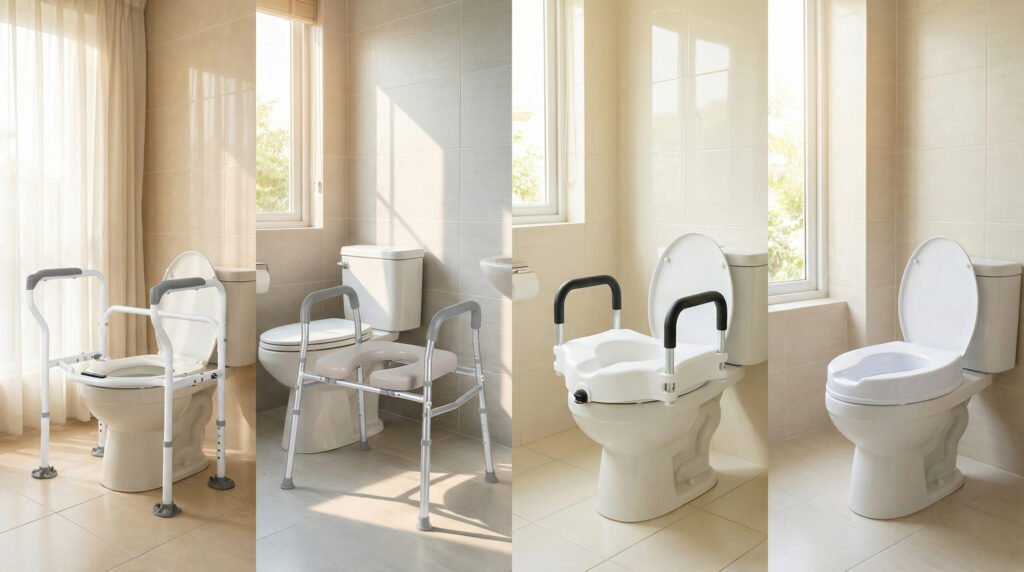
Buyers should understand the different types of commode safety frames:
- Drop arm commode rails – for easier lateral transfers
- Heavy duty commode handrails – designed for higher weight or bariatric users
- Adjustable toilet safety frame – adaptable to different toilet heights
- Padded toilet safety handles – enhanced comfort during use
- Portable potty elderly / potty chair for adults – ideal for home or travel use
3. Installation and Compatibility
Ensure that toilet handrails and raised toilet seat with handles are compatible with existing bathroom layouts. Consider:
- Mounting options for home vs institutional toilets
- Bedside commode with armrests for flexible placement
- Clearance and spacing to avoid obstruction
4. Compliance and Standards
For distributors and healthcare buyers, compliance is essential. Verify:
- CE marking for European distribution
- ISO 13485 certification of manufacturer quality systems
- Load and stability test reports
Understanding the regulations helps reduce risk and ensures long-term institutional trust.
5. Comfort and User Experience
Elderly toilet handrail and bathroom safety handrail design affects user confidence. Key points:
- Height and angle of handrails for natural grip
- Padded handles reduce pressure on hands
- Non-slip materials and finishes
6. Buying Tips for Professional Procurement
Experienced buyers consider both specifications and user experience. Recommendations:
- Segment products by user type: standard, bariatric, home, or institutional
- Request actual load and fatigue test data
- Check for adjustable or modular designs for multiple use cases
Explore our Commode Handrail product category for models suitable for different users.
For inquiries and detailed sourcing advice, contact our team directly.