
Nursing Home Equipment Differences Explained for Buyers
Buyers entering the elderly care and rehabilitation equipment market often assume that nursing home products are simply “stronger versions” of home-use items. In reality, the differences go much deeper. Daily usage patterns, shared environments, regulatory expectations, and staff workflows create a set of stresses that home-use equipment rarely encounters.
This article explains the real-world differences buyers should understand before sourcing, specifying, or replacing nursing home equipment — based on manufacturing experience, facility feedback, and long-term procurement observations rather than brochure claims.
1. Daily Usage Intensity Is the Core Difference
Home-use equipment is typically operated by one user, assisted by a family member, for a limited number of hours per day. In contrast, nursing home equipment is used continuously, often by multiple residents with very different physical conditions.
- Repeated transfers by different caregivers per shift
- Higher average load cycles per day
- More frequent cleaning and disinfection
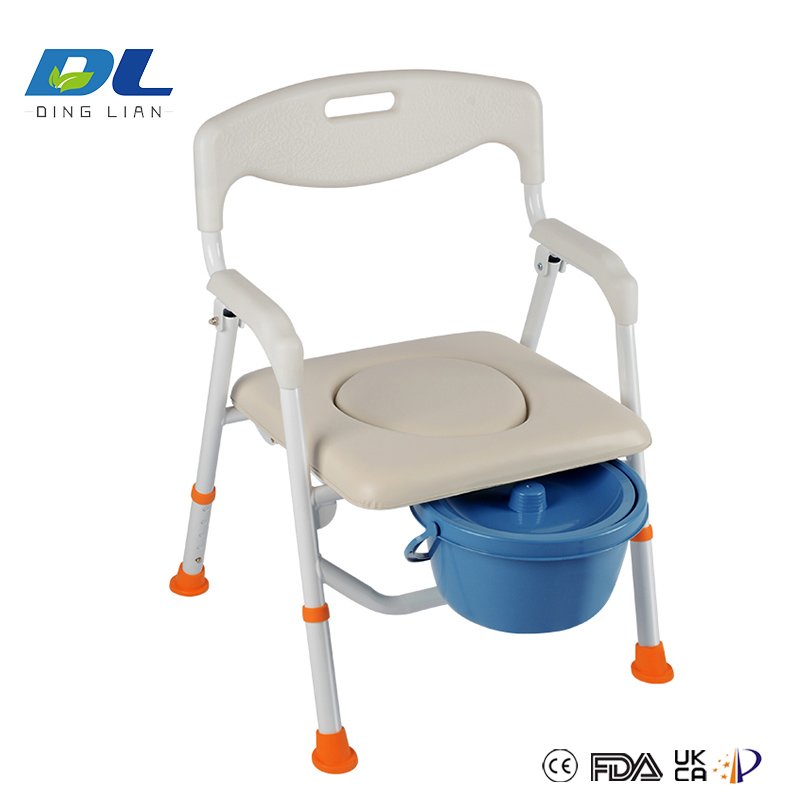
For example, a commode chair in a nursing facility may be transferred, adjusted, and cleaned 8–15 times daily, while a home-use equivalent may only be adjusted once or twice.
2. Shared Use Changes Structural Requirements
Shared-use environments introduce stresses that home designers often overlook. Adjustable parts are no longer “set and forget.” Locks, hinges, arm supports, and height mechanisms are constantly reconfigured.
| Component | Home Use | Nursing Home Use |
|---|---|---|
| Adjustment Mechanism | Occasional | Multiple times daily |
| User Variability | Single user | Multiple body types |
Buyers who ignore shared-use stress often face premature part loosening, instability complaints, and higher replacement frequency.
3. Caregiver Workflow Shapes Product Behavior
Equipment in nursing homes is handled under time pressure. Caregivers prioritize safety and speed over gentle handling — not out of negligence, but necessity.
This reality affects:
- Grip surface durability
- Fastener fatigue
- Frame torsion resistance
Products such as commode handrails must withstand lateral loading that rarely occurs in home environments.
4. Cleaning Protocols Accelerate Material Aging
Nursing facilities follow strict cleaning schedules using disinfectants that are far more aggressive than household cleaners. Over time, this impacts coatings, fasteners, and plastic components.
From a manufacturing standpoint, material selection must account for:
- Chemical resistance of coatings
- Corrosion behavior of internal fasteners
- Surface wear from repeated wiping
5. Why Nursing Homes Replace Equipment Earlier
Early replacement is often misinterpreted as poor quality. In reality, it is a calculated risk-management decision.
Facility managers prioritize:
- Consistency across rooms
- Reduced caregiver injury risk
- Lower liability exposure
Equipment that still “works” may no longer meet internal safety margins after years of heavy use.
6. Buyer Mistakes We See Repeatedly
From our experience as Zhongshan Dinglian Rehabilitation Equipment Co., Ltd manufacturer, supplier, and factory, the most common sourcing mistakes include:
- Specifying based on home-use samples
- Ignoring shared-use testing
- Underestimating cleaning impact
Buyers who align specifications with real nursing home usage patterns achieve lower total cost over time, even if initial unit pricing is slightly higher.
7. Certifications and Compliance Expectations
Nursing home equipment sourcing increasingly requires documented compliance. Our products are developed under systems aligned with CE, FDA, UKCA, ISO13485, ISO9001, and relevant patents.
Certification alone does not guarantee suitability, but it establishes a baseline for controlled manufacturing and traceability.
8. Customization and Procurement Reality
Large buyers often require:
- Reinforced structures for high-traffic wards
- Specific height or width ranges
- Private-label or color coding
As a long-term supplier, we support OEM adjustments, stable MOQ planning, and predictable lead times for institutional buyers.
FAQ: Common Buyer Questions
How do I verify equipment durability?
Request usage-cycle testing data and cleaning resistance documentation rather than relying on static load ratings.
What materials perform best?
Powder-coated steel with verified corrosion resistance and reinforced polymer components tends to perform best in institutional settings.
What about MOQ and lead time?
For standard models, MOQs are flexible. Customized projects require longer lead times but provide better long-term alignment.
To better understand how our equipment performs in real facilities, you can explore usage examples on our video share page.
If you are evaluating suppliers or planning your next procurement cycle, feel free to contact us for specification discussions rather than generic quotations.