
Why Surface Treatment Matters in Infection-Control Settings
Many buyers assume infection control is mainly about cleaning protocols, disinfectants, and staff training. Yet after years of stricter procedures, infection-related complaints still appear around the same product categories. The missing link is often not how equipment is cleaned, but how its surface was designed to be cleaned over time. Surface treatment quietly determines whether infection control efforts work with the product — or against it.
The Common Misunderstanding: Smooth Surfaces Are Enough
In procurement discussions, surface treatment is often reduced to one question: “Is it smooth enough to wipe?” That assumption sounds reasonable — until products enter high-frequency care environments.
Shower chairs, bedside supports, and mobility aids are cleaned repeatedly every day. Over time, disinfectants, moisture, friction, and temperature variation interact with the surface layer. A surface that looks smooth on delivery may behave very differently after thousands of cleaning cycles.
What buyers rarely see during early inspections
- Micro-porosity forming under repeated chemical exposure
- Loss of coating integrity around welded joints
- Surface dulling that increases residue retention
- Inconsistent finish between structural components
None of these issues are visible in standard product photos. They only emerge after real-world use.
Why Infection Risk Is a Surface Behavior Problem, Not a Cleaning Problem
In infection-control settings, cleaning is repetitive, standardized, and often aggressive. The assumption is that stronger cleaning equals lower risk. But surface behavior determines how effective that cleaning actually is.
In products like shower chairs, water exposure, soap residue, and disinfectants interact continuously. When surface treatment is not designed for this cycle, residue accumulation becomes unavoidable.
| Surface Condition | Long-Term Cleaning Result |
|---|---|
| Uniform coating | Predictable wipe-down efficiency |
| Micro surface variation | Residue retention over time |
| Coating degradation | Increased cleaning effort with reduced effect |
Why Surface Treatment Is a Manufacturing Decision, Not a Cosmetic One
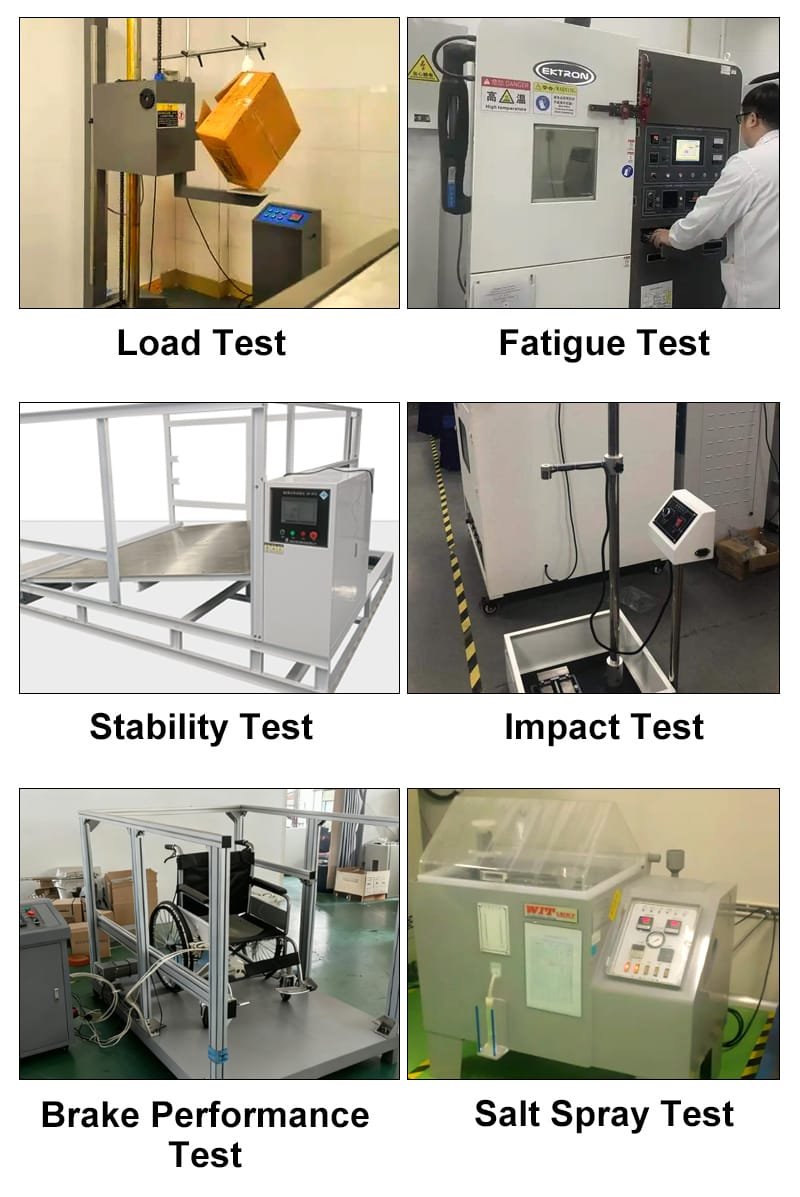
From the perspective of a Zhongshan Dinglian manufacturer, surface treatment decisions begin long before coating is applied. Material selection, welding sequence, polishing standards, and curing processes all influence how a surface behaves years later.
Buyers visiting our Our Equipment page often notice that surface testing is integrated into production rather than treated as a final cosmetic check.
Surface treatment decisions that matter long-term
- Coating thickness consistency across joints
- Resistance to repeated chemical cleaning
- Edge treatment to reduce micro-damage
- Compatibility between material and coating type
Which Buyers Should Rethink Surface Treatment First
Surface treatment becomes critical when equipment is shared, cleaned frequently, and used by different users daily.
- Nursing homes with centralized cleaning systems
- Hospitals with infection-control audits
- Home care distributors serving high-risk users
- Rental and institutional supply programs
In these environments, surface behavior directly influences staff workload and long-term hygiene consistency. This is why some buyers choose to work with a Zhongshan Dinglian factory rather than purely price-driven sourcing channels.
Making Surface Treatment Part of Your Risk Assessment
Instead of asking whether a product looks easy to clean, experienced buyers ask different questions.
- How does the surface change after repeated disinfection?
- Which areas are most prone to coating fatigue?
- What testing simulates long-term cleaning behavior?
- How are field complaints fed back into surface design?
These questions shift procurement from appearance-based decisions to risk-based evaluation.
To better understand our production philosophy, you can visit About Us. For specific infection-control or long-term supply discussions, feel free to Contact Us.