
Bariatric Commode Chairs: Heavy-Duty Solutions for Larger Patients
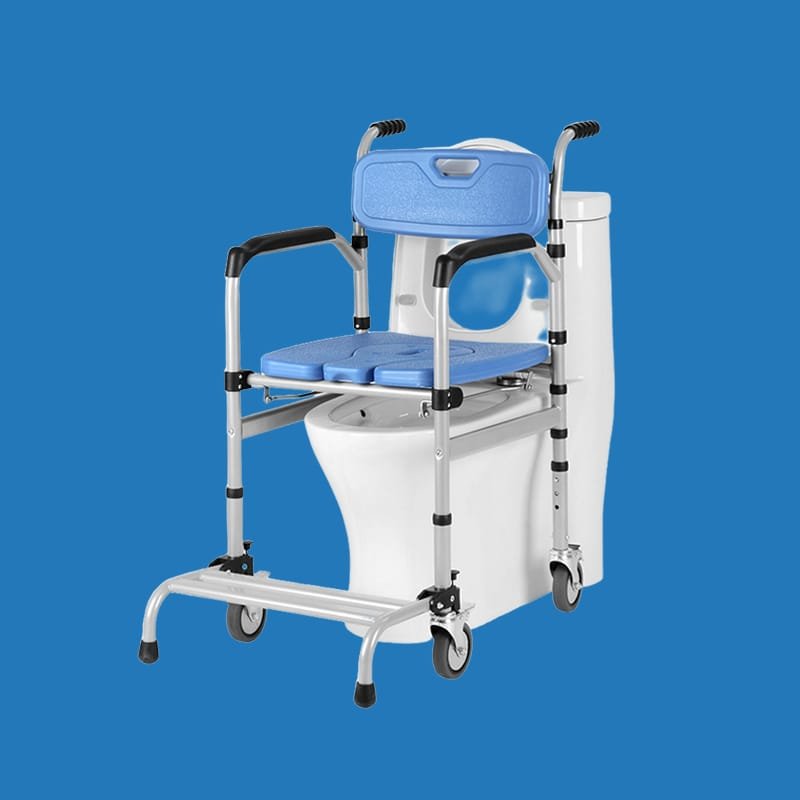
Bariatric Commode Chairs: Heavy-Duty Solutions for Larger Patients
Most inquiries about bariatric commodes start with a single number — the weight rating. That part is easy to confirm on a spec sheet. What’s harder to confirm from a distance is whether the tube wall, the weld pattern, and the bending tolerance were actually adjusted for that higher rating, or whether a standard frame was simply relabeled and sold as bariatric. That gap is where most sourcing problems in this category actually start.
For buyers already comparing suppliers, this page walks through the manufacturing and documentation details worth checking before an order goes in — not a general introduction to what a bariatric commode is.
Why a Bariatric Rating Isn’t Just a Bigger Number
In aluminum-frame construction, moving from a standard-duty commode to a bariatric-rated one usually means three things change together: tube wall thickness, the bracing pattern at the seat corners, and the width of the base stance. If only the seat gets wider and the frame underneath stays the same, the rating on the box doesn’t reflect what the chair can actually hold up under repeated use.
| Capacity Tier | Frame Spec | Manufacturing Adjustment | Typical Setting | Sourcing Note |
|---|---|---|---|---|
| Standard (up to 150 kg) | Standard aluminum tube diameter | Standard bending and weld pattern | Home care, general nursing | Suitable for general elderly care use |
| Bariatric (up to 180 kg) | Reinforced wall thickness, wider base stance | Additional cross-bracing at seat corners, adjusted bending calibration | Hospitals, rehab centers | Ask for a load report specific to this tier, not the standard-line certificate |
| Above 180 kg | Project-specific | Requires dedicated engineering review | Specialized bariatric units | Best discussed directly with the factory before quoting |
What Changes in the Manufacturing Process Between Tiers
Aluminum tube bending has to be recalibrated when wall thickness increases — the same bending radius that works cleanly on a standard tube can cause micro-cracking on a thicker-walled bariatric tube if the machine settings aren’t adjusted. This is a detail that doesn’t show up in a photo and rarely shows up in a spec sheet either.
Weld settings shift too. A heavier frame needs deeper penetration at the joints without overheating the surrounding aluminum, which is part of why precision welding equipment matters more here than on lighter product lines. We keep the actual bending and welding equipment used for these adjustments documented on our production equipment page, which is usually a faster way to judge whether a factory has the tooling for this than reading a general product description.
Powder-coat adhesion is the last piece that’s easy to overlook. A bariatric frame under higher stress flexes slightly more at the joints than a standard one, and a coating that isn’t matched to that flex tends to hairline-crack at the weld points months before the frame itself shows any issue.
Certification and Load Documentation Worth Asking For
CE, FDA, UKCA, and ISO13485 certificates are standard requests in this category, and most established factories can produce them without hesitation. The detail worth checking is whether the certificate on file actually covers the bariatric-rated product line, or whether it was issued for the standard-capacity model and is being presented as if it applies across the whole range.
It’s a reasonable, increasingly common request to ask for a load validation report tied specifically to the bariatric batch you’re ordering — not a general compliance letter. A factory that tests bariatric and standard models separately, and can produce paperwork showing that distinction, is usually a more reliable long-term supplier than one that treats certification as a single blanket document.
Where This Fits Into a Full Bathroom Safety Setup
A bariatric commode is rarely the only piece of equipment specified for a heavier patient. Facilities commonly pair it with a bedside handrail positioned at the transfer point, since seating capacity and transfer support are two separate engineering problems that happen to sit next to each other in daily use. Distributors putting together a bariatric care package for a facility typically source both from the same conversation rather than treating them as unrelated line items.
Evaluating a Bariatric Commode Factory Directly
Production history tends to matter more here than a single product page can show. Zhongshan Dinglian has spent over a decade specializing in aluminum-frame shower and commode chairs, running an in-house metal workshop that controls cutting, bending, welding, and finishing under one roof rather than outsourcing individual stages — which is part of why capacity claims can be backed up with documentation rather than just a spec sheet.
If you want more detail on how that manufacturing background comes together, our company background page covers the workshop setup and testing approach in more depth than fits naturally in a single product article.
Final Thoughts
The number on a bariatric commode’s spec sheet is only as reliable as the process behind it. Frame tolerance, weld calibration, and load documentation tied to the actual batch are what separate a bariatric-rated chair that performs as described from one that simply has a bigger number printed on the box.
If you’re evaluating suppliers and want to see current batch documentation, discuss a capacity above 180 kg, or review specific dimensions for your project, our team can walk through the details directly — you can reach us through our contact page.