
Hydraulic Patient Transfer Chairs: What Buyers Should Know
Why Hydraulic Transfer Systems Are Replacing Traditional Mobility Handling
Many buyers still think hydraulic transfer chairs are simply upgraded wheelchairs with lifting functions. In actual rehabilitation and elderly-care environments, they solve a much bigger problem: reducing physical strain during daily patient transfers. Bed movement, toilet repositioning, shower assistance, and wheelchair transfers all place repeated stress on caregivers. A properly designed hydraulic patient transfer chair changes the entire transfer process from manual lifting into controlled assisted movement.
That shift is exactly why rehabilitation distributors, nursing-care importers, and elderly-care project buyers are increasingly paying attention to hydraulic transfer systems instead of standard wheelchairs alone.
For a complete overview of transfer equipment categories and buyer trends, start here:
Read the Complete Patient Transfer Equipment Guide →
Industry Insight
Global elderly-care demand continues increasing as hospitals shorten recovery stays and home-care support expands. Hydraulic transfer systems are becoming one of the fastest-growing rehabilitation equipment categories because they reduce caregiver injury risk during repetitive transfers.
The Biggest Misunderstanding About Hydraulic Transfer Chairs
One of the most common misconceptions is that a hydraulic wheel chair is only needed for fully immobile patients.
In reality, many transfer-related injuries happen with users who still have partial mobility.
This includes:
- Stroke rehabilitation users
- Post-surgery patients
- Elderly users with weak standing balance
- Parkinson’s patients
- Long-term home-care users
These users may still stand briefly, but unstable transfer movement creates high fall risk during bathroom repositioning or bed movement.
Hydraulic support reduces sudden lifting force while improving positioning control.
Why Traditional Wheelchairs Are No Longer Enough
A standard wheelchair mainly supports seated transportation. It does not necessarily improve transfer safety.
Caregivers still need to:
- Lift body weight manually
- Stabilize standing posture
- Reposition users repeatedly
- Assist bathroom transfers
- Manage narrow-space movement
Over time, this creates physical fatigue and higher injury risk.
Hydraulic systems solve this problem differently. Instead of relying on caregiver strength alone, controlled lifting mechanisms support smoother movement transitions.
Buyer Advice
Distributors increasingly report stronger repeat demand for hydraulic transfer products because caregivers quickly notice the reduction in lifting strain during daily use.
What Buyers Should Actually Evaluate in a Hydraulic Transfer Chair
Many catalogs focus heavily on appearance or lifting range. Experienced rehabilitation buyers usually evaluate something different: daily operational stability.
1. Frame Stability
Hydraulic transfer systems carry dynamic movement loads during lifting and positioning.
Weak tubing or poor welding quality may create instability over time.
2. Wheel Locking Performance
Transfer movement requires stable positioning before lifting begins.
Weak brake systems are one of the most common hidden risks in low-cost products.
3. Footrest Design
Short or unstable footrests increase lower-limb pressure and reduce transfer confidence.
4. Caregiver Operating Comfort
Hydraulic systems should reduce physical strain, not create complicated operation procedures.
5. Bathroom Compatibility
Modern transfer chairs increasingly need to function as both mobility support and bathroom transfer systems.
Why Hydraulic Transfer Systems Are Growing Fast in Home Care
Hospital demand remains important, but home-care environments are now driving major market growth.
Families increasingly need products that:
- Reduce manual lifting
- Fit inside small bathrooms
- Support toilet transfers
- Improve caregiver efficiency
- Allow single-person operation
This explains why products like the silla de transferencia hidraulica category are becoming more visible across international markets, especially in elderly-care distribution channels.
DL-WGYW02: Why Hydraulic Support Changes the Transfer Experience
One important trend in rehabilitation equipment is combining transfer safety with caregiver ergonomics.
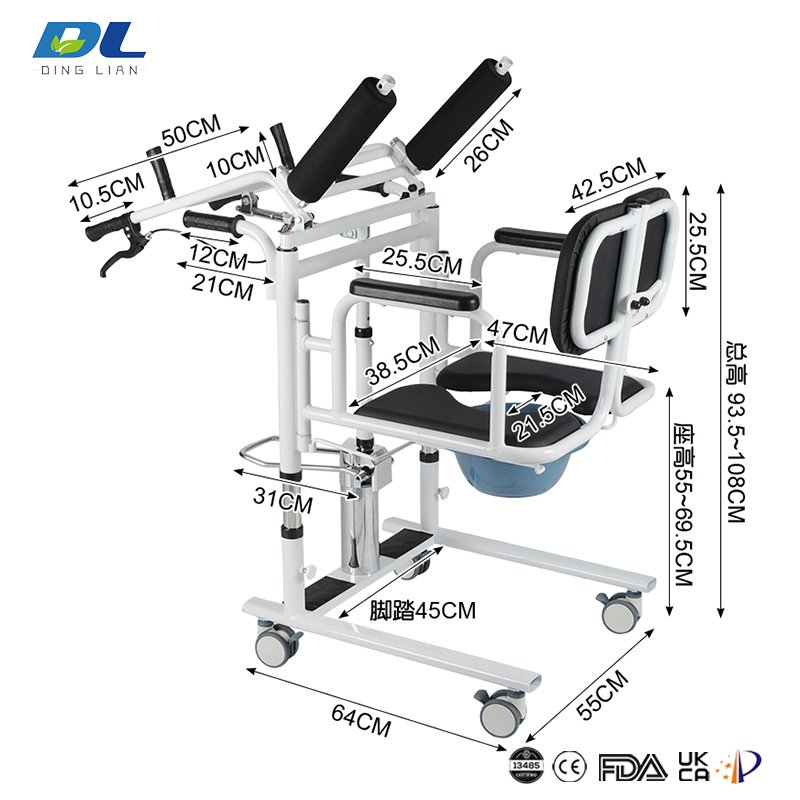
The DL-WGYW02 hydraulic transfer chair was designed around this practical requirement.
| Feature | Specification | Practical Benefit | Buyer Value |
|---|---|---|---|
| Hydraulic Lift Handle | Manual hydraulic support | Reduces lifting strain | Better caregiver usability |
| Silent Brake Casters | 2.25-inch wheels | Stable transfer positioning | Safer daily operation |
| Seat Height Adjustment | 55~69.5CM | Improves bed & toilet compatibility | Broader usage scenarios |
| Load Capacity | 150KG | Supports elderly & bariatric users | Wider market suitability |
| Extended Footrest | Lengthened support area | Improves comfort & stability | Better transfer confidence |
Many buyers underestimate how important arm support and foot positioning become during transfer movement. In practice, these details directly affect user confidence and caregiver control.
Why Foldable Opening Systems Matter More Than Buyers Expect
Transfer accessibility is another area where many low-end products fail.
The DL-WGYW03 transfer chair focuses heavily on easier patient enclosure and safer movement support.
Its 180-degree opening structure allows caregivers to position the chair more naturally around the user instead of forcing difficult lifting angles.
| DL-WGYW03 Feature | Function | Caregiver Advantage | Daily Impact |
|---|---|---|---|
| 180° Opening Structure | Easy enclosure positioning | Reduces difficult lifting angles | Simpler transfers |
| Double Buckle System | Improves seating stability | Safer operation | Higher confidence |
| Retractable Footrests | Flexible positioning | Improves accessibility | Better maneuverability |
| Widened Backrest | Expanded support area | Improves comfort | Reduced fatigue |
| Silent Brake Wheels | Stable positioning | Better transfer control | Lower accident risk |
Why Experienced Buyers Focus on Long-Term Usage Instead of Initial Appearance
Many rehabilitation products look similar in catalogs.
The real difference usually appears after months of repeated daily use.
Professional distributors often evaluate:
- Weld consistency
- Tube thickness
- Wheel durability
- Transfer smoothness
- Brake reliability
- Hydraulic operating stability
These practical details affect customer complaints far more than cosmetic styling.
Caregiver Insight
The most successful transfer products are usually the ones caregivers trust during repeated daily use — not necessarily the ones with the most aggressive marketing appearance.
Why Manufacturer Experience Matters in Hydraulic Transfer Equipment
Hydraulic transfer systems involve much higher structural demands compared with standard wheelchairs.
Repeated lifting movement places continuous stress on:
- Frame joints
- Caster systems
- Hydraulic components
- Seat positioning mechanisms
That is why rehabilitation buyers increasingly prefer experienced transfer-equipment manufacturers instead of general mobility suppliers.
As a rehabilitation equipment manufacturer and factory with years of export experience, Zhongshan Dinglian focuses heavily on real caregiving usage scenarios instead of only showroom presentation.
Learn more about our manufacturing background here:
About Zhongshan Dinglian →
Where Hydraulic Transfer Equipment Is Heading Next
The future of transfer mobility is moving toward integrated systems that combine:
- Transfer support
- Bathroom accessibility
- Mobility positioning
- Reduced caregiver strain
- Compact home-care usability
Products that simplify caregiving without increasing operational complexity will likely dominate future rehabilitation demand.
Explore our patient transfer equipment range here:
Browse Patient Transfer Equipment →
Final Thoughts
Hydraulic transfer systems are no longer niche rehabilitation products. They are becoming essential tools in modern elderly care, home-care support, and rehabilitation movement management.
For distributors and healthcare buyers, understanding real transfer pain points is far more important than comparing appearance alone.
The right hydraulic patient transfer chair improves caregiver efficiency, reduces injury risk, and creates safer daily movement for elderly and disabled users.
If you are sourcing hydraulic transfer equipment for distribution or project procurement, contact our team here:
Talk With Our Transfer Equipment Team →