
How are mobility aids like rollators constructed?
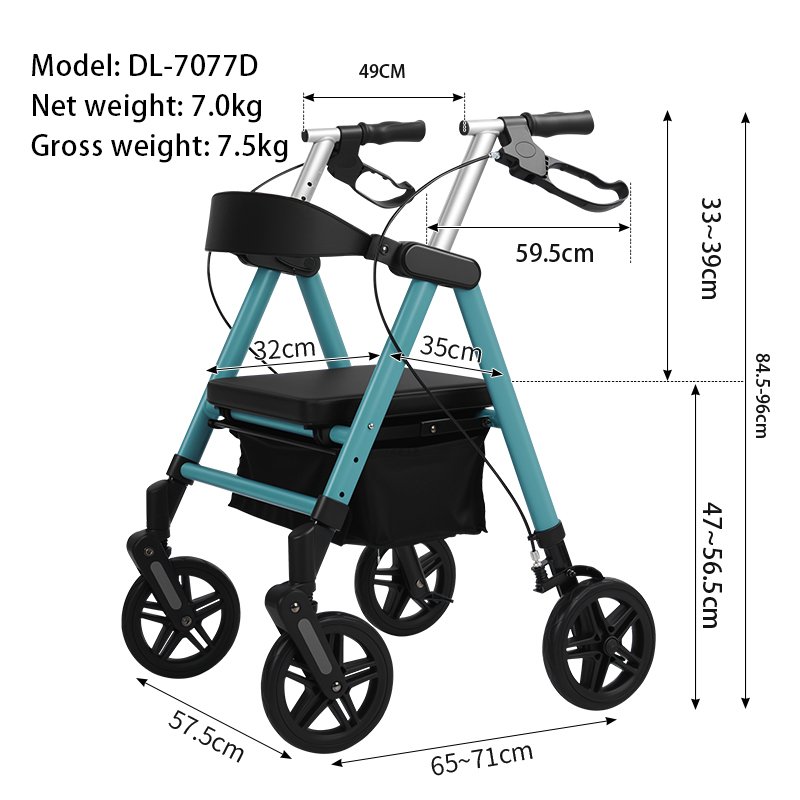
Inside the Build: From Frame Tubes to a Finished Mobility Aid
A rollator is constructed through a series of connected manufacturing operations, starting with metal tube selection and ending with frame assembly, wheel installation, brake adjustment, and product inspection. However, a reliable rollator is not simply the result of using strong materials. Frame geometry, tube processing accuracy, welding consistency, joint design, and assembly control all influence how the finished product performs during everyday use.
For distributors and medical equipment buyers, understanding this process makes supplier evaluation much easier. Two rollators may look almost identical in a product catalogue, yet their manufacturing methods can produce different results in frame rigidity, folding performance, and long-term maintenance requirements.
When evaluating a manufacturer, I would look beyond the finished appearance. The more useful question is whether the factory can reproduce the same structural quality across hundreds or thousands of units, rather than simply producing one attractive sample.
What Are the Main Structural Components of a Rollator?
A standard rollator combines a supporting metal frame with several mechanical and user-contact components. Each part has a specific function, but the overall performance depends on how these parts work together.
For procurement teams, the frame should be the first area to examine. It supports the user’s weight, connects the major components, and determines how forces are transferred when the rollator moves over different surfaces. The wheels, brakes, seat, and folding mechanism then add functional requirements to that basic structure.
Frame Structure and Load Distribution
The frame is generally manufactured from aluminum alloy or steel tubing. Its construction may include two main side frames, connecting crossbars, front and rear support sections, and additional brackets for the seat and accessories.
These connections are not interchangeable. A poorly positioned crossbar or an inadequately designed joint can affect the rigidity of the entire structure, even when the individual tubes are manufactured to the correct dimensions.
There are several areas worth checking during a supplier assessment:
- Main side frames: These provide the primary structural support and influence the overall width and height of the rollator.
- Crossbars: They connect the left and right sides and help control lateral movement of the frame.
- Front and rear supports: These provide mounting positions for the wheels and help distribute loads through the frame.
- Seat support brackets: These need to remain properly aligned because the seat introduces a different loading condition from ordinary walking support.
- Folding joints: These allow the product to become more compact, but their design must balance convenient operation with secure locking.
One point often overlooked during product comparisons is the relationship between frame width and structural design. A wider rollator may offer more room for the user, but it also changes the geometry of the supporting structure. Simply increasing the distance between the side frames without reviewing the connecting members and joint positions can create unnecessary design compromises.
For buyers handling private-label projects, I recommend requesting a dimensioned frame drawing rather than relying entirely on catalogue photographs. The drawing helps confirm the main tube positions, connection points, folding arrangement, and overall dimensions before production begins.
Wheels, Brakes and Folding Mechanisms
The wheels and braking system are functional assemblies rather than decorative accessories. Their installation accuracy affects how the rollator tracks, turns, and remains stationary when the user needs to stop.
Most conventional rollators use four wheels, although wheel diameter, tread design, and material vary according to the intended product category. Larger wheels may be selected for models intended to handle a wider range of indoor and outdoor surfaces, while smaller configurations may be suitable for compact indoor products.
Braking systems commonly include hand-operated brakes with a parking function. The brake cables, handles, adjustment points, and wheel braking components must work together. A brake handle that feels smooth during a quick sample inspection does not necessarily indicate consistent braking performance across a production batch.
The folding mechanism deserves similar attention. Many rollators use a central folding arrangement or a folding seat assembly to reduce storage space. However, the mechanism must return to its intended operating position without excessive play or difficult manual adjustment.
For distributors, I would ask three practical questions:
- Can the frame be folded and reopened without tools under normal operating conditions?
- Does the locking mechanism engage consistently after repeated operation?
- Can replacement brake cables, handles, wheels, and other commonly serviced components be supplied separately?
The third question is particularly relevant to importers supplying hospitals, rehabilitation facilities, and care institutions. A product with replaceable components may be easier to maintain than one that requires replacement of a larger assembly whenever a small part wears out.
Seat, Backrest and Accessories
Many rollators include a built-in seat, allowing the user to rest when needed. Depending on the model, the construction may also include a backrest, storage bag, adjustable handles, and additional accessories.
The seat assembly needs to be considered separately from the walking-support frame. Its mounting points, support brackets, and folding arrangement must accommodate the intended sitting load. Buyers should not assume that a rollator’s walking-support rating automatically represents its approved seating capacity. These values should be confirmed through the manufacturer’s specifications and applicable test documentation.
For OEM orders, accessory compatibility is another practical issue. Changing the seat dimensions, backrest style, or storage bag position may affect the folding clearance and the overall product dimensions. These details should be settled during the engineering confirmation stage, not after the first production batch has already started.
Which Materials Are Used to Build a Rollator Frame?
Aluminum alloy and carbon steel are two common material choices for rollator frames. Neither is automatically the better option. The right decision depends on the target market, product positioning, weight requirements, manufacturing capability, and expected selling price.
When buyers compare suppliers, material selection is often reduced to a simple argument: aluminum is lightweight, while steel is strong. That comparison is incomplete. A properly engineered steel frame can provide dependable structural performance, while an aluminum frame can offer practical handling advantages. The finished result depends on the tube specifications, frame geometry, processing methods, and quality controls.
Aluminum Alloy Frames
Aluminum alloy is widely used in rollators where lower product weight is an important selling point. A lighter frame can make transportation, lifting, folding, and storage more convenient. This may be particularly useful for users who frequently move the product between rooms or transport it in a vehicle.
From a manufacturing perspective, aluminum tubing requires suitable cutting, forming, and welding processes. Heat input during welding needs careful control because excessive heat can affect the material around the joint. The selected alloy and temper also matter, so buyers should request material specifications rather than accepting a general statement that the product uses aluminum.
Surface treatment is another consideration. Aluminum naturally forms an oxide layer, but this does not mean every aluminum frame is equally resistant to corrosion or surface damage. The actual result depends on the alloy, surface preparation, coating system, and operating environment.
For distributors developing a lightweight rollator range, I would prioritize the following:
- Confirm the aluminum alloy grade and tube specifications.
- Review the wall thickness and cross-sectional design of the main frame tubes.
- Check the quality and consistency of welded connections.
- Evaluate the finished frame for deformation and alignment.
- Compare the complete product weight, not just the frame weight.
A lightweight frame is commercially attractive, but it should never become a reason to overlook the performance of joints, locking mechanisms, and other structural components.
Carbon Steel Frames
Carbon steel remains a practical option for rollators where manufacturing cost, structural design, and product positioning need to be balanced. Steel tubing offers different design possibilities, and the material is familiar to many metal-processing factories.
Its higher density generally results in a heavier frame compared with a similarly sized aluminum structure. However, the final weight depends on the selected tube dimensions, wall thickness, structural layout, and additional components. A steel model should therefore be evaluated as a complete design rather than judged by material density alone.
Corrosion protection is an important part of steel frame production. The surface preparation and coating process need to be controlled to protect exposed metal surfaces and maintain a consistent finish. Particular attention should be paid to welded areas, tube ends, joints, and locations where moisture may collect.
For buyers targeting price-sensitive distribution channels, steel rollators may offer a useful product option. However, reducing the material cost by changing tube specifications without reviewing the structural design is a poor purchasing decision. Any material substitution should be supported by engineering review and appropriate product testing.
Aluminum Alloy vs. Carbon Steel: What Should Buyers Compare?
| Comparison | Aluminum Alloy | Carbon Steel | Buyer Consideration | Inspection Focus |
|---|---|---|---|---|
| Frame Weight | Generally lighter | Generally heavier | Influences handling, transport, and positioning | Complete product weight |
| Structural Design | Requires suitable tube dimensions and joint design | Offers different tube and section design options | Evaluate the complete frame construction | Drawings and structural connections |
| Corrosion Protection | Depends on alloy, surface condition, and treatment | Requires appropriate protective finishing | Consider storage and operating environments | Surface coverage and coating quality |
| Manufacturing | Requires suitable aluminum forming and welding controls | Requires controlled cutting, bending, and welding | Assess the factory’s material-specific experience | Process consistency |
| Product Positioning | Suitable for lightweight product ranges | Suitable for cost-conscious product ranges and suitable structural designs | Match the design to the target market | Specifications and test records |
My recommendation is to avoid selecting a frame material based on a single specification. For an importer, the more useful comparison is the relationship between product weight, structural performance, unit cost, expected service requirements, and the consistency of the manufacturer’s production process.
At Zhongshan Dinglian Rehabilitation Equipment Co., Ltd., material selection is considered alongside the intended product configuration and manufacturing requirements. Buyers can review our rollator walker product range to compare available product configurations and discuss suitable specifications for their markets.
How Is a Rollator Frame Manufactured?
Once the material and frame design have been confirmed, production moves into metal processing. This is where a manufacturer’s equipment, tooling, and process discipline begin to make a visible difference.
A typical rollator frame manufacturing sequence includes tube cutting, tube bending, drilling or punching where required, welding, grinding, surface preparation, and protective coating. The exact order can vary according to the frame design and the location of mounting holes or brackets.
For procurement teams, the important point is not simply whether a factory owns these machines. It is whether the equipment is suitable for the product, whether operators follow controlled procedures, and whether the same dimensions can be maintained throughout the production run.
Tube Cutting and Preparation
Tube cutting is normally one of the first metal-processing operations. Aluminum alloy or steel tubes are cut into the required lengths according to the approved engineering drawings.
The cutting method may involve a circular saw, a dedicated tube cutting machine, or another suitable cutting system. The choice depends on tube dimensions, material characteristics, production volume, and required accuracy.
Length variation at this stage can create problems later. If several frame tubes are cut inconsistently, the resulting assembly may require additional adjustment during welding. That can affect frame alignment and increase production rework.
Several details deserve attention:
- Cutting length: Tube lengths should match the approved drawings and process tolerances.
- Cutting angle: Angled tube ends must be consistent where they connect with other frame members.
- Edge condition: Sharp edges and burrs should be removed before the next operation.
- Material identification: Different materials and tube specifications should remain traceable during production.
For a factory producing multiple rollator models, material identification is particularly important. Similar-looking tubes may have different diameters or wall thicknesses. Mixing them during production can create a problem that is difficult to identify through a simple visual inspection of the finished product.
Tube Bending and Forming
Many rollator frames use curved tubes to create the required frame shape, handle positions, and support geometry. Tube bending machines form straight metal tubes into the specified angles and curves.
However, bending is not simply a matter of applying force at the correct position. The material can experience deformation, wall thinning, and springback after the bending operation. These effects need to be considered when developing the tooling and processing parameters.
For example, excessive deformation around a bend can affect the tube’s appearance and potentially influence its structural performance. Inconsistent bending angles can also make later welding and assembly more difficult.
A repeatable bending process should consider:
- Tube diameter and wall thickness.
- Material type and mechanical characteristics.
- Bending radius and required angle.
- Tooling condition and positioning accuracy.
- Springback compensation and dimensional verification.
One practical recommendation for buyers: when approving a pre-production sample, examine the curved sections from several angles. Look for flattened areas, visible wrinkles, uneven curves, or differences between the left and right frame members. These details can indicate whether the bending process is properly controlled.
Welding and Frame Assembly
Welding connects the individual frame members into a supporting structure. Depending on the material and design, manufacturers may use suitable manual or semi-automated welding processes.
Welding quality should be evaluated according to the joint design, material, welding procedure, and intended structural requirements. A clean-looking weld is useful, but appearance alone cannot establish the mechanical integrity of a connection.
For rollators, particular attention should be given to the following locations:
- Main frame intersections.
- Crossbar connection points.
- Wheel mounting brackets.
- Seat support connections.
- Folding mechanism mounting areas.
These locations may experience different loading conditions during normal product use. A weak or inconsistent connection can lead to excessive movement, premature wear, or structural failure.
Production fixtures are also important. Welding jigs help position frame components before joining, reducing the risk of dimensional variation between units. Without suitable positioning tools, operators may need to rely heavily on manual adjustment, which can make repeatability more difficult as production volume increases.
For distributors planning regular orders, this is one of the most useful areas to review during a factory assessment. A production line that can reproduce the same frame geometry is generally more valuable than a supplier that can only produce an acceptable first sample.
Grinding and Surface Preparation
After welding, selected areas may require grinding and surface finishing. The purpose is to remove unwanted weld projections, sharp edges, and surface irregularities where the design permits such treatment.
This stage should not be confused with simply making the frame look smooth. Excessive grinding can remove too much material from a weld or damage the surrounding tube surface. The manufacturer needs to distinguish between removing an unwanted projection and weakening a structural connection.
Surface preparation also influences the quality of subsequent coating operations. Oil, dust, oxidation, and other contaminants may interfere with coating adhesion if they are not properly addressed.
For buyers, I would check whether the factory has a defined preparation procedure before painting or powder coating. Pay particular attention to welded joints, tube ends, and areas that are difficult to reach during manual finishing.
Powder Coating and Corrosion Protection
Powder coating is commonly used to provide a finished surface on metal rollator frames. The process generally involves surface preparation, powder application, and curing under controlled conditions.
The quality of the final coating depends on more than the powder material itself. Surface cleanliness, application consistency, grounding, coating thickness, and curing conditions all contribute to the result.
Uneven coverage may occur around corners, welded connections, recessed areas, and complex frame geometries. These locations deserve attention because a coating that appears satisfactory on a large straight tube may not provide the same coverage at every joint.
Buyers should consider the following checks:
- Is the coating visually consistent across the frame?
- Are there exposed metal areas, pinholes, or obvious coating defects?
- Does the coating show signs of poor adhesion?
- Are welded joints and difficult-to-reach areas adequately covered?
- Can the manufacturer provide coating specifications and relevant inspection records?
Where a customer specifies a minimum coating thickness or corrosion-resistance requirement, the factory should confirm the measurement method, sampling plan, and acceptance criteria before mass production. A nominal coating specification should not be treated as proof that every finished frame meets the requirement.
For manufacturers such as Zhongshan Dinglian Rehabilitation Equipment Co., Ltd., the relationship between equipment capability and process control is an important part of production evaluation. Buyers interested in understanding the actual manufacturing environment can visit our factory equipment and production facilities page.
How Are Rollator Components Assembled and Checked?
Once the frame has been processed and its surface finish is complete, the next stage is mechanical assembly. This is where separate components become a functional mobility aid. Even when the frame dimensions are correct, problems can still occur if the wheels, brakes, handles, seat, or folding mechanism are installed inconsistently.
For buyers, final assembly deserves as much attention as metal fabrication. A rollator may pass a visual inspection but still have a wheel that does not rotate freely, a brake cable that needs adjustment, or a locking mechanism that requires excessive force to operate.
These issues are particularly important in bulk procurement. One incorrectly assembled sample can be corrected easily; repeated assembly problems across an entire shipment create a much more expensive situation.
Handle and Height Adjustment Assembly
Most rollators provide adjustable handles so that the product can accommodate different user heights. The handle assembly generally consists of a grip, handle tube, adjustment holes or positioning system, and a locking mechanism.
During assembly, the handle tubes need to fit correctly into the corresponding frame sections. The adjustment mechanism should allow the intended height positions without excessive looseness or difficulty when locking.
Buyers should pay attention to several practical details:
- Both handles should provide consistent adjustment positions.
- The locking mechanism should engage securely at the selected height.
- The grip should remain firmly attached during normal operation.
- Left and right handle assemblies should be aligned correctly.
- There should be no obvious excessive movement after adjustment.
One issue worth clarifying during OEM development is the relationship between handle height and brake cable routing. If the cable is too short or routed incorrectly, changing the handle position may interfere with brake operation. This is a small assembly detail, but it can create unnecessary after-sales complaints if overlooked.
Wheel and Brake Installation
Wheel installation involves more than attaching four wheels to the frame. The mounting position, axle alignment, fastening method, and clearance between moving components all influence the finished product.
The wheels should rotate without abnormal resistance or unwanted contact with the frame. At the same time, their mounting points must remain secure under the conditions specified for the product.
Brake installation requires particular attention because the hand-operated mechanism and wheel assembly need to work as one system. Depending on the design, the factory may need to adjust cable tension, brake engagement, and parking-lock operation.
For distributors, I recommend asking the supplier to demonstrate both normal braking and parking operation on a finished production unit. The demonstration should cover the actual product configuration being purchased, rather than a different model from the same catalogue.
It is also worth checking whether replacement wheels, brake cables, and handles are available. For professional buyers supplying care facilities or rehabilitation equipment dealers, access to replacement components can reduce maintenance difficulties over the product’s service life.
Seat, Backrest and Accessories Installation
The seat, backrest, and storage accessories are usually installed after the main frame and mechanical assemblies have been prepared. Their installation needs to follow the approved product configuration because different accessory arrangements can affect folding clearance and overall dimensions.
The seat should be properly secured to its support structure. If the model includes a folding seat, the movement should be smooth and should not interfere with the frame locking arrangement. A backrest, where supplied, should be positioned and fixed according to the manufacturer’s design.
Storage bags and baskets also need attention. Their attachment points should not obstruct wheel movement, brake cables, or folding operations. A bag that hangs too low may contact the wheels, while an incorrectly positioned accessory may make the product difficult to fold.
For private-label orders, buyers should confirm the accessory list before approving the production sample. A change in seat dimensions, bag capacity, or backrest design may require additional fit checks. It is better to identify these changes during sample development than after the factory has prepared the bulk production materials.
Which Quality Checks Matter Before a Rollator Leaves the Factory?
Quality inspection should cover the finished product’s dimensions, structure, mechanical functions, and appearance. A reliable inspection plan does not rely on one final visual check. It uses appropriate controls at different production stages to identify problems before they become expensive batch-level defects.
For procurement teams, there is an important distinction between a product that looks acceptable and a product that has been checked against defined requirements. A factory should be able to explain what it inspects, how it records the results, and what happens when a unit fails.
Dimensional and Structural Inspection
Dimensional inspection confirms whether the finished rollator matches the approved drawings and product specifications. Typical measurements may include overall width, handle height range, seat dimensions, wheel spacing, and folded dimensions.
These measurements matter commercially as well as technically. A small dimensional change can affect packaging, container loading, compatibility with replacement parts, and the product’s suitability for the intended user group.
Structural inspection should also consider the condition of welded joints, fastening points, frame alignment, and locking components. The exact inspection method depends on the product design and the applicable acceptance requirements.
For a buyer approving a new model, I would suggest establishing a dimensional inspection sheet before mass production. It should identify the important measurements, agreed tolerances, inspection method, and sampling frequency.
Functional and Durability Checks
Functional checks examine whether the assembled rollator operates as intended. These checks should be based on the actual product design and applicable test requirements, rather than a general checklist copied from another model.
Important areas include:
- Folding operation: Confirm that the frame can be folded and reopened according to the intended design.
- Locking mechanism: Check that locking components engage and release correctly.
- Wheel movement: Check for abnormal resistance, loose mounting, and interference with the frame.
- Brake operation: Verify normal braking and parking functions according to the product’s specifications.
- Handle adjustment: Confirm that height adjustment positions remain secure.
- Seat assembly: Check installation, support, and the relevant seating performance requirements.
Durability testing should address repeated operations and structural performance under defined conditions. Depending on the model, this may involve tests associated with walking support, seating, folding components, wheels, and braking systems.
One point I would emphasize during supplier discussions is that a test result is only meaningful when its test method and acceptance criteria are clear. Asking a supplier whether a rollator has passed a durability test is not enough. Buyers should establish which configuration was tested, what loading conditions were applied, how many cycles were performed, and whether the result can be linked to the product being purchased.
Standards, Certifications and Technical Documentation
For rollators marketed as walking aids, ISO 11199-2:2021 is an important international reference covering rollators. Buyers should review the applicable edition, amendments, product scope, and relevant market requirements before confirming a compliance plan.
It is important not to confuse a general quality management certificate with proof that a particular rollator model meets every applicable product requirement. ISO 9001 and ISO 13485 relate to quality management systems, while product conformity needs to be assessed against the relevant technical and regulatory requirements.
For European market projects, buyers should also confirm the applicable EU medical device regulatory requirements and whether the specific product falls within the intended medical device classification. CE marking should be supported by the appropriate conformity assessment and technical documentation; it should not be treated as a substitute for reviewing product-level evidence.
A practical documentation package may include:
- Approved product specifications and technical drawings.
- Material information for major structural components.
- Applicable product test reports.
- Risk management and technical documentation, where required.
- Inspection records and batch identification information.
- Product labels, instructions, and packaging specifications.
ISO 11199-2:2021 also needs to be read together with its applicable amendments. Amendment 1:2024 removed the brake requirements from the standard. Therefore, buyers should not assume that every brake-related requirement is still contained in the amended standard itself. Brake performance should be addressed through the applicable regulatory requirements, product risk assessment, and agreed testing specifications.
For procurement projects, the most useful approach is to create a product compliance checklist before placing the order. This prevents misunderstandings about certificates, testing scope, and documentation responsibilities when the goods are already approaching shipment.
What Should Buyers Look for When Evaluating a Rollator Manufacturer?
A factory visit or supplier audit should answer a more important question than whether the manufacturer has modern-looking equipment: can the company consistently produce the approved rollator specification and support the product after delivery?
For importers and distributors, manufacturing capability needs to be considered alongside process control, engineering communication, documentation, and supply continuity. A supplier may be able to produce a sample quickly, but maintaining the same dimensions, finish, and assembly quality across repeat orders requires a more organized production system.
Equipment and Process Control
Start by reviewing the equipment relevant to the rollator manufacturing process. This may include tube cutting machines, bending equipment, drilling or punching machines, welding equipment, grinding tools, and surface treatment facilities.
However, equipment ownership alone does not establish production capability. Buyers should ask how each operation is controlled and whether the factory has suitable fixtures, measurement tools, and trained operators.
During a factory assessment, useful questions include:
- Are tube cutting and bending operations performed according to controlled drawings?
- Does the factory use dedicated fixtures for repeatable frame assembly?
- How are welding defects identified and handled?
- Are coating thickness and surface quality checked against defined requirements?
- Are inspection results recorded and reviewed?
For buyers comparing manufacturers in China, visiting the actual production environment can provide a clearer picture than reviewing a catalogue or a collection of factory photographs. It also gives buyers an opportunity to understand which processes are completed in-house and which are handled by external suppliers.
Batch Consistency and Traceability
One approved sample is only the starting point. The real manufacturing challenge is reproducing the same specification over repeated production batches.
Consider a distributor who orders a rollator model several times a year. If the supplier changes a tube specification, adjusts a frame dimension, or replaces a component without proper approval, the products may no longer match the originally approved sample.
These differences can affect replacement-part compatibility, product documentation, packaging, and customer expectations.
A more dependable purchasing arrangement should include:
- An approved reference sample or controlled product specification.
- Clear material and component requirements.
- Defined inspection criteria and acceptance standards.
- Change-control procedures for design or material substitutions.
- Batch identification and relevant production records.
- A process for handling complaints and corrective actions.
For long-term cooperation, I would place particular emphasis on change control. A factory should not make an unapproved material or component substitution simply because the alternative is easier to source. Even when a change appears minor, the buyer needs an opportunity to assess its impact before it enters production.
OEM Requirements, Spare Parts and Long-Term Supply
OEM projects often involve more than adding a logo to an existing rollator. Buyers may need different frame colors, handle grips, seat materials, accessories, packaging, labels, or product dimensions.
Each customization should be reviewed against the existing structure and manufacturing process. For example, changing the frame color may only require a surface finishing adjustment, while changing the handle height range or seat dimensions may affect the frame drawing, assembly sequence, and packaging arrangement.
Before approving an OEM project, confirm the following:
- Which specifications can be customized without changing the existing frame structure?
- Which changes require new drawings, tooling, or sample approval?
- What is the minimum order quantity for customized colors and accessories?
- Can the supplier provide replacement wheels, brakes, handles, and other service parts?
- Are packaging dimensions and shipping arrangements confirmed before mass production?
- How are repeat orders matched to the original approved specification?
Spare parts deserve more attention than they often receive during the initial quotation stage. A distributor who supplies hospitals, care homes, or medical equipment retailers may need to maintain products over an extended period. Having a clear spare-parts arrangement can make the difference between a manageable after-sales process and repeated customer complaints.
For buyers assessing a potential Chinese manufacturing partner, learn more about Zhongshan Dinglian Rehabilitation Equipment Co., Ltd. and its rehabilitation equipment manufacturing background before discussing product specifications and cooperation requirements.
Why Does the Manufacturing Process Matter More Than the Material Alone?
When comparing two rollators, buyers often start with the material, product weight, maximum user capacity, and unit price. These are important specifications, but they do not tell the whole story.
A lightweight aluminum frame can still have poor structural performance if its joints are inadequately designed or its assembly dimensions are inconsistent. A steel frame may offer a practical cost structure, but insufficient surface protection can create problems during storage and use. Similarly, a well-designed frame cannot compensate for incorrectly installed brakes or a folding mechanism that does not lock reliably.
The better purchasing approach is to evaluate the complete manufacturing system behind the finished product.
From a procurement perspective, I would divide the decision into four areas:
- Product engineering: Are the frame geometry, tube specifications, connection points, and component arrangements suitable for the intended application?
- Manufacturing control: Can the factory reproduce cutting, bending, welding, coating, and assembly requirements consistently?
- Product verification: Are dimensions, mechanical functions, structural performance, and documentation checked against agreed criteria?
- Supply support: Can the manufacturer maintain product specifications, provide replacement parts, and handle repeat orders reliably?
These four areas are connected. A manufacturer with good engineering but weak process control may struggle with batch consistency. A factory with suitable equipment but inadequate inspection procedures may not identify problems before shipment. A supplier that delivers acceptable products but cannot support spare parts may create difficulties for distributors later.
For this reason, the lowest quotation should not automatically be considered the most competitive offer. Buyers should compare the full supply arrangement, including product specifications, inspection responsibilities, packaging, spare parts, communication, and the supplier’s ability to maintain the agreed quality level.
At Zhongshan Dinglian Rehabilitation Equipment Co., Ltd., our product development and manufacturing discussions focus on matching product configurations with the practical requirements of professional buyers. We understand that distributors and importers need more than a product photograph and a price list. They need clear specifications, consistent communication, and a supplier that can support ongoing business requirements.
If you are evaluating rollator models for distribution, developing a private-label product, or looking for a long-term rehabilitation equipment manufacturing partner, you can contact our team to discuss your rollator requirements. Providing your target market, preferred frame material, estimated order quantity, and customization needs will help us assess the appropriate product configuration.