
Walking Frame with Wheels vs Standard Walking Frame: A Buyer Comparison
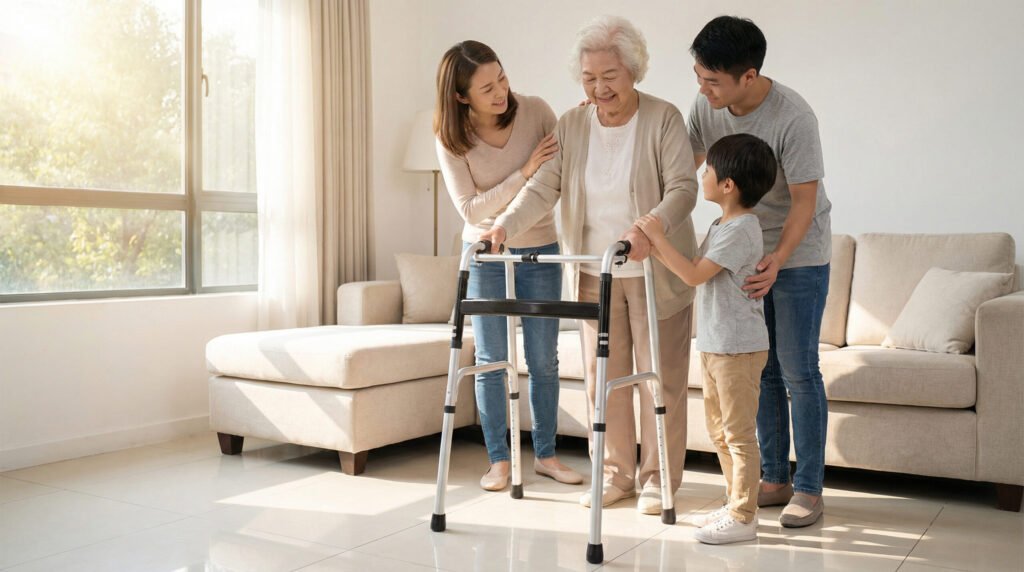
Walking Frame with Wheels vs Standard Walking Frame: How Buyers Decide
Should a walking frame include wheels, or does that compromise safety? This is a recurring question for rehabilitation equipment buyers, especially when balancing user mobility, institutional risk, and long-term procurement reliability.
This comparison forms part of a broader sourcing framework explained in our walking frame buyer guide , where professional buyers evaluate stability, compliance, and long-term risk across different walking aid designs.
From a professional sourcing perspective, walking frames with wheels and standard non-wheeled frames are not interchangeable products. They address different user capabilities, risk tolerances, and care environments.
Understanding the Structural Difference
A standard walking frame relies on four-point ground contact to maximize stability. A wheeled walking frame introduces controlled forward movement by adding two front wheels, while the rear legs remain static.
This design difference may appear minor, but from a procurement and safety standpoint, it fundamentally changes user interaction.
- Standard frame – Lift-and-place movement, highest stability
- Wheeled frame – Push-forward movement, reduced lifting effort
Buyers evaluate these designs based on user predictability, not convenience alone.
Stability vs Mobility: Where Buyers Draw the Line
Standard walking frames are favored in early-stage rehabilitation and institutional care environments where balance control is limited or inconsistent.
Wheeled walking frames, by contrast, are introduced only when users demonstrate sufficient upper-body control and gait awareness.
| Procurement Factor | Standard Walking Frame | Walking Frame with Wheels |
|---|---|---|
| Stability Level | Very high | Moderate |
| User Effort | Higher (lifting required) | Lower (rolling assisted) |
| Fall Risk (early rehab) | Lowest | Higher if posture control is weak |
| Institutional Preference | Strong | Conditional |
Buyer insight: In risk-managed environments, stability is prioritized over movement efficiency.
Why Institutions Often Start with Standard Frames
Predictable User Behavior
Standard frames require deliberate lifting and placement. This slows user movement but significantly reduces unintended forward momentum.
From a buyer’s risk perspective, this predictability translates into:
- Lower incident probability
- Fewer misuse scenarios
- Reduced liability exposure
Lower Training Requirements
Standard walking frames require minimal instruction. Wheeled frames, however, introduce directional control that some users struggle to manage consistently.
In institutional settings, reduced training complexity is a procurement advantage.
When Buyers Approve Walking Frames with Wheels
Experienced buyers do not reject wheeled frames outright. Instead, they define strict usage conditions.
Wheeled walking frames are typically approved when:
- The user has progressed beyond early rehabilitation
- Upper-body strength and posture control are stable
- The primary use environment is flat and predictable
In these cases, wheeled frames reduce fatigue and improve user confidence without introducing unacceptable risk.
Procurement and Compliance Considerations
From a compliance standpoint, both designs are evaluated through market-access frameworks such as CE marking, supported by manufacturers operating under certified quality systems like ISO 13485.
However, buyers often apply stricter internal review criteria to wheeled designs, particularly around:
- Front wheel durability
- Frame rigidity under forward load
- Slip resistance of rear ferrules
These checks are not always visible in showroom samples, reinforcing the need for documented engineering validation.
Inventory Strategy: Stocking Both, Not Choosing One
Professional distributors rarely choose between standard and wheeled walking frames. Instead, they position both within a structured product offering.
Standard frames address:
- Hospitals
- Nursing facilities
- Early-stage rehab programs
Wheeled frames support:
- Home-care transitions
- Post-rehab users
- Users seeking reduced physical strain
This staged approach reduces returns, improves satisfaction, and aligns product selection with real user capability.
Final Buyer Perspective
The decision between a walking frame with wheels and a standard frame is not about which design is better. It is about which design is appropriate for a defined risk profile.
For buyers evaluating both configurations within a broader walking frame category , direct manufacturer communication remains the most efficient way to clarify documentation, testing scope, and long-term supply support.
You may contact the manufacturer directly to discuss procurement suitability.